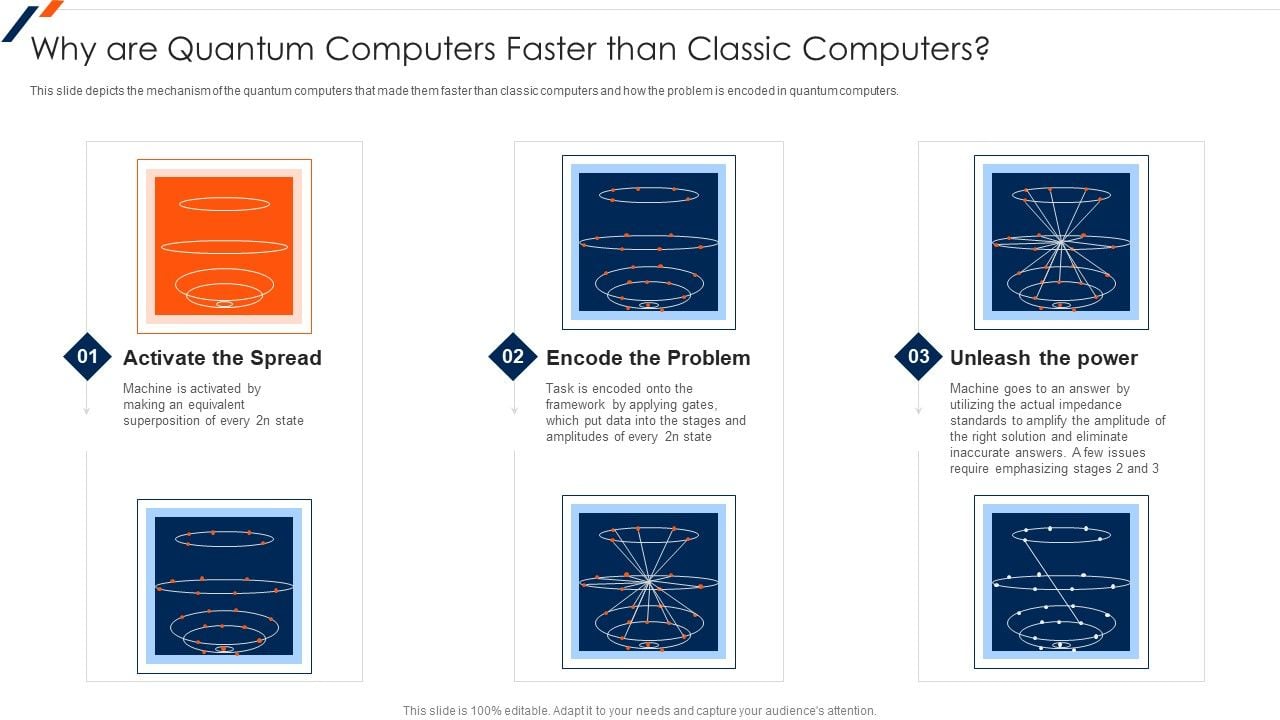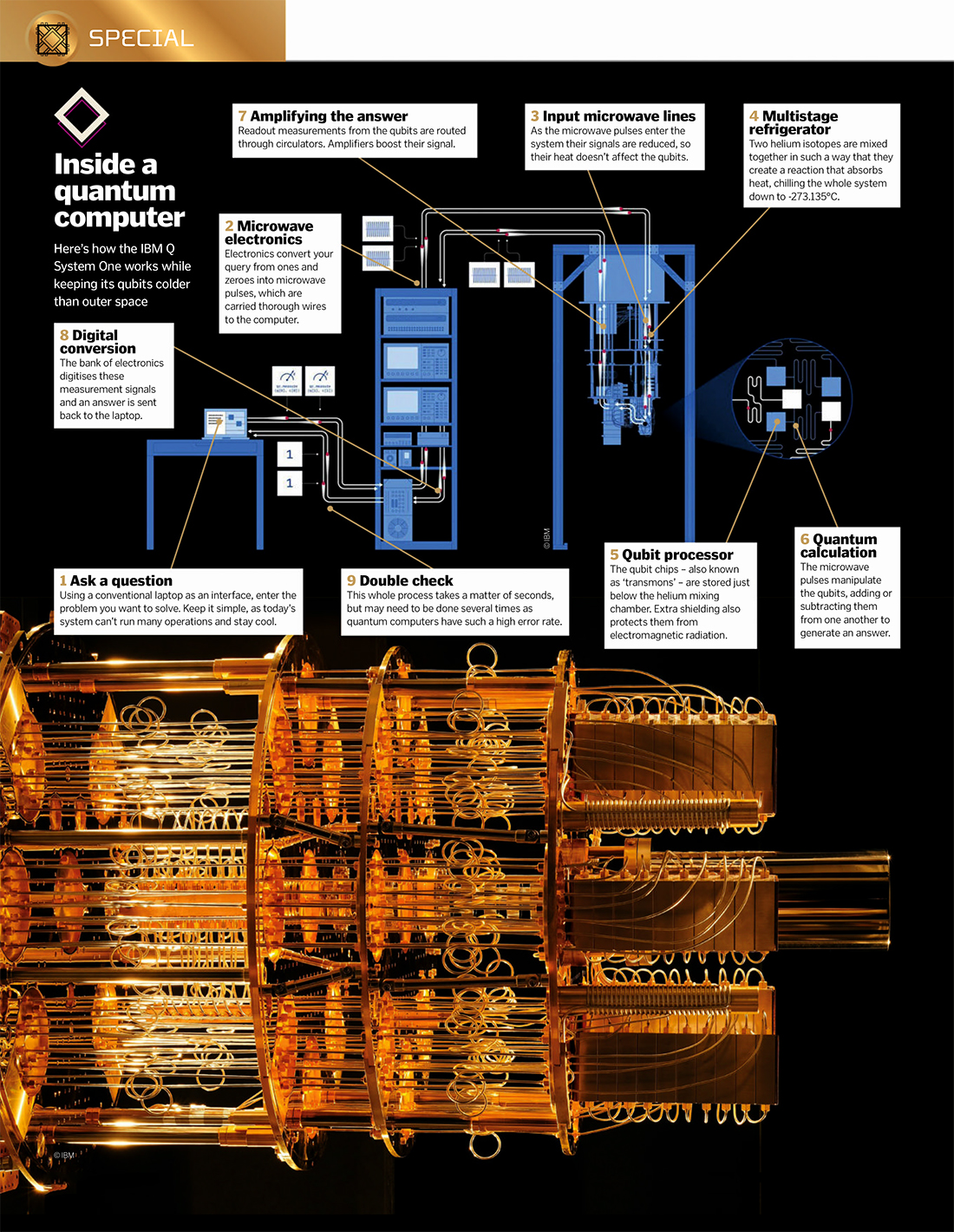
What are some possible quantum computer architectures?

Understanding Quantum Computing Architectures Quantum computing represents a groundbreaking shift in computational technology, unlocking capabilities far beyond the reach of classical computers. This transformation is rooted not just in enhanced speed but in the exploitation of quantum mechanical principles, which enable novel ways to process and manipulate information. Various quantum computing architectures have been proposed, […]

Read More →

How can businesses become more green and sustainable?

Understanding Business Sustainability Business sustainability refers to the practice of operating in a manner that is environmentally responsible, socially equitable, and economically viable over the long term. It involves integrating eco-friendly methods and ethical principles into all facets of an organization’s operations to minimize negative environmental impacts while promoting social welfare and economic growth. Environmental […]

Read More →

What’s Inside Optical Components? A Peek into Photonic Machinery

Definition of Optical Components Optical components are specialized devices designed to control and manipulate light (photons) for various technological applications. These components play a crucial role in directing, modifying, and detecting light, enabling advancements in fields such as telecommunications, medical imaging, and quantum computing. They include elements like lenses, mirrors, prisms, beam splitters, optical fibers, […]

Read More →

What is the best university for learning nanophotonics?

Definition of Nanophotonics Nanophotonics is a cutting-edge scientific discipline that explores the behavior and manipulation of light on a scale much smaller than the wavelength of visible light. This field merges principles from physics, materials science, and engineering to study how light interacts with nanostructures, enabling innovations in optics, quantum technologies, and photonic devices. Scale: […]

Read More →

How bright is the focused beam in a particle accelerator?

Understanding Beam Brightness in Particle Accelerators The concept of beam brightness in particle accelerators extends far beyond simple visual brightness. It encompasses the concentration, energy, and intensity of charged particle streams, reflecting complex interactions governed by electromagnetic and quantum physics. To fully grasp this topic, one must explore the principles of particle acceleration, the physics […]

Read More →

Are we overreacting on climate change?

Understanding the Debate on Climate Change Reactions The conversation about climate change has attracted significant global attention over recent decades, sparking both passionate advocacy and outspoken skepticism. As the planet experiences rising temperatures and an increase in extreme weather phenomena, it becomes essential to evaluate whether society’s response is an overreaction or a justified reaction […]

Read More →

What kind of weird stuff is happening at CERN?

Overview of CERN and Its Scientific Significance The European Organization for Nuclear Research, commonly known as CERN, stands as a monumental hub for particle physics research. Situated on the border between France and Switzerland, this expansive facility is renowned worldwide for housing the Large Hadron Collider (LHC), the most powerful particle accelerator ever constructed. Beyond […]

Read More →

How is the subject of environmental science?

Definition of Environmental Science Environmental science is a multidisciplinary field that integrates principles from both natural and social sciences to explore the complex relationships between human activities and the natural world. It investigates how human actions influence ecosystems and the environment, aiming to understand and address pressing ecological challenges such as climate change, pollution, and […]

Read More →

What makes quantum computation so powerful?

Understanding Quantum Computation Quantum computation represents a revolutionary shift in how information is processed, moving beyond the confines of classical computing paradigms. At its core, it leverages the principles of quantum mechanics to perform calculations that would be infeasible for traditional computers. This transformative approach challenges our fundamental understanding of computation and opens new avenues […]

Read More →