
Short Answer
Overview of the Large Hadron Collider
The Large Hadron Collider (LHC) stands as the pinnacle of particle physics research, representing a colossal scientific endeavor aimed at unraveling the fundamental secrets of the universe. Since its launch in 2008, the LHC has been instrumental in landmark discoveries, most notably the identification of the Higgs boson. As the most powerful particle accelerator globally, it probes the basic building blocks of matter by colliding particles at unprecedented energies.
Understanding the LHC’s Purpose and Design
The LHC was meticulously designed to explore the subatomic world by accelerating particles close to the speed of light and smashing them together. This process allows physicists to observe rare phenomena and test theoretical models of particle physics.
- Superconducting Magnets:
These powerful magnets steer and focus particle beams along the collider’s 27-kilometer circular tunnel. - Detectors:
Complex instruments capture and analyze collision data to identify new particles and interactions. - Data Processing Systems:
Advanced computing infrastructure processes vast amounts of data generated during collisions for scientific analysis.
Challenges in Maintaining and Upgrading the LHC
Operating and enhancing a machine as intricate as the LHC involves navigating numerous technical and logistical hurdles. The synchronization of its many subsystems is critical to ensure optimal performance. Any misalignment or malfunction can cause delays or impact experimental outcomes.
Moreover, the LHC operates in a high-radiation environment, necessitating stringent safety protocols to protect both personnel and equipment. Balancing rapid technological progress with rigorous safety standards is a continuous challenge for CERN’s teams.
The High Luminosity LHC (HL-LHC) Upgrade
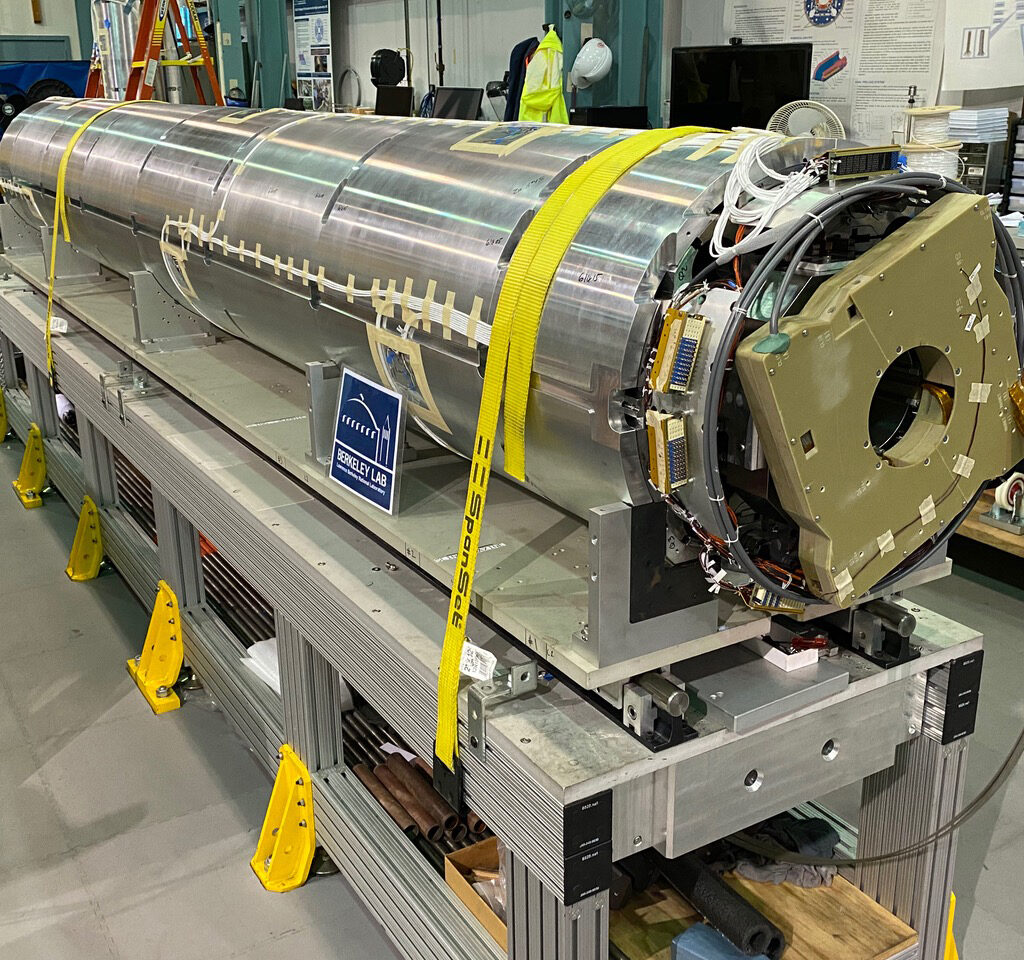
In a bid to extend the LHC’s capabilities, CERN has approved the High Luminosity LHC (HL-LHC) project, targeting completion by 2026. This upgrade aims to increase the collider’s luminosity by a factor of ten, significantly boosting the number of particle collisions and enhancing the precision of measurements.
- Increased Collision Rate:
More frequent collisions improve the chances of detecting rare particles and phenomena. - Enhanced Detector Sensitivity:
Upgraded detectors will better capture and analyze collision data. - Scientific Opportunities:
The HL-LHC will enable deeper investigations into fundamental questions such as the nature of dark matter and the forces governing the universe.
Project Management and Scientific Philosophy at CERN
CERN’s approach to the LHC’s lifecycle emphasizes careful monitoring and evaluation at every stage. This reflects a broader scientific ethos that balances ambitious goals with pragmatic risk management. While the desire to push boundaries drives progress, contingency planning ensures preparedness for unforeseen obstacles.
The collaborative environment at CERN, involving physicists, engineers, and safety experts from around the world, fosters resilience and innovation. This teamwork is essential for overcoming the complex challenges inherent in such a large-scale scientific project.
Public Engagement and Communication
Public understanding of the LHC’s work is often clouded by the complexity of particle physics, leading to misconceptions and sensationalized reports about delays or risks. Effective communication strategies are vital to bridge this gap.
- Educational Outreach:
CERN actively promotes programs to educate the public about the science and significance of the LHC. - Transparency:
Utilizing modern digital platforms, CERN shares updates and insights to foster trust and informed dialogue.
Scientific Impact and Future Prospects
The HL-LHC upgrade promises to deepen our understanding of the universe’s most profound mysteries. By enabling more precise experiments, it could shed light on elusive phenomena such as dark matter and the accelerating expansion of the cosmos. These advancements have the potential to revolutionize physics and expand humanity’s knowledge of the natural world.
Common Misconceptions About the LHC
The LHC is frequently delayed and may never complete upgrades.
While complex projects like the LHC face challenges, CERN maintains a rigorous schedule and has confirmed ongoing progress toward the HL-LHC upgrade.
The LHC poses significant safety risks to the public.
Extensive safety protocols and international oversight ensure that the LHC operates within strict safety standards, protecting both personnel and the environment.
Significance of the LHC in Modern Science
The LHC exemplifies the intersection of cutting-edge technology and fundamental research, driving forward our comprehension of the universe. Its discoveries influence not only theoretical physics but also practical applications in medicine, computing, and materials science. The ongoing upgrades and research at CERN underscore the importance of sustained investment in large-scale scientific infrastructure for advancing human knowledge.
FAQ
What is the Large Hadron Collider?
The LHC is the world's most powerful particle accelerator, designed to study fundamental particles by colliding protons at high energies.
Why is the HL-LHC upgrade important?
It will increase the collision rate, allowing scientists to collect more data and improve the chances of discovering new physics phenomena.
Are there any safety concerns with operating the LHC?
CERN maintains rigorous safety protocols to protect personnel and equipment from high-radiation environments and operational risks.
How does CERN handle challenges during upgrades?
Through international collaboration, meticulous planning, and continuous assessment at every phase of the project.






Leave a Reply