What types of particles are collided in a particle accelerator?

Definition of Particle Accelerators and Their Role Particle accelerators are advanced devices engineered to propel charged particles to extremely high speeds. These instruments are essential tools in contemporary physics, enabling scientists to investigate the fundamental forces and building blocks of matter by inducing high-energy collisions between particles. This article explores the diverse types of particles […]

Read More →

What is it like to be in a quantum realm?

Definition of the Quantum Realm The quantum realm refers to the microscopic scale where the laws of classical physics give way to the principles of quantum mechanics. This domain is characterized by phenomena that defy everyday intuition, such as particles exhibiting wave-like behavior, existing in multiple states simultaneously, and becoming instantaneously linked across distances. It […]

Read More →

Carbon 60: The Ultimate Molecular Switch?

Definition and Overview of Carbon 60 Carbon 60, commonly referred to as Buckminsterfullerene or C60, is a remarkable allotrope of carbon distinguished by its spherical molecular configuration. This molecule consists of 60 carbon atoms arranged in a pattern resembling a soccer ball, composed of interconnected pentagonal and hexagonal rings. Its discovery marked a significant milestone […]

Read More →

What is quantum computer and how it work?

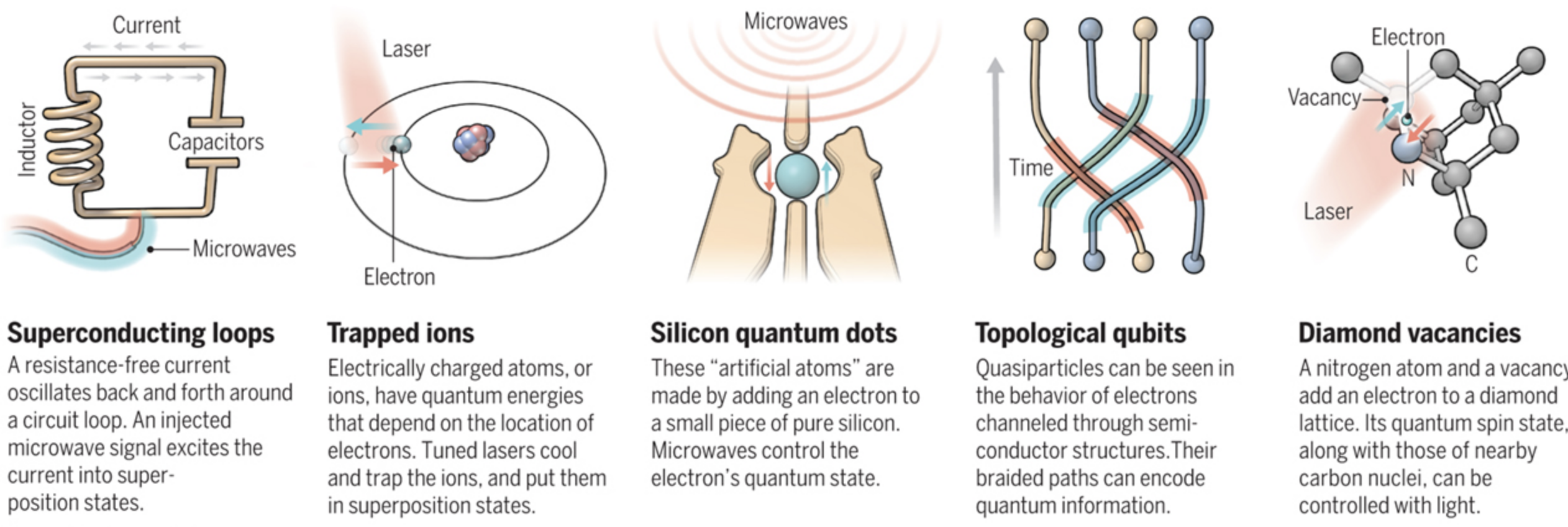
Understanding Quantum Computing Quantum computing signifies a revolutionary advancement in computational technology, transcending the limitations imposed by classical physics and venturing into the domain governed by quantum mechanics. This innovative field bridges abstract theoretical physics with tangible technological applications, utilizing the unique behaviors of subatomic particles to process data at speeds far beyond those achievable […]

Read More →

How do chemistry and physics work together?

Overview of the Relationship Between Chemistry and Physics Chemistry and physics are not isolated scientific fields but rather interconnected disciplines that collectively deepen our understanding of the natural universe. Their intersection reveals fundamental principles governing matter and energy, forming the backbone of many scientific advancements. This synergy encourages a holistic approach to scientific exploration, fostering […]

Read More →

Is the Higgs boson present in every particle?

Definition of the Higgs Boson and Its Significance The Higgs boson is a fundamental particle intimately connected to the Higgs field, a pervasive energy field that exists throughout the universe. Discovered in 2012, this particle plays a pivotal role in the mechanism that endows certain elementary particles with mass. Understanding the Higgs boson requires exploring […]

Read More →

Do molecules have definite shapes?

Understanding Molecular Shape The investigation of molecular structure is a fundamental aspect of molecular chemistry and physical sciences. The question, “Do molecules have definite shapes?” opens a complex discussion that spans basic principles, experimental evidence, and theoretical models. This article aims to clarify the concept of molecular geometry and the factors that influence it, providing […]

Read More →

What is the standard model all about?

Definition of the Standard Model The Standard Model of particle physics is a comprehensive theoretical framework that describes the fundamental particles constituting matter and the forces that govern their interactions. It serves as the cornerstone of modern physics, providing a detailed map of the subatomic world and explaining how particles combine and interact to form […]

Read More →

What is the importance of atomic structures in chemistry?

Definition of Atomic Structure Atomic structure refers to the arrangement and composition of the smallest unit of matter-an atom-that retains the chemical properties of an element. It encompasses the nucleus, containing protons and neutrons, and the surrounding electrons organized in specific energy levels or orbitals. This structure forms the cornerstone of chemistry and influences the […]

Read More →