Can we ever freeze an object down to absolute zero?

Definition of Absolute Zero Absolute zero is the theoretical temperature point at which all classical molecular motion ceases. It is defined as 0 Kelvin (K), equivalent to -273.15 degrees Celsius (°C). At this temperature, particles are thought to reside in their lowest possible energy state, possessing no kinetic energy. This concept represents the ultimate lower […]

Read More →

Ozone’s Worst Enemy? The Asteroid Crash That Could Change Our Sky

Definition of Asteroid Impacts and Atmospheric Effects Asteroid impacts refer to collisions between Earth and spaceborne rocky bodies originating from the solar system’s formation. These events can trigger significant alterations in Earth’s atmosphere, particularly affecting the ozone layer-a vital shield that protects life by absorbing harmful ultraviolet (UV) radiation from the Sun. The disruption of […]

Read More →

The Additional Role of Biophysics in Biology: Seeing Life Through a Quantum Lens

Definition of Biophysics Biophysics is an interdisciplinary science that merges the principles of biology and physics to explore the complexities of living organisms. It applies physical laws and methodologies to investigate the structural and functional aspects of biological systems, providing a deeper understanding of life’s fundamental processes. Interdisciplinary Nature: Biophysics bridges biology and physics, enabling […]

Read More →

Quantum Hall Effect: Why Low Temperatures Unlock Strange States

Definition of the Quantum Hall Effect The Quantum Hall Effect (QHE) is a remarkable phenomenon observed in condensed matter physics, where the interplay between electric charge, magnetic fields, and quantum mechanics produces quantized conductance in two-dimensional electron systems. This effect becomes especially prominent at extremely low temperatures, revealing unique quantum states that challenge classical understanding […]

Read More →

What are some unexpected career paths for a physics major?

Definition A physics major traditionally conjures images of careers in research, education, or engineering. However, the discipline’s scope extends far beyond these conventional roles, offering a diverse array of interdisciplinary opportunities. These alternative career paths leverage the analytical, quantitative, and problem-solving skills developed through physics, opening doors to fields that may initially seem unrelated but […]

Read More →

When will quantum computers be publicly used?

Understanding Quantum Computing Quantum computing represents a revolutionary leap in computational technology, often compared to the transformative impact of the Internet’s emergence. Unlike classical computers that rely on binary bits, quantum computers utilize quantum bits, or qubits, which enable them to process vast amounts of information simultaneously. This capability stems from the principles of quantum […]

Read More →

What is the strongest quantum computer in the world?

Understanding Quantum Computing Quantum computing represents a revolutionary shift in how information is processed, leveraging the principles of quantum mechanics to perform calculations far beyond the reach of classical computers. Unlike traditional bits that exist strictly as 0s or 1s, quantum bits, or qubits, can exist in multiple states simultaneously due to superposition. This unique […]

Read More →

What do ST ET and RT mean on a MRI scan?

Definition of Key MRI Timing Parameters Magnetic Resonance Imaging (MRI) relies on precise timing parameters to generate detailed images of the body’s internal structures. Among these, Repetition Time (RT), Echo Time (ET), and Short Tau (ST) are fundamental in shaping image contrast and diagnostic clarity. Repetition Time (RT): The duration between consecutive radiofrequency pulses targeting […]

Read More →

What is the smallest size for a functional particle accelerator?

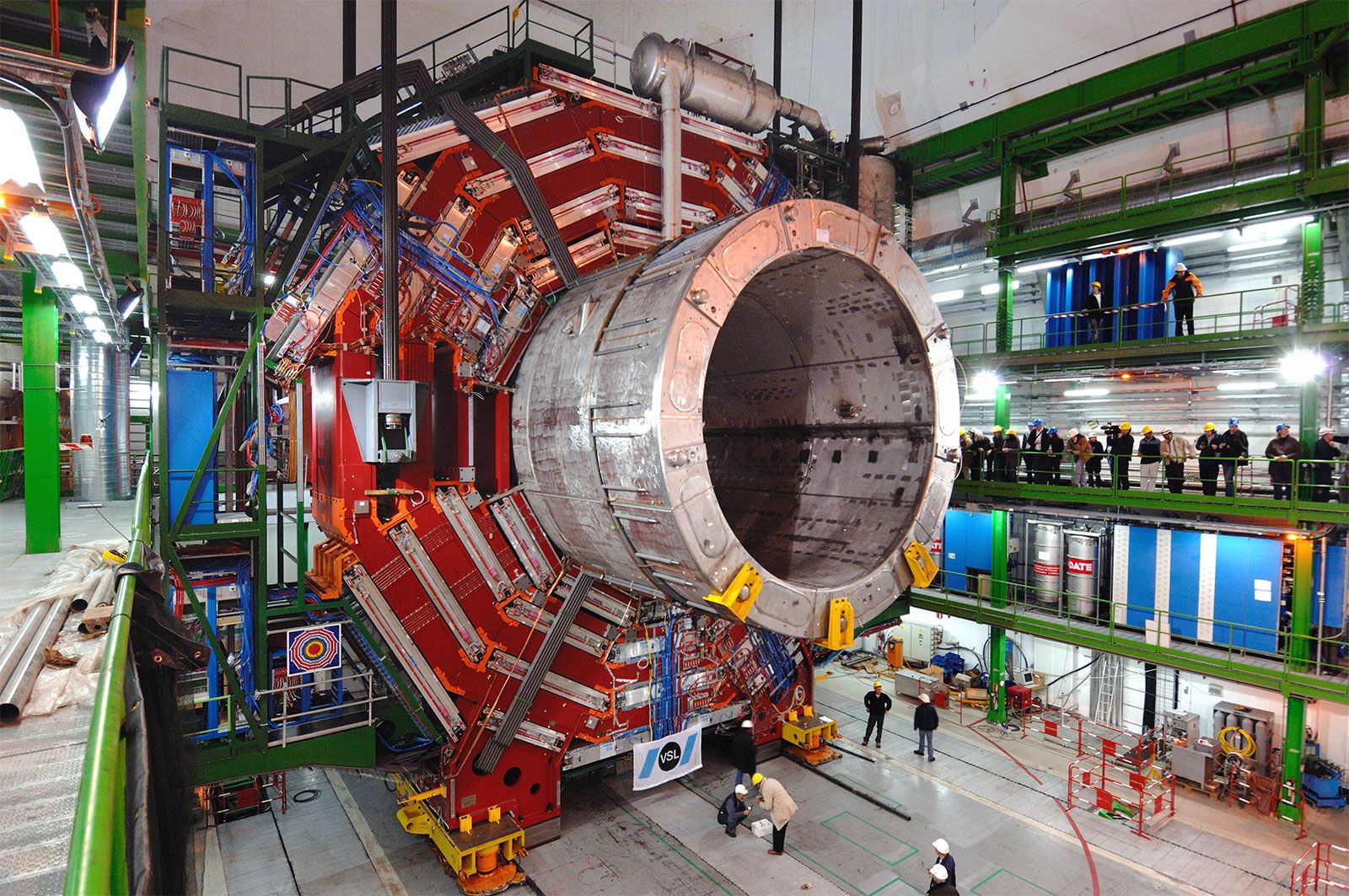
Definition of Particle Accelerators Particle accelerators are sophisticated devices fundamental to contemporary physics, designed to propel charged particles-such as electrons, protons, or ions-to extremely high velocities. These instruments enable scientists to investigate the basic building blocks of matter by facilitating high-energy collisions and interactions. The question of how compact a particle accelerator can be while […]

Read More →