
Short Answer
Definition of Single-Atom Electronics
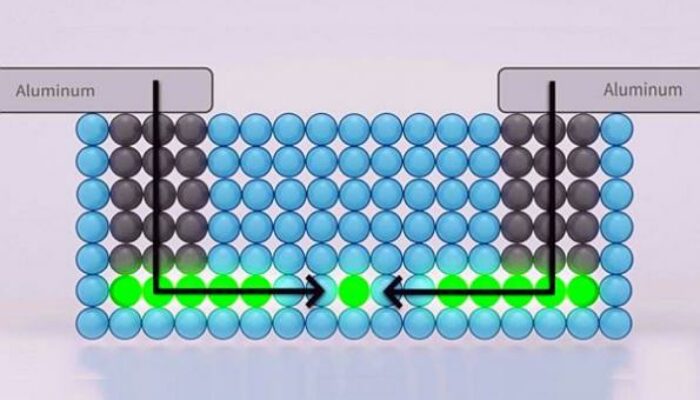
Single-atom electronics refers to the cutting-edge field of technology where individual atoms serve as the fundamental units for electronic components and logic operations. This approach represents a transformative shift from traditional semiconductor devices, leveraging quantum mechanical properties at the atomic scale to process and store information.
- Atomic-scale components:
Devices constructed from single atoms, enabling unprecedented miniaturization beyond conventional transistor limits. - Quantum mechanical foundation:
Utilizes phenomena such as quantum tunneling, superposition, and entanglement to control electronic behavior.
Historical Context and Limitations of Traditional Electronics
Conventional electronics have long relied on silicon-based transistors, which have steadily shrunk in size to enhance performance and integration density. However, as these components approach nanometer dimensions, classical physics imposes fundamental constraints. Issues like quantum tunneling-where electrons unpredictably pass through barriers-and thermal noise increasingly disrupt device reliability and efficiency.
These physical boundaries have spurred the search for alternative technologies capable of sustaining the trajectory of miniaturization and performance improvement, leading to the emergence of single-atom transistors as a promising candidate.
Mechanisms Behind Single-Atom Transistors
Single-atom transistors operate by precisely manipulating the electronic states of individual atoms to control current flow. Techniques such as scanning tunneling microscopy (STM) allow scientists to position and modify atoms with atomic-scale precision, while atomic layer deposition facilitates the construction of ultra-thin layers necessary for device fabrication.
This atomic-level control enables logic operations to be performed with minimal energy loss and maximal efficiency, akin to reducing a complex orchestra to a solo virtuoso performing with exquisite precision.
Advantages and Potential of Atomic-Level Logic
The adoption of single-atom electronics offers several compelling benefits:
- Enhanced computational density:
By shrinking device size to the atomic scale, it becomes feasible to pack vastly more logic elements into a given volume, potentially compressing entire data centers into compact, book-sized units. - Energy efficiency:
Smaller devices inherently consume less power, addressing the growing global demand for sustainable and low-energy computing solutions. - Quantum computing capabilities:
Single atoms can serve as qubits, the fundamental units of quantum computers, exploiting superposition and entanglement to perform complex calculations beyond the reach of classical systems.
Quantum Phenomena in Single-Atom Electronics
Quantum mechanics plays a pivotal role in the operation of single-atom devices. Key principles include:
- Superposition:
The ability of qubits to exist simultaneously in multiple states, enabling parallel computation. - Entanglement:
A phenomenon where qubits become interconnected such that the state of one instantly influences another, regardless of distance, facilitating complex information processing.
Harnessing these effects could revolutionize fields such as cryptography, materials science, and complex system simulations.
Challenges in Developing Single-Atom Electronics
Despite its promise, the path to practical single-atom electronics is laden with obstacles:
- Atomic stability:
Maintaining the position and integrity of single atoms on substrates is technically demanding due to thermal vibrations and environmental disturbances. - Manufacturing integration:
Existing semiconductor fabrication methods are ill-equipped for atomic-scale precision, necessitating novel interdisciplinary approaches combining physics, materials science, and engineering. - Scalability:
Transitioning from laboratory prototypes to mass production remains a significant hurdle.
Societal and Ethical Implications
The widespread adoption of single-atom electronics could profoundly impact society by:
- Reducing energy consumption:
Lower power requirements could mitigate environmental concerns related to climate change and resource depletion. - Enabling advanced technologies:
Enhanced computing power may accelerate innovation across healthcare, telecommunications, and other sectors. - Raising ethical questions:
The immense computational capabilities necessitate careful consideration of cybersecurity, privacy, and the potential for pervasive surveillance.
It is crucial for policymakers, technologists, and society to collaboratively establish frameworks that ensure these advancements promote equitable and responsible use.
Real-World Applications and Future Outlook
While still in developmental stages, single-atom electronics hold promise for transformative applications:
- Quantum computing:
Single-atom qubits could enable powerful quantum processors capable of solving complex problems in seconds that classical computers would take millennia to address. - Miniaturized data centers:
Dramatically reduced physical footprints for data storage and processing facilities. - Energy-efficient devices:
Consumer electronics and industrial systems with significantly lower power consumption.
As research progresses, these technologies may redefine the landscape of information technology and computational science.
Conclusion: Embracing the Atomic Frontier
The exploration of single-atom electronics marks a revolutionary step in the evolution of computing technology. By merging the principles of quantum mechanics with precise atomic manipulation, this field promises to deliver unprecedented efficiency, computational power, and sustainability. However, realizing its full potential requires overcoming substantial technical challenges and addressing ethical considerations to ensure that these innovations benefit humanity as a whole. The journey into atomic-level logic invites us to envision a future where science and innovation converge to reshape our technological horizons.
FAQ
What is single-atom electronics?
Single-atom electronics refers to technology that uses individual atoms as the fundamental units for electronic components and logic operations, enabling unprecedented miniaturization and efficiency.
What are the advantages of single-atom electronics?
Advantages include enhanced computational density, energy efficiency, and the potential for quantum computing capabilities.
What challenges exist in developing single-atom electronics?
Challenges include maintaining atomic stability, integrating manufacturing processes, and scalability from prototypes to mass production.





Leave a Reply