
Short Answer
Overview of Celestial Sciences
When we look up at the night sky, we are met with a vast and awe-inspiring panorama filled with stars, nebulae, and distant galaxies. This immense cosmic landscape sparks curiosity and wonder, prompting questions that bridge the realms of science and philosophy. Within this grand cosmic context, three closely related yet distinct scientific disciplines-astronomy, astrophysics, and cosmology-endeavor to provide answers. Each field offers a unique lens through which to explore the universe, catering to different intellectual interests and approaches to understanding the cosmos.
Definition and Scope of Astronomy
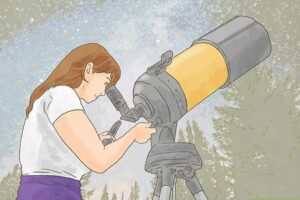
Astronomy is the oldest of these disciplines, tracing its origins back to ancient civilizations that sought to map and explain the movements of celestial bodies. It is primarily an observational science focused on gathering and analyzing data about stars, planets, comets, and other objects in space. Astronomers chart constellations, calculate orbital paths, and use telescopes to study light emitted from objects located millions of light-years away. This field is empirical and descriptive, answering fundamental questions such as:
- What: Identifying the various celestial objects populating the sky.
- Where: Determining the positions and distances of these objects relative to Earth.
Astrophysics: Exploring the Mechanics of the Universe
Astrophysics builds upon astronomy by integrating principles of physics to understand the underlying mechanisms that govern celestial phenomena. It seeks to answer the “how” and “why” questions, such as how stars produce energy or why galaxies exhibit particular rotational behaviors. This discipline moves beyond observation to investigate the fundamental forces-gravity, electromagnetism, nuclear fusion-that drive the dynamics of the cosmos. Astrophysicists utilize theoretical models, computer simulations, and a broad range of physics concepts, from classical mechanics to quantum theory, to explain processes that are often not directly observable.
Cosmology: The Study of the Universe as a Whole
Cosmology examines the universe on the largest scale, addressing profound questions about its origin, evolution, and ultimate destiny. It combines theoretical physics, observational astronomy, and philosophical inquiry to construct models of the cosmos, including the Big Bang, cosmic inflation, dark matter, and dark energy. Cosmologists analyze data from sources such as the cosmic microwave background radiation and galaxy redshifts to understand the universe’s structure and temporal development. Unlike astronomy and astrophysics, which focus on specific objects or mechanisms, cosmology contemplates the entirety of space-time and its future trajectory.
Choosing Your Path: Interests and Intellectual Styles
The decision to pursue astronomy, astrophysics, or cosmology depends largely on your personal interests and preferred modes of inquiry:
- Astronomy: Ideal for those who enjoy direct observation, data collection, and mapping the night sky. It involves practical work with telescopes and advanced detection technologies across various wavelengths.
- Astrophysics: Suited for individuals fascinated by theoretical problem-solving and the application of physics and mathematics to explain cosmic phenomena.
- Cosmology: Appeals to those intrigued by big-picture questions about the universe’s origin and fate, blending philosophy with cutting-edge scientific theories.
Interconnections Among the Disciplines
These three fields are interconnected and often overlap in practice. Many scientists transition between them as their interests evolve. For example, astronomers frequently develop astrophysical expertise to interpret their observations, while cosmologists depend on both astronomy and astrophysics to test and refine their models. Together, they form a continuum of inquiry aimed at deepening our understanding of the cosmos.
Methodologies and Work Environments
The tools and settings associated with each discipline vary considerably:
- Astronomy: Often involves fieldwork at observatories located in remote or elevated areas to minimize atmospheric interference.
- Astrophysics: Typically conducted in computational laboratories, utilizing simulations and collaborating with experts in physics and engineering.
- Cosmology: Engages with large-scale international projects, such as space telescopes and particle accelerators, requiring interdisciplinary collaboration and theoretical modeling.
Why Understanding These Fields Is Important
Grasping the distinctions and connections between astronomy, astrophysics, and cosmology enriches our comprehension of the universe and our place within it. These disciplines collectively fuel scientific progress, technological innovation, and philosophical reflection. They inspire curiosity, foster intellectual rigor, and invite us to explore the profound mysteries of existence.
Common Misconceptions
Astronomy, astrophysics, and cosmology are interchangeable terms.
While related, each field has distinct focuses-astronomy emphasizes observation, astrophysics explains physical processes, and cosmology studies the universe’s large-scale structure and history.
Cosmology is purely speculative and lacks empirical basis.
Cosmology relies heavily on observational data and rigorous theoretical frameworks to develop and test models of the universe.
Conclusion: Embracing the Cosmic Journey
Choosing between astronomy, astrophysics, and cosmology is less about fitting into a rigid category and more about embarking on a dynamic intellectual adventure. Each path offers unique challenges and rewards, inviting you to engage with the universe in different ways-whether through direct observation, theoretical analysis, or philosophical exploration. Ultimately, these fields transform our perception of the night sky from a mere collection of stars into a profound narrative of cosmic complexity and wonder.
FAQ
What is the difference between astronomy and astrophysics?
Astronomy focuses on observing celestial objects, while astrophysics applies physics to understand the processes governing those objects.
Can someone transition between astronomy, astrophysics, and cosmology?
Yes, many scientists move between these fields as their interests evolve.
Leave a Reply