

Short Answer
Understanding Astronomy: An Overview
Astronomy, the scientific study of celestial bodies and the universe, has fascinated humanity for centuries. It combines empirical research with theoretical frameworks to explore the vast cosmos, unraveling the mysteries of stars, planets, galaxies, and cosmic phenomena. This discipline not only advances our comprehension of the universe’s structure and origins but also confronts the challenge of separating scientifically validated facts from widespread myths and misconceptions.
Core Branches of Modern Astronomy
Contemporary astronomy encompasses various specialized fields, each contributing unique insights and methodologies:
- Observational Astronomy:
This branch relies on sophisticated instruments such as ground-based and space telescopes to collect data on celestial objects. Techniques like spectrometry and photometry analyze the light emitted or reflected by stars, planets, and other cosmic entities, enabling precise measurements and discoveries including supernovae, exoplanets, and cosmic microwave background radiation. - Theoretical Astronomy:
Complementing observations, this field develops models and simulations to explain astronomical phenomena, predict cosmic events, and interpret data within the framework of physics and mathematics. - Astrophysics:
Focused on the physical properties and underlying processes of celestial bodies, astrophysics bridges astronomy with fundamental physics to understand the mechanics of the universe.
Distinguishing Scientific Facts from Astronomical Myths
The proliferation of misinformation in astronomy is often fueled by sensational media and rapid online dissemination. Popular pseudoscientific claims, such as the existence of a rogue “Planet X” or “Nibiru” threatening Earth, lack empirical evidence and are frequently based on misinterpretations of ancient texts or speculative storytelling. These narratives, while captivating, do not withstand rigorous scientific scrutiny and often rely on anecdotal or selectively chosen data.
Critical evaluation and skepticism are essential tools for discerning credible astronomical information. Emphasizing evidence-based research helps prevent the spread of unfounded theories and promotes a clearer understanding of cosmic realities.
Historical Evolution of Astronomical Thought
The development of astronomy is marked by paradigm shifts that have reshaped humanity’s cosmic perspective. A landmark example is the transition from the geocentric model, which placed Earth at the universe’s center, to the heliocentric model introduced by Nicolaus Copernicus. This revolutionary idea, initially met with resistance and skepticism, exemplifies the scientific process of challenging established beliefs through testable and falsifiable hypotheses.
Such historical milestones highlight the dynamic nature of scientific progress and the importance of maintaining an open yet critical approach to new astronomical theories.
Technological Advances and Their Impact on Astronomy
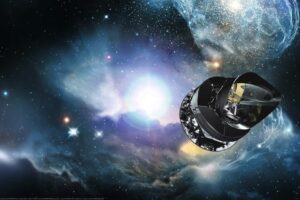
Technological innovation has dramatically expanded our ability to explore the universe. The deployment of space-based observatories like the Hubble Space Telescope has resolved longstanding mysteries, such as the discovery of dark energy and refined measurements of the universe’s expansion rate. These advancements have transformed astronomy into a data-rich science, necessitating collaboration across disciplines including physics, computer science, and data analytics to interpret complex datasets effectively.
Public Engagement and Combating Misinformation
Enhancing public understanding of astronomy is vital in an era saturated with information. Educational initiatives such as planetarium exhibitions, public lectures, and interactive online platforms foster scientific literacy and critical thinking. Citizen science projects and virtual observatories empower individuals to participate in authentic research, democratizing access to astronomical data and encouraging informed discourse.
These outreach efforts play a crucial role in countering misinformation by equipping the public with the tools to evaluate astronomical claims critically.
Ethical Considerations in Astronomy Communication
Responsible dissemination of astronomical discoveries requires careful differentiation between verified findings and speculative interpretations. For example, while the detection of exoplanets is a confirmed scientific achievement, assertions about their habitability often involve significant uncertainties. Ethical communication demands transparency about these nuances to prevent misconceptions and maintain public trust in scientific research.
Philosophical Reflections on the Cosmos
Astronomy also intersects with philosophical inquiry, prompting profound questions about humanity’s place in the universe. Cosmological theories explore themes of determinism, randomness, and the nature of existence, inviting contemplation beyond empirical data. This intellectual synthesis enriches both scientific understanding and existential perspectives, fostering a holistic appreciation of the cosmos.
Conclusion: Navigating the Universe of Knowledge
The quest to comprehend the universe requires a balanced approach that rigorously distinguishes between factual evidence and speculative fiction. Through interdisciplinary collaboration, technological innovation, and effective public communication, the astronomical community continues to unravel cosmic truths while dispelling myths. This thoughtful engagement ensures that humanity’s journey through the celestial expanse remains grounded in knowledge, curiosity, and critical inquiry.
FAQ
What is astronomy?
Astronomy is the scientific study of celestial bodies and the universe, exploring stars, planets, galaxies, and cosmic phenomena.
How can I distinguish between astronomical facts and myths?
Critical evaluation, skepticism, and reliance on evidence-based research help differentiate credible astronomical information from myths.

Leave a Reply