
Short Answer
Definition and Overview
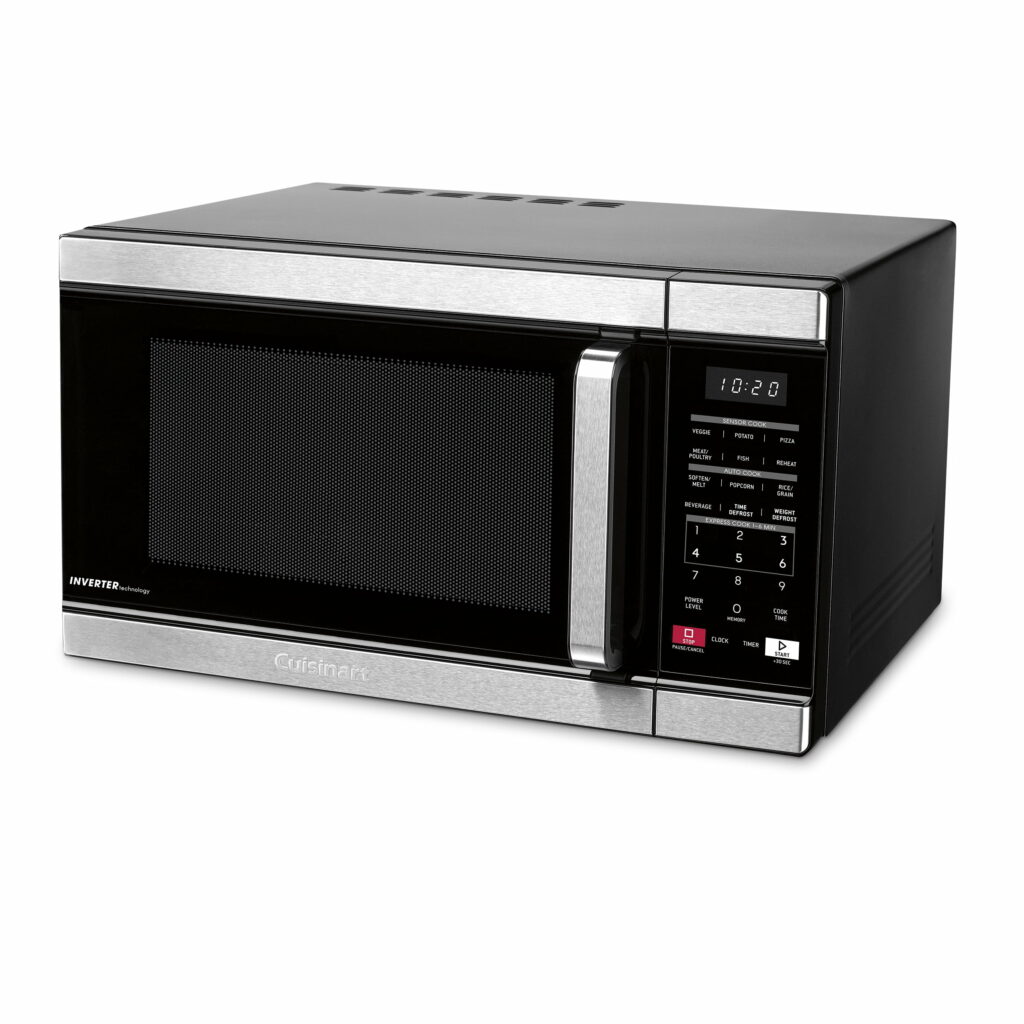
Microwave ovens and particle accelerators are two distinct technologies that both utilize electromagnetic principles but serve vastly different functions. Microwave ovens are common kitchen appliances designed for rapid food heating using microwave radiation. Particle accelerators, on the other hand, are sophisticated scientific instruments used to propel charged particles to near-light speeds for research in fundamental physics.
Fundamental Principles of Microwave Ovens
Microwave ovens operate by emitting electromagnetic waves within the microwave frequency range, typically between 300 MHz and 300 GHz. These waves interact primarily with water molecules in food, causing them to vibrate and generate heat through a process known as dielectric heating. This mechanism allows for quick and efficient cooking or reheating, making microwave ovens a staple in modern households.
- Electromagnetic Radiation:
Microwaves are a form of non-ionizing radiation that excites polar molecules, especially water, to produce thermal energy. - Magnetron:
The key component that converts electrical energy into microwave radiation, enabling the cooking process.
Core Concepts Behind Particle Accelerators
Particle accelerators are advanced devices used primarily in nuclear and high-energy physics to accelerate charged particles such as electrons or protons. These particles are propelled to velocities approaching the speed of light using powerful electromagnetic fields. The accelerated particles are then collided to study fundamental forces, subatomic particles, and the origins of matter.
- Acceleration Mechanism:
Electromagnetic fields within resonant cavities impart kinetic energy to charged particles. - Scientific Purpose:
High-energy collisions reveal new particles and validate theoretical models like the Standard Model of particle physics.
Electromagnetic Waves: A Shared Foundation
Both microwave ovens and particle accelerators rely on electromagnetic waves, but their applications and operational contexts differ significantly. Microwave ovens use microwaves generated by a magnetron to heat food, whereas particle accelerators employ microwave cavities that resonate at specific frequencies to accelerate particles.
- Microwave Ovens:
Use microwaves to agitate water molecules, producing heat. - Particle Accelerators:
Utilize microwave cavities to create strong electromagnetic fields that increase particle velocity.
Frequency and Energy Differences
The frequency and energy levels of microwaves used in these devices vary greatly, influencing their respective functions. Microwave ovens operate at relatively low frequencies suitable for heating, while particle accelerators use higher frequency microwaves to impart significant kinetic energy to particles.
- Microwave Oven Frequencies:
Typically around 2.45 GHz, optimized for dielectric heating. - Particle Accelerator Frequencies:
Higher frequencies that enable efficient particle acceleration and energy transfer.
Interaction Mechanisms Within Each Device
The way electromagnetic waves interact with matter in microwave ovens and particle accelerators highlights their fundamental differences. In microwave ovens, energy absorption causes molecular vibrations that generate heat. In contrast, particle accelerators manipulate particles through electromagnetic forces governed by quantum electrodynamics, leading to high-energy collisions and the creation of new subatomic phenomena.
- Microwave Oven Interaction:
Thermal excitation of water molecules resulting in heat production. - Particle Accelerator Interaction:
Acceleration and collision of particles governed by fundamental physical laws.
Safety Considerations
Both technologies incorporate safety measures tailored to their operational risks. Microwave ovens are designed to contain radiation within the cooking chamber to protect users, while particle accelerators implement rigorous shielding and protocols to safeguard personnel and the environment from high-energy particles.
- Microwave Oven Safety:
Enclosed design prevents microwave leakage, protecting biological tissues. - Particle Accelerator Safety:
Extensive shielding and controlled access limit exposure to radiation and particle emissions.
Comparative Insights and Technological Significance
Exploring the relationship between microwave ovens and particle accelerators reveals the versatility of electromagnetic waves across diverse applications. While microwave ovens exemplify user-friendly, everyday technology, particle accelerators represent the pinnacle of complex scientific engineering. This comparison underscores how similar physical principles can be harnessed for vastly different purposes, from culinary convenience to groundbreaking scientific discovery.
Why Understanding This Distinction Matters
Recognizing the differences and commonalities between these devices enhances our appreciation of technological innovation. It highlights the adaptability of electromagnetic phenomena and the spectrum of engineering challenges, from simple household appliances to intricate research instruments. This understanding fosters informed perspectives on technology’s role in both daily life and scientific advancement.
FAQ
What is the difference between microwave ovens and particle accelerators?
Microwave ovens use microwaves to heat food by agitating water molecules, while particle accelerators use electromagnetic fields to propel charged particles to high speeds for scientific experiments.
Can microwave ovens accelerate particles like particle accelerators?
No, microwave ovens do not accelerate particles to high speeds; their microwaves are designed solely for heating purposes.
Are the microwaves used in ovens and accelerators the same?
Both use microwaves, but at different frequencies and intensities tailored to their specific functions.






Leave a Reply