
Short Answer
Understanding the Nature of Atoms
The fundamental question of whether atoms are composed of particles or waves lies at the core of modern scientific exploration. This inquiry extends beyond physics, captivating thinkers across disciplines by challenging our basic understanding of matter and energy. It invites a profound examination of reality at the microscopic scale, urging us to rethink how we perceive the building blocks of the universe.
Classical Atomic Model
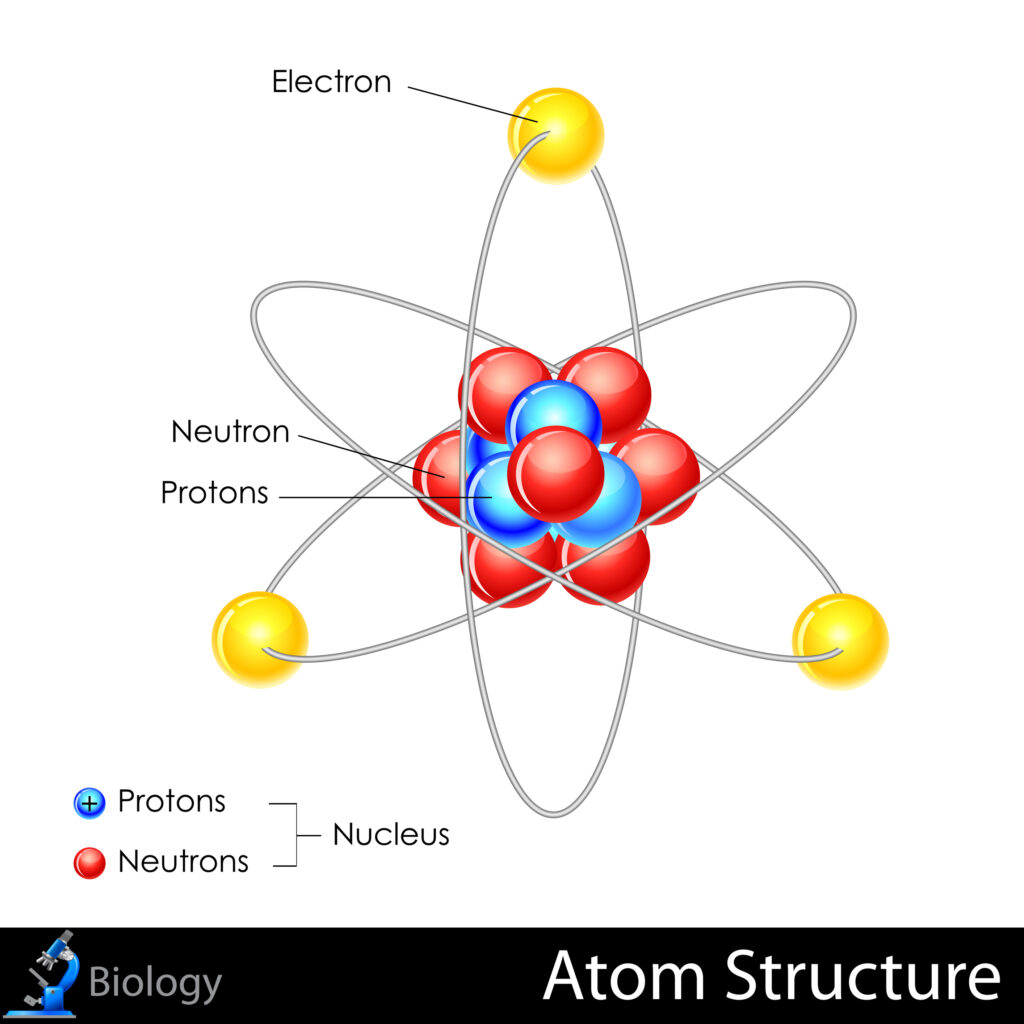
Historically, atoms have been viewed as the smallest units of matter. The conventional model describes an atom as a dense nucleus, containing protons and neutrons, encircled by electrons moving in defined orbits. This analogy likens the atom to a miniature solar system, where electrons revolve around the nucleus much like planets orbit the sun. While this model provides a foundational understanding, it oversimplifies the true complexity of atomic structure.
Wave-Particle Duality: A Quantum Perspective
Quantum mechanics introduces the concept of wave-particle duality, which fundamentally challenges the clear-cut distinction between particles and waves. According to this principle, subatomic entities such as electrons exhibit characteristics of both particles and waves, depending on the context of observation. This duality is vividly demonstrated by the famous double-slit experiment, where electrons passing through two narrow slits produce an interference pattern typical of waves. However, when an attempt is made to observe which slit an electron passes through, the interference pattern vanishes, and electrons behave like discrete particles. This paradox highlights the complex and often counterintuitive nature of atomic constituents.
The Role of the Wave Function in Quantum Mechanics
Central to understanding wave-particle duality is the wave function, a mathematical expression developed by Erwin Schrödinger. The wave function describes the probability distribution of an electron’s position and momentum, encapsulating the inherent uncertainty in quantum systems. Instead of predicting exact outcomes, it provides a probabilistic framework where particles exist in a superposition of states until measured. This concept revolutionizes classical physics by introducing fundamental unpredictability at the atomic level.
Quarks: The Building Blocks Within the Nucleus
Delving deeper into atomic structure reveals that protons and neutrons themselves are composed of smaller particles called quarks. These quarks are never found in isolation but are permanently confined within nucleons by the strong nuclear force. The interactions among quarks add another layer of complexity to atomic architecture. An open question remains whether quarks also exhibit wave-particle duality or if this phenomenon is exclusive to certain fundamental particles.
Implications of Wave-Particle Duality in Chemistry and Materials Science
The wave-like behavior of electrons is not just a theoretical curiosity; it has practical consequences in fields such as chemistry and materials science. Electron wave functions determine how atoms bond to form molecules, influence electrical conductivity, and affect magnetic properties. Understanding these wave characteristics is essential for explaining the behavior of materials and the emergence of complex structures from atomic interactions.
Technological Innovations Inspired by Quantum Behavior
The dual nature of atomic particles underpins groundbreaking technologies in the realm of quantum mechanics. Quantum computing leverages superposition and entanglement to perform computations far beyond the capabilities of classical computers. Similarly, quantum cryptography uses these principles to enable highly secure communication channels. These advancements demonstrate how insights into atomic wave-particle duality can transform information technology and security.
Philosophical Reflections on Atomic Duality
The exploration of whether atoms are particles or waves extends into philosophical territory, prompting questions about the nature of observation and reality. The act of measurement appears to influence the behavior of quantum systems, blurring the line between observer and observed. This challenges traditional notions of objectivity and invites contemplation on the relationship between consciousness and the physical world.
Broader Significance and Human Connection
Understanding atomic duality also has profound implications for how we view ourselves and our place in the cosmos. Since all matter, including living beings, is composed of atoms exhibiting wave-particle duality, this knowledge connects us intimately to the fundamental processes of the universe. It encourages reflection on the interconnectedness of all things and the shared quantum heritage that underlies existence.
Conclusion: Embracing the Dual Nature of Atoms
The question of whether atoms are particles or waves transcends simple categorization. Modern physics reveals that atoms embody both aspects simultaneously, defying classical binaries. Recognizing and embracing this duality opens new frontiers in scientific research and deepens our appreciation for the intricate complexity of the universe. This ongoing inquiry exemplifies the relentless human curiosity that drives discovery and enriches our understanding of reality.
FAQ
What is wave-particle duality?
Wave-particle duality is a principle in quantum mechanics stating that particles such as electrons exhibit both wave-like and particle-like properties.
How do electrons behave in an atom?
Electrons behave as both particles and waves, existing in probabilistic clouds described by wave functions rather than fixed orbits.
What does the double-slit experiment show about electrons?
It demonstrates that electrons create interference patterns like waves but act as particles when observed or measured.
What are quarks?
Quarks are fundamental particles that combine to form protons and neutrons within the atomic nucleus.
Why is this duality important?
Understanding wave-particle duality is crucial for explaining atomic behavior and developing quantum technologies like quantum computing.




Leave a Reply