
Short Answer
Definition
This article explores the intriguing intersection between political ideology-specifically communism-and fundamental concepts in physics such as particle dynamics and thermodynamics. It draws parallels between Marxist doctrines and the principles governing quantum mechanics, using scientific metaphors to shed light on socio-political phenomena like class struggle, wealth distribution, and collective identity.
Indistinguishability in Physics and Society
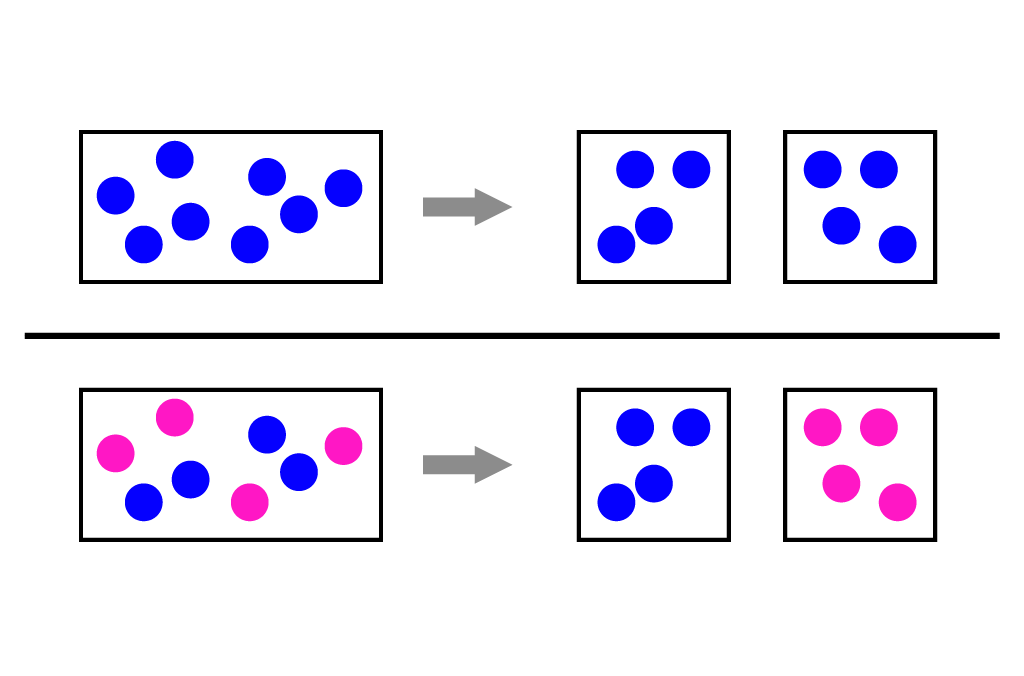
Central to this discussion is the concept of indistinguishability, a key idea in statistical mechanics exemplified by the Gibbs paradox. In physics, indistinguishable particles behave differently from distinguishable ones, challenging traditional notions of identity. This principle serves as a metaphor for social classes, where individuals within a group may be treated as interchangeable units, reflecting the collectivist ideals of communism versus the individual distinctions emphasized in capitalist societies.
- Gibbs Paradox:
Highlights how treating particles as identical or unique affects entropy calculations, symbolizing the tension between individuality and collective identity. - Social Parallel:
Class members may be perceived as uniform contributors to a system, mirroring the indistinguishability of particles in quantum statistics.
Particle Interactions and Political Solidarity
The dynamics of particle interactions offer a compelling analogy for solidarity within communist frameworks. Just as particles influence each other through forces in a lattice, individuals in a collectivist society engage in reciprocal relationships, contributing to and benefiting from the communal whole. This comparison raises questions about determinism in both physics and politics-whether political outcomes can be as probabilistic and uncertain as particle behaviors.
Thermodynamics and Socio-Political Systems
Thermodynamic laws, particularly the Second Law of Thermodynamics, provide a useful lens to examine capitalist and communist systems. The tendency toward entropy in physical systems parallels the concentration of wealth and social disorder in capitalist economies. Conversely, communism aspires to establish a new, ordered social structure characterized by equality and shared resources. Yet, this raises critical inquiries about whether such a system can resist entropy or if it will succumb to uniformity that suppresses individual distinctiveness.
Wave-Particle Duality and Political Identity
The scientific principle of wave-particle duality, where particles exhibit both fluid and localized properties, mirrors the political challenge of balancing collective unity with individual uniqueness. Communism aims to harmonize these dual aspects by fostering a collective identity without erasing personal individuality, posing the question of how to maintain this equilibrium within a socio-political context.
Historical Realities and Ideological Challenges
Historical attempts to implement communism reveal the complexities and contradictions inherent in the ideology. While promoting equality, many regimes have devolved into authoritarianism, undermining their foundational goals. This unpredictability resembles the uncertain and fragile nature of quantum states, emphasizing the difficulty of sustaining idealistic socio-political constructs without encountering paradoxes and failures.
Philosophical Reflections on Identity and Collectivism
The metaphor of a “Nobel for Communism” intertwined with particle physics invites a nuanced reflection on the dual nature of political movements striving for equality. Like particles that embody both order and chaos, these movements grapple with the tension between collective aspirations and individual identities. This synthesis encourages deeper contemplation of how societies can balance unity with diversity.
Why This Intersection Matters
Understanding the parallels between physics and political ideology enriches our comprehension of both fields. It highlights the complexities of social organization and the challenges of achieving equitable systems. By applying scientific concepts to political theory, we gain fresh perspectives on enduring questions about identity, community, and the dynamics of change.
Summary
The fusion of theoretical physics and political thought reveals a landscape filled with paradoxes and intricate relationships. The analogy of indistinguishable particles serves as a powerful symbol for the struggles within capitalism and communism, where the forces of individuality and collective identity continuously interact. As society advances, insights from this interdisciplinary approach may guide our pursuit of a balanced coexistence between personal uniqueness and communal solidarity.
FAQ
What is the main theme of the article?
The article explores the parallels between communism and principles of physics, such as particle dynamics and thermodynamics.
How does the article relate physics to politics?
It uses scientific metaphors to analyze socio-political structures and ideologies, particularly focusing on collectivism and individuality.



Leave a Reply