
Short Answer
Understanding Gravity in a Cosmic Context
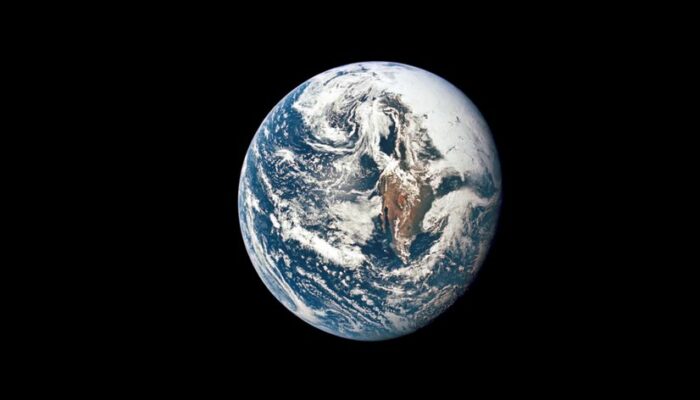
Gravity is the fundamental force that anchors all matter to Earth, exerting a constant pull of approximately 9.8 meters per second squared. It governs the movement of oceans, atmospheric patterns, and tectonic shifts, while also shaping the evolution of life by providing a stable environment for biological adaptation. However, gravity’s influence in the universe is not uniform; it diminishes with distance, allowing celestial bodies to orbit and interact through complex gravitational relationships rather than a constant, omnipresent force.
Conceptualizing a Universe with Uniform Gravity
Imagine a cosmos where gravity is evenly distributed throughout space, mirroring the gravitational pull we experience on Earth at every point in the universe. This radical shift would transform the nature of space itself, replacing the vast emptiness with a persistent gravitational field. Such a scenario challenges our understanding of physics, biology, and technology, prompting us to reconsider how life and exploration would adapt under these conditions.
Implications for Space Exploration and Movement
In a universe saturated with Earth-like gravity, the freedom of movement currently enjoyed by astronauts would be severely restricted. The sensation of weightlessness during spacewalks would vanish, replaced by the constant effort required to overcome gravity’s pull. Maneuvering in space would resemble terrestrial exertion, with every motion demanding significant energy, effectively eliminating the ease of microgravity environments.
Engineering Challenges in a Gravity-Dense Cosmos
Spacecraft design would face unprecedented challenges in a gravity-pervaded environment. Propulsion systems would need to generate far greater thrust to counteract the continuous gravitational force, making launches and orbital insertions more energy-intensive. Traditional orbital mechanics, which rely on the balance of gravitational forces between celestial bodies, would be disrupted. Instead of stable orbits, objects would experience chaotic trajectories, pulled simultaneously from all directions, complicating navigation and mission planning.
Effects on Cosmic Structures and Stellar Evolution
The presence of uniform gravity throughout space would profoundly influence the formation and behavior of stars, planets, and galaxies. Stellar lifecycles might be altered as the persistent gravitational field interacts with local mass, potentially affecting fusion processes and the stability of celestial bodies. The vast cosmic void could become a dynamic arena where gravitational forces continuously shape matter distribution, possibly leading to new equilibrium states between gravity and other fundamental forces.
Biological Adaptations to Constant Gravity
Life evolving under a universal gravitational field would face unique physiological demands. On Earth, gravity influences cardiovascular function, bone density, and muscle strength. In microgravity, humans experience muscle atrophy and bone loss, but a constant Earth-like gravity in space would impose continuous physical stress. Organisms might develop robust, gravity-adapted anatomies prioritizing strength and stability over agility, potentially giving rise to life forms fundamentally different from those on Earth or in microgravity environments.
Reevaluating Physical Laws and Theories
The introduction of a uniform gravitational field independent of mass challenges existing physical theories, including general relativity, which describes gravity as the curvature of spacetime caused by mass and energy. A constant gravity field throughout the cosmos suggests new physics beyond current models, possibly hinting at additional dimensions or forces. This hypothetical framework invites speculation about alternate universes and compels physicists to revisit foundational principles governing the universe.
Societal and Cultural Transformations in Space Travel
The human experience of space would be fundamentally altered by pervasive gravity. The allure of weightless space tourism and the poetic freedom of floating astronauts would be replaced by the demanding reality of constant gravitational resistance. Space missions would require greater physical endurance and innovative technologies, reshaping narratives of heroism and exploration into stories of perseverance against an unyielding force.
Potential Advantages in a Gravity-Rich Environment
Despite the challenges, a gravity-filled cosmos could offer new opportunities. Construction and assembly of space structures might become more manageable, as components would have predictable weights, facilitating precision engineering. Resource aggregation could differ significantly, enabling novel mining techniques and energy generation methods that leverage the constant gravitational pull, potentially revolutionizing space industry and infrastructure.
The Broader Significance of Gravity’s Distribution
This thought experiment highlights the delicate balance of forces that shape our universe. The localized nature of gravity allows for the dynamic interplay of celestial mechanics, biological evolution, and technological advancement. Imagining a cosmos with uniform Earth-like gravity underscores how subtle variations in fundamental forces can dramatically alter existence, reminding us that the universe’s intricate equilibrium is essential to the diversity and complexity of life and matter.
FAQ
What would happen to space exploration if gravity was uniform?
Space exploration would become more challenging as the sensation of weightlessness would disappear, requiring significantly more energy for movement and navigation.
How would life adapt to constant Earth-like gravity?
Life forms would likely evolve to develop stronger anatomies to cope with the continuous physical stress imposed by constant gravity.
What engineering challenges would arise in a gravity-rich cosmos?
Spacecraft would need to generate greater thrust to counteract constant gravity, complicating launches and orbital maneuvers.
How could a gravity-filled cosmos impact societal structures?
The human experience and narratives of space travel would shift, focusing more on endurance and technological innovation rather than the allure of weightlessness.





Leave a Reply