
Short Answer
Definition of Gravity
Gravity is a fundamental natural phenomenon that causes objects with mass to attract one another. It is the invisible force responsible for holding planets in orbit, keeping objects anchored to the Earth, and shaping the large-scale structure of the universe. Despite its omnipresence and critical role in the cosmos, gravity remains one of the most intriguing and complex forces studied in physics.
- Universal Attraction:
Gravity acts between all masses, regardless of their size or location. - Invisible Force:
It cannot be seen directly but is inferred from its effects on matter and energy. - Cosmic Architect:
Gravity governs the motion of celestial bodies and the formation of galaxies.
Historical Perspectives on Gravity
The quest to understand gravity dates back centuries, with significant milestones marking its conceptual evolution. The 17th century saw Sir Isaac Newton’s groundbreaking work, which laid the foundation for classical mechanics by mathematically describing gravity as a force of attraction between masses.
Newton’s Law of Universal Gravitation
Newton observed everyday phenomena, such as falling apples and planetary orbits, and formulated a law stating that every mass attracts every other mass with a force proportional to the product of their masses and inversely proportional to the square of the distance between them. This law provided a powerful tool to predict and explain a wide range of physical behaviors both on Earth and in space.
Philosophical Challenges in Newtonian Gravity
Although Newton’s theory was remarkably successful, it introduced conceptual difficulties. The idea that two objects could exert forces on each other instantaneously across empty space without any medium was puzzling and led to philosophical debates. Newton himself refrained from speculating on the underlying cause of gravity, focusing instead on its mathematical description.
Einstein’s Revolutionary View: Gravity as Curved Spacetime
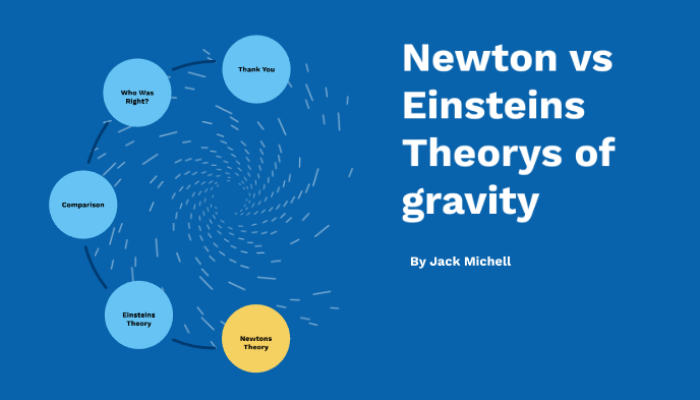
In the early 20th century, Albert Einstein transformed our understanding of gravity with his general theory of relativity. He proposed that gravity is not a force acting at a distance but a manifestation of the curvature of spacetime caused by mass and energy.
Conceptual Shift from Force to Geometry
Einstein’s insight replaced the Newtonian force model with a geometric interpretation: massive objects distort the fabric of spacetime, creating curves that dictate the motion of other objects. This can be visualized as a heavy ball creating a depression on a stretched rubber sheet, where smaller objects roll along the curved surface.
Implications of Spacetime Curvature
Objects follow the natural paths, or geodesics, within this curved spacetime, which we perceive as gravitational attraction. For example, Earth’s orbit around the Sun is a result of moving along the curved spacetime shaped by the Sun’s mass. The sensation of weight arises because our bodies resist this natural free-fall trajectory through curved spacetime.
Comparing Newtonian and Einsteinian Gravity
While Newton’s and Einstein’s theories may appear contradictory, they are complementary in scope and application. Newton’s laws provide highly accurate predictions for everyday phenomena involving relatively weak gravitational fields and low velocities. However, Einstein’s general relativity becomes essential in extreme conditions, such as near black holes or at speeds approaching that of light.
- Newtonian Gravity:
Treats gravity as an instantaneous force acting across space, effective for most practical purposes. - Einsteinian Gravity:
Describes gravity as the curvature of spacetime, necessary for understanding high-gravity and high-speed environments.
Novel Predictions of General Relativity
Einstein’s theory predicted phenomena such as gravitational waves-ripples in spacetime caused by accelerating masses-and the bending of light by gravity, both of which have been experimentally confirmed. These effects cannot be explained by Newtonian gravity.
Unresolved Questions and the Quest for Quantum Gravity
Despite the success of general relativity, the fundamental origin of gravity remains an open question. The theory describes how gravity operates but does not explain why spacetime curves or how gravity fits within the framework of quantum mechanics.
The Challenge of Unification
Modern physics seeks a unified theory that reconciles general relativity with quantum mechanics. This elusive framework, often referred to as quantum gravity, aims to describe gravity at the smallest scales and highest energies.
Current Theoretical Approaches
- Gravitons:
Hypothetical quantum particles that mediate the gravitational force, analogous to photons in electromagnetism. - String Theory:
A theoretical model proposing that fundamental particles are one-dimensional strings, potentially unifying all forces including gravity.
Gravity’s Significance in Science and Everyday Life
Gravity is not only a cornerstone of physics but also a force that profoundly influences our daily existence and the cosmos at large. It governs the structure and evolution of galaxies, dictates planetary orbits, and ensures that life remains grounded on Earth.
Understanding gravity has driven scientific progress from classical mechanics to modern cosmology, continually expanding our comprehension of the universe. It embodies the intricate relationship between matter, space, and time, symbolizing the profound mysteries that science strives to unravel.
Common Misconceptions About Gravity
Gravity is a force that acts instantaneously across space.
According to general relativity, gravity propagates at the speed of light through the curvature of spacetime.
Gravity only affects objects on Earth.
Gravity is a universal force influencing all masses throughout the cosmos, from apples to galaxies.
Einstein’s theory completely replaces Newton’s gravity.
Newton’s laws remain highly accurate for most everyday applications; Einstein’s theory extends understanding to extreme conditions.
FAQ
What is gravity?
Gravity is a fundamental force that attracts objects with mass towards one another.
How did Newton describe gravity?
Newton described gravity as a force of attraction between masses, encapsulated in his law of universal gravitation.
What is Einstein's view of gravity?
Einstein proposed that gravity is a curvature of spacetime caused by mass and energy, rather than a force acting at a distance.
What are gravitational waves?
Gravitational waves are ripples in spacetime caused by accelerating masses, predicted by Einstein’s general relativity.



Leave a Reply