
Short Answer
Definition of Gravity on Mars
Gravity is a fundamental force that governs the motion and interaction of celestial bodies throughout the universe. Specifically, the gravitational pull on a planet determines how objects move and behave on its surface. When discussing Mars, often dubbed the “Red Planet,” a common inquiry is whether its gravity closely resembles that of Earth. Although Mars shares some similarities with Earth in terms of size and composition, its gravitational force differs significantly, influencing both the environment and potential human activity on the planet.
Factors Influencing Martian Gravity
The strength of gravity on any planetary body depends primarily on two factors: its mass and radius. Earth, with a mass of approximately 5.97 × 1024 kilograms and an average radius of 6,371 kilometers, produces a surface gravitational acceleration of about 9.81 meters per second squared (m/s²). Mars, by contrast, has only about 10.7% of Earth’s mass and a radius near 3,390 kilometers, resulting in a surface gravity of roughly 3.71 m/s². This means Mars’ gravity is approximately 38% that of Earth’s, a substantial difference that affects everything from the movement of objects to atmospheric retention.
How Martian Gravity Affects Physical Movement and Human Physiology
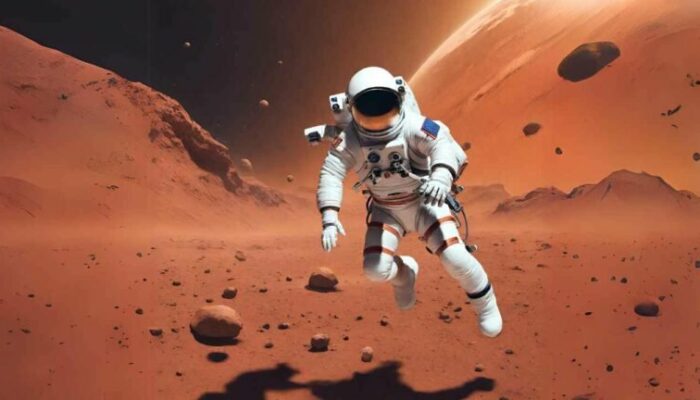
The reduced gravitational pull on Mars would create a distinctly different experience for humans compared to Earth. Movements such as walking, jumping, or lifting objects would feel lighter and more buoyant, almost as if performed in slow motion. This altered gravity not only changes everyday physical activities but also has significant implications for long-term human health. Extended exposure to lower gravity environments can lead to muscle weakening and bone density reduction, issues already observed in astronauts aboard the International Space Station who live in microgravity conditions.
Geological and Environmental Impact of Mars’ Gravity
Mars’ weaker gravity also influences its geological processes and landscape formation. Erosion, sediment transport, and volcanic activity operate differently under this diminished gravitational force, contributing to Mars’ distinctive features such as enormous shield volcanoes, vast canyon systems, and extensive dune fields. Additionally, the planet’s thin atmosphere, unable to be held tightly due to lower gravity, results in suspended dust particles and extreme weather patterns. Thus, gravity plays a crucial role in shaping both the physical terrain and climatic conditions on Mars.
Implications for Space Exploration and Colonization
The concept of Mars’ gravity being “similar” to Earth’s often arises in discussions about human colonization. While Mars’ gravity is significantly stronger than the near-weightlessness experienced on the Moon or in space stations, it remains only about 38% of Earth’s gravity. This intermediate level presents unique challenges for human adaptation, requiring innovative solutions such as artificial gravity systems, specialized exercise programs, and medical interventions to counteract the physiological effects of reduced gravity during prolonged stays.
Internal Structure and Gravitational Variations on Mars
Unlike Earth, which has a dense iron-nickel core making up a large portion of its volume, Mars possesses a smaller and possibly partially liquid core. This difference in internal composition affects the planet’s gravitational field, causing local variations in gravity that can influence navigation and landing operations. High-resolution gravimetric data collected by orbiters and landers have revealed these subtle anomalies, indicating that Mars’ gravity is more complex than a uniform surface value might suggest.
Why Understanding Mars’ Gravity Is Crucial
Gravity is a defining factor in the sustainability of ecosystems, atmospheric retention, structural engineering, and daily life activities. Comprehending the nature of Mars’ gravity is essential for advancing scientific knowledge and developing technologies that enable human survival beyond Earth. It challenges engineers and scientists to design habitats, machinery, and life-support systems that accommodate the unique gravitational environment, ultimately expanding humanity’s capacity for exploration and settlement in space.
Philosophical Reflections on Gravity and Life Beyond Earth
Considering Mars’ gravity invites a deeper appreciation of Earth’s unique conditions that support life. The constant and unyielding gravitational force on our planet governs natural phenomena from rainfall to biological rhythms. Recognizing that Mars operates under a markedly different gravitational regime highlights the delicate balance that sustains life on Earth and underscores the extraordinary nature of our home planet within the cosmos.
Summary and Future Perspectives
In summary, while Mars’ gravity shares a conceptual connection with Earth’s, it is distinctly different in magnitude and effect. At approximately 38% of Earth’s gravitational force, Mars presents an alien environment that challenges existing assumptions and encourages innovation in human adaptation strategies. Far from being a limitation, this difference serves as a catalyst for scientific inquiry and technological advancement, inspiring continued exploration and a deeper understanding of our place in the universe.
FAQ
What is the strength of gravity on Mars?
Mars' gravity is roughly 3.71 m/s², which is about 38% of Earth's gravity.
How does low gravity affect human health?
Prolonged exposure to lower gravity can lead to muscle weakening and bone density reduction.


Leave a Reply