
Short Answer
Definition of Earth’s Motion Through Space
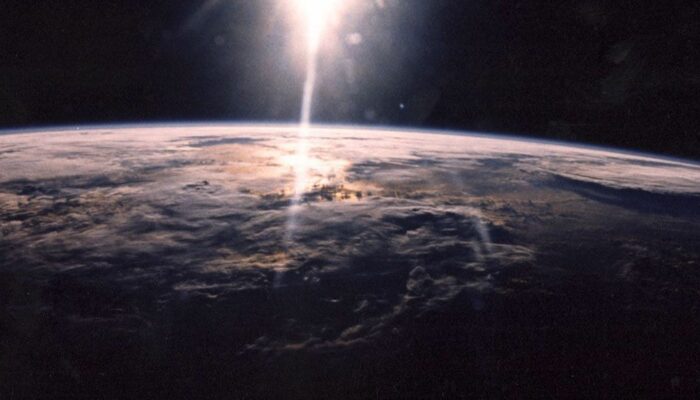
The idea that Earth is continuously “falling” through space might initially evoke images of a rapid plunge into an abyss. However, this concept is a poetic simplification of a far more complex cosmic phenomenon. In reality, Earth is engaged in a perpetual orbital motion governed by gravitational forces and the geometry of spacetime. Understanding this requires exploring how gravity, inertia, and the curvature of spacetime interact to create Earth’s stable path around the Sun.
Orbital Mechanics: Earth’s Continuous Journey
Earth travels around the Sun at an astonishing speed of about 67,000 miles per hour, maintaining this orbit for billions of years. This movement resembles a continuous fall toward the Sun, yet Earth never collides with it. Instead, the planet’s trajectory is shaped by the principles of orbital mechanics, where gravity acts not as a simple downward pull but as a force that bends Earth’s inertial motion into an elliptical orbit.
- Inertia and Gravity:
According to Newton’s first law, an object in motion tends to move in a straight line unless acted upon by an external force. Earth’s natural tendency to move tangentially is constantly redirected inward by the Sun’s gravitational attraction. - Stable Orbit:
The balance between Earth’s forward velocity and the Sun’s pull results in a stable orbit, effectively a continuous free fall around the Sun rather than a direct fall into it.
Newtonian Perspective on Earth’s Orbit
Isaac Newton’s laws provide the classical framework for understanding Earth’s motion. He described how the gravitational force from the Sun continuously alters Earth’s straight-line path, causing it to follow an elliptical orbit. This dynamic equilibrium between the outward inertial force and the inward gravitational pull prevents Earth from spiraling into the Sun or drifting away into space.

Free Fall and Weightlessness: Analogies in Space
The concept of free fall helps clarify Earth’s orbital motion. Astronauts aboard the International Space Station experience weightlessness because both they and the station are in free fall around Earth. Similarly, Earth itself is in free fall around the Sun, moving along a curved path shaped by gravity. This illustrates that falling does not necessarily mean descending to a surface but can describe a continuous orbit within a gravitational field.
Einstein’s General Relativity and Spacetime Curvature
Albert Einstein revolutionized our understanding of gravity by introducing the General Theory of Relativity. Instead of viewing gravity as a force, Einstein described it as the warping of spacetime caused by massive objects like the Sun. Earth’s orbit is thus a geodesic-a path representing the shortest distance through curved spacetime. This means Earth is not being pulled inward in a traditional sense but is following the natural contours of the cosmic fabric.
Earth’s Motion Within the Milky Way Galaxy
Earth’s orbital journey is part of a larger cosmic movement. The entire solar system orbits the center of the Milky Way galaxy at roughly 514,000 miles per hour, completing one revolution approximately every 225 to 250 million years. This layered motion means Earth is simultaneously falling around the Sun and the Sun is falling around the galactic center, creating a complex, multi-scale cosmic voyage.
Philosophical Reflections on Earth’s Cosmic Journey
The realization that Earth is perpetually moving through space challenges our perceptions of stability and permanence. What feels solid and stationary is actually part of an immense, dynamic system governed by invisible forces and geometric principles. This perspective invites contemplation about our place in the universe and the nature of existence itself.
Common Misconceptions About Earth’s Motion
Earth is falling straight into the Sun.
Earth is in a stable orbit, continuously falling around the Sun due to the balance between its forward velocity and the Sun’s gravitational pull.
Falling always means moving downward to a surface.
In orbital mechanics, falling can mean moving along a curved path around a massive body without ever landing.
Gravity is simply a force pulling objects inward.
According to General Relativity, gravity is the effect of curved spacetime guiding objects along geodesics.
Why Understanding Earth’s Orbital Motion Matters
Grasping the nature of Earth’s motion through space is fundamental to astrophysics, satellite technology, and space exploration. It explains why planets remain in orbit, how satellites maintain their paths, and why astronauts experience weightlessness. Beyond science, this knowledge enriches our appreciation of the universe’s complexity and our place within it, inspiring both curiosity and awe.
Summary: Earth’s Eternal Cosmic Dance
In essence, Earth is not falling in the conventional sense of plummeting toward destruction but is engaged in an endless free fall around the Sun. This orbit is shaped by the interplay of inertia, gravity, and the curvature of spacetime, resulting in a graceful, perpetual journey through the cosmos. This understanding transcends simplistic analogies, revealing a sophisticated celestial dance that highlights the beauty and intricacy of the universe.
Leave a Reply