
Short Answer
Definition of Black Holes
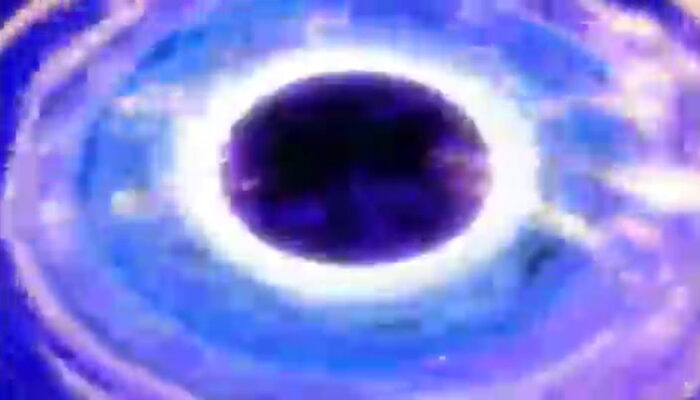
Black holes are extraordinary cosmic objects characterized by gravitational fields so intense that nothing, not even light, can escape their grasp. They represent regions in space where matter has been compressed into an extremely small volume, resulting in a gravitational pull that dramatically distorts the surrounding space-time fabric. Often portrayed in popular media as dark voids consuming everything nearby, black holes are in fact complex astrophysical phenomena that challenge our understanding of physics and the universe.
Understanding Space-Time and Its Distortion
Space-time is a four-dimensional continuum combining the three spatial dimensions with time, forming the fundamental framework within which all cosmic events occur. Contrary to the traditional view of space as a fixed, three-dimensional arena, massive objects like stars and black holes bend and curve space-time according to Einstein’s general theory of relativity. Black holes represent the extreme limit of this curvature, where gravitational forces become so powerful that conventional physical laws begin to break down.
How Massive Objects Influence Space-Time
- Mass and Curvature:
Large masses cause space-time to curve, creating gravitational wells that influence the motion of objects and light. - Black Holes as Extreme Curvature:
Black holes intensify this curvature to the point where the escape velocity exceeds the speed of light, forming an event horizon.
Formation and Structure of Black Holes
A black hole forms when a massive star exhausts its nuclear fuel and collapses under its own gravity, compressing its mass into an incredibly small region. This collapse generates a gravitational field so strong that it creates a boundary known as the event horizon-the point beyond which escape is impossible. Inside this boundary lies the singularity, a theoretical point of infinite density where space-time curvature becomes infinite and classical physics ceases to apply.
Key Components
- Event Horizon:
The spherical surface marking the limit of no return, beyond which light and matter cannot escape. - Singularity:
The central point of infinite density where known physical laws break down.
Mechanics of Space-Time Warping by Black Holes
The gravitational influence of a black hole warps space-time into a funnel-like shape, steepening dramatically near the singularity. This curvature alters the natural paths-called geodesics-that objects and light follow, effectively pulling them inward. The intense gravity also causes gravitational time dilation, where time slows down relative to distant observers, becoming infinitely stretched near the event horizon.
Phenomena Associated with Space-Time Distortion
- Geodesics:
The curved trajectories in warped space-time that dictate the motion of particles and light near a black hole. - Gravitational Time Dilation:
The slowing of time in strong gravitational fields, making time near a black hole appear to pass more slowly compared to distant regions. - Frame-Dragging:
In rotating black holes, the spin twists space-time itself, causing nearby objects to spiral inward in swirling orbits.
Theoretical Implications and Singularities
Singularities challenge our current understanding of physics, as they represent points where density and curvature become infinite. This suggests that classical theories like general relativity are incomplete in describing these realms. Some hypotheses propose that quantum mechanics or exotic states of matter might govern the behavior near singularities, potentially leading to new unified theories that reconcile gravity with quantum phenomena.
Black Holes as Natural Laboratories
Black holes provide unique environments to test the predictions of general relativity under extreme conditions. Observations of black hole mergers, especially through gravitational wave detection, offer empirical evidence that helps validate and refine our understanding of space-time curvature and gravity. These cosmic events serve as natural experiments that push the boundaries of theoretical physics.
Observational Effects: Gravitational Lensing
The intense gravitational field of black holes bends the path of light from objects behind them, producing visual distortions such as multiple images, rings, and arcs known as gravitational lensing. This effect acts like a cosmic magnifying glass, allowing astronomers to observe distant galaxies and stars with enhanced clarity. Such phenomena highlight how black holes influence not only their immediate surroundings but also our perception of the universe.
Common Misconceptions About Black Holes
Black holes are cosmic vacuum cleaners that indiscriminately suck in everything.
Black holes only capture objects that cross their event horizon; objects at a safe distance orbit them like any other massive body.
Black holes are completely empty voids.
Black holes contain a singularity with immense density, not empty space.
Time stops inside a black hole.
Time dilation occurs near the event horizon relative to outside observers, but time continues to pass inside the black hole from the perspective of an infalling observer.
Significance of Black Holes in Science and Cosmology
Black holes are pivotal in advancing our comprehension of fundamental physics, cosmology, and the nature of space-time. They serve as natural testbeds for theories of gravity and quantum mechanics, and their study may unlock answers to profound questions about the origin and fate of the universe. Beyond their scientific value, black holes inspire philosophical reflection on the limits of human knowledge and the mysteries of existence.
Conclusion: The Enduring Mystery of Black Holes
As technology progresses, enabling more precise observations and simulations, black holes continue to captivate scientists and the public alike. Far from mere cosmic curiosities, they embody the intricate interplay of matter, energy, space, and time, challenging us to rethink the very fabric of reality. Their ability to warp space-time beyond imagination not only expands our scientific horizons but also deepens our appreciation for the universe’s complexity and wonder.
FAQ
What is a black hole?
A black hole is a region in space where the gravitational pull is so strong that nothing, not even light, can escape from it.
How do black holes warp space-time?
Black holes warp space-time by creating extreme gravitational fields that curve the fabric of space-time around them.
What happens at the event horizon of a black hole?
The event horizon is the boundary around a black hole beyond which nothing can escape, and it marks the point of no return.




Leave a Reply