

Short Answer
Definition of Black Holes and Red Giants
Black holes and red giants are two remarkable astronomical entities that represent vastly different stages and characteristics in the life cycle of stars. Both are known for their significant gravitational influence, yet they differ fundamentally in structure, size, and the nature of their gravity.
- Red Giant:
A red giant is a late evolutionary phase of a star where it expands enormously after exhausting hydrogen fuel in its core, burning helium or heavier elements instead. These stars swell to hundreds or thousands of times the radius of the Sun, exhibiting a cool, diffuse outer atmosphere and a bright, reddish appearance. - Black Hole:
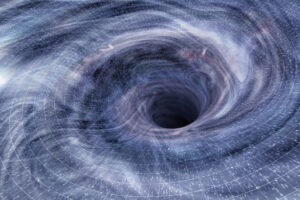
A black hole forms from the gravitational collapse of a massive star’s core, compressing matter into an extremely dense point known as a singularity. Its gravitational pull is so intense that nothing, not even light, can escape beyond its event horizon, the boundary surrounding the black hole.
Gravitational Characteristics of Red Giants
Despite their enormous size and brightness, red giants have surprisingly weak surface gravity. This is because their mass, although several times that of the Sun, is spread over an immense volume, causing a significant drop in density. The gravitational acceleration at the surface depends on how concentrated the mass is; as the star’s radius expands dramatically, the gravitational pull at its outer layers diminishes.
In essence, if one could hypothetically stand on the tenuous atmosphere of a red giant, the gravitational force experienced would be much weaker than on a smaller, denser star like the Sun.
Gravitational Intensity of Black Holes
Black holes represent the extreme end of gravitational concentration. Their mass, which can range from a few times that of the Sun (stellar black holes) to billions of solar masses (supermassive black holes), is compressed into an incredibly small volume. This results in an extraordinarily strong gravitational field near the event horizon, where the escape velocity exceeds the speed of light.
The intense gravity near a black hole can cause extreme tidal forces, stretching objects into elongated shapes in a process often referred to as “spaghettification.” This phenomenon highlights the dramatic difference in gravitational effects compared to more diffuse objects like red giants.
Newtonian Gravity and Mass Distribution
Gravity is governed by Newton’s law of universal gravitation, which states:
F = G (Mm) / r²
- F: Gravitational force between two masses
- G: Gravitational constant
- M: Mass of the attracting body
- m: Mass of the object experiencing the force
- r: Distance between the centers of the two masses
This formula illustrates that gravitational force depends not only on mass but also inversely on the square of the distance between objects. For red giants, the large radius (r) reduces the gravitational force at their surface despite their substantial mass. Conversely, black holes have their mass concentrated within a minuscule radius, causing gravity near the event horizon to be immensely powerful.
Comparative Gravity: Black Holes vs. Red Giants
When comparing the gravitational pull of black holes and red giants, it is crucial to consider both mass and spatial distribution. From a distance, a black hole and a red giant with equivalent mass exert similar gravitational forces on other objects. However, the difference becomes stark when approaching their surfaces or boundaries.
Near a red giant’s surface, gravity is relatively weak due to the star’s expanded radius. In contrast, approaching a black hole’s event horizon reveals an intense gravitational field that warps spacetime and exerts extreme tidal forces.
Astrophysical Significance and Symbolism
Beyond their physical properties, red giants and black holes hold deep symbolic and scientific significance. Red giants represent the transitional phase of stellar evolution, embodying themes of transformation, decay, and renewal. Their glowing, expansive atmospheres narrate the story of a star’s final stages before shedding outer layers and leaving behind a dense core.
Black holes, on the other hand, symbolize mystery and the limits of current physical understanding. They challenge our grasp of spacetime, information theory, and the fundamental laws of physics. Their gravitational dominance shapes galaxies and provokes profound awe and curiosity about the universe’s most extreme environments.
Why Understanding Their Gravity Matters
Studying the gravitational differences between black holes and red giants enhances our comprehension of cosmic evolution and the forces shaping the universe. Gravity is the fundamental interaction that orchestrates the motion of celestial bodies, the lifecycle of stars, and the structure of galaxies.
Recognizing how mass distribution affects gravitational strength helps scientists predict stellar behavior, understand phenomena like black hole event horizons, and explore the boundaries of physics. Moreover, these insights inspire philosophical reflections on power, transformation, and the cosmic narrative that connects all matter and energy.
Summary: Gravity in Context
In conclusion, black holes exhibit far stronger localized gravity than red giants due to their extreme mass concentration within a tiny volume. While red giants possess significant mass, their vast size dilutes gravitational pull at their surfaces. Both objects captivate us not only through their gravitational forces but also through what these forces represent-dynamic processes of creation, destruction, and cosmic balance that continue to fuel human fascination with the universe.
FAQ
What defines a red giant?
A red giant is defined by its large size and cool, diffuse outer atmosphere as it expands after using its core's hydrogen.
What happens near a black hole's event horizon?
Near a black hole's event horizon, the gravitational pull is so intense that it warps spacetime and can lead to extreme tidal forces.

Leave a Reply