
Short Answer
Understanding the Expansion of the Universe
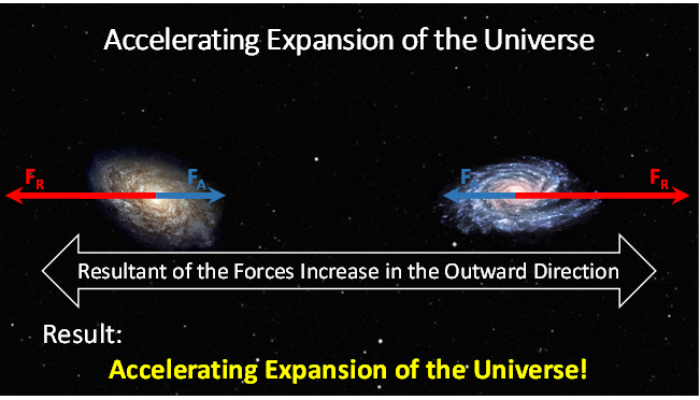
The expansion of the universe stands as one of the most profound and puzzling phenomena in contemporary cosmology. Contrary to earlier beliefs in a static cosmos, modern observations reveal that space itself is continuously stretching, causing galaxies to move away from each other. This ongoing expansion, particularly its accelerating nature, poses deep questions about the fundamental forces and energies shaping the cosmos, challenging our grasp of physics and reshaping our understanding of the universe’s origin and ultimate fate.
Historical Context and Discovery
At the dawn of the 20th century, the dominant scientific consensus held that the universe was unchanging and eternal. This perspective was dramatically overturned by Edwin Hubble’s groundbreaking work in the 1920s, which demonstrated that galaxies are receding from us at speeds proportional to their distances-a relationship now known as Hubble’s Law. This discovery introduced the revolutionary concept of an expanding universe, implying a dynamic cosmos that began with a singular event commonly referred to as the Big Bang.
Acceleration of Cosmic Expansion
Initially, scientists assumed that the universe’s expansion would slow down over time due to the gravitational attraction of matter. However, late 20th-century observations revealed a startling truth: the expansion is accelerating. This unexpected acceleration suggests the presence of a mysterious repulsive force or an exotic form of energy permeating all of space, overpowering gravity on the largest scales. This enigmatic component, termed dark energy, is estimated to constitute about 68% of the universe’s total energy content, yet its nature remains elusive.
Defining Dark Energy
Dark energy is not a conventional form of energy but rather a diffuse pressure that exerts a negative gravitational effect, effectively pushing the universe’s fabric outward. One of the simplest explanations for dark energy is Einstein’s cosmological constant, a term he originally introduced to maintain a static universe but later abandoned. Today, this constant is reconsidered as a possible source of repulsive gravity, representing a constant energy density of empty space that drives the acceleration without diminishing over time.
Alternative Theories: Quintessence and Dynamic Fields
Beyond the cosmological constant, other hypotheses propose dynamic fields similar to those studied in particle physics. Known as quintessence, these fields have energy densities that evolve over cosmic timescales. Unlike the fixed cosmological constant, quintessence suggests a changing energy component that could illuminate the complex relationship between gravity and expansion. These models open the door to a universe where acceleration is not a static property but a dynamic process potentially linked to unknown fundamental forces or particles.
Implications for the Universe’s Fate
The forces driving cosmic expansion have profound consequences for the universe’s long-term destiny. If dark energy remains constant, the universe will continue to accelerate indefinitely, leading to a scenario called the Big Freeze, where galaxies drift beyond observable limits and star formation ceases. Conversely, if quintessence or other dynamic fields weaken over time, the expansion might slow or reverse, potentially culminating in a Big Crunch, where the cosmos contracts. These scenarios highlight the dramatic cosmic evolution governed by subtle energy components.
Current Challenges and Open Questions
Despite significant progress, many questions about dark energy remain unanswered. Is it an intrinsic property of spacetime, or does it point to new physics beyond the Standard Model? Could modifications to Einstein’s theory of general relativity on cosmic scales explain the acceleration without invoking exotic energy? Ongoing research employs precise measurements of the cosmic microwave background, large-scale structure surveys, and distant supernova observations to explore these possibilities.
Role of Dark Matter in Cosmic Expansion
Another critical but distinct component of the universe is dark matter, which, unlike dark energy, interacts gravitationally to form the scaffolding for galaxies and clusters. Although invisible to electromagnetic detection, dark matter’s gravitational influence shapes cosmic structures and indirectly affects the expansion by creating gravitational wells. The interplay between dark matter’s clumping effect and dark energy’s expansive force is essential to understanding the universe’s overall dynamics.
Local Effects Amidst Cosmic Expansion
While the universe expands on vast scales, local systems such as solar systems, galaxies, and even atoms remain bound by gravitational and electromagnetic forces. This coexistence of large-scale expansion with local cohesion illustrates the subtle complexities of cosmological dynamics, where space itself stretches but does not disrupt tightly bound structures.
Significance of Studying Cosmic Expansion
Investigating what drives the universe’s expansion is not only a quest to understand cosmic history but also a journey toward uncovering fundamental laws of nature. Each new discovery refines our cosmic narrative and challenges existing paradigms, inviting scientists and philosophers alike to rethink the fabric of reality. The accelerating universe expands the boundaries of human knowledge and curiosity, inspiring profound questions about existence and the cosmos.
Summary
The mystery behind the universe’s expansion is a compelling scientific saga that intertwines observation, theory, and philosophical reflection. Whether driven by a constant vacuum energy, dynamic fields, or new physics, the forces propelling cosmic acceleration shape the past, present, and future of everything we observe. As technology and theory advance, the veil over this cosmic enigma gradually lifts, revealing a universe both majestic and mysterious-an eternal expansion that continues to captivate and challenge humanity’s understanding.
FAQ
What is dark energy?
Dark energy is a mysterious force that drives the accelerated expansion of the universe, constituting about 68% of its energy content.
Who discovered the expansion of the universe?
The expansion of the universe was first demonstrated by Edwin Hubble in the 1920s through his observation of galaxies receding from us.


Leave a Reply