
Short Answer
Overview of the Hubble Space Telescope
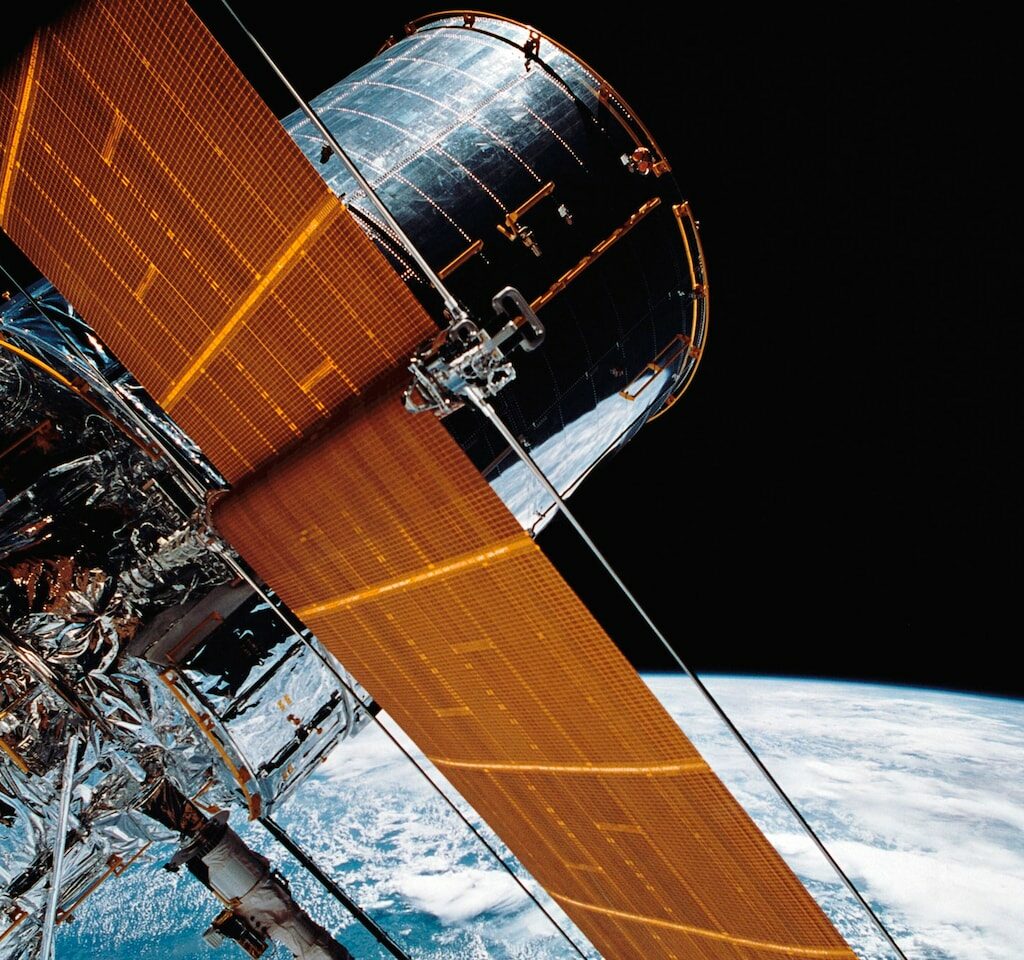
The Hubble Space Telescope is a landmark achievement in the field of space exploration and astronomical research. Launched in 1990, it has provided stunning imagery and critical scientific data that have significantly advanced our comprehension of the cosmos. Despite its groundbreaking contributions, Hubble’s mission has faced technical challenges, particularly related to its gyroscope system, which is essential for maintaining the telescope’s precise orientation in orbit.
Definition and Role of Gyroscopes in Hubble
Gyroscopes are pivotal components within the Hubble Space Telescope, enabling it to maintain a stable and accurate focus on distant celestial bodies. These devices measure changes in the telescope’s rotational position with exceptional sensitivity, allowing onboard systems to make fine adjustments to its pointing direction. This stability is crucial for long-duration observations and high-quality data collection.
- Gyroscope Function:
Detects angular velocity changes to help maintain telescope orientation. - Reaction Wheels:
Work in tandem with gyroscopes to adjust and stabilize Hubble’s position in space.
Mechanics and Vulnerabilities of Hubble’s Gyroscopes
The gyroscopes in Hubble operate through a delicate mechanism involving a float-a small, nearly frictionless rotor suspended in a thin fluid film. Over time, this fluid can degrade or become contaminated, increasing friction and causing the gyroscope’s performance to decline. Mechanical wear and tear on internal parts such as the rotor assembly further contribute to failures, which compromise the telescope’s ability to maintain precise pointing.
Operational Impact of Gyroscope Failures
Hubble requires at least three functioning gyroscopes to operate at full capacity. When fewer than three are available, the telescope’s pointing accuracy diminishes, forcing reliance on less precise methods and reducing observational efficiency. Early symptoms of gyro degradation included unstable pointing and intermittent loss of fine guidance, which limited the telescope’s ability to conduct extended scientific observations.
Longevity and Aging of Gyroscope Systems
Although each gyroscope was originally designed for a lifespan of about five years, many units exceeded this expectation, functioning well into the 21st century. Nevertheless, aging components inevitably led to failures. NASA responded with a combination of hardware replacements and software adaptations to extend the operational life of the telescope.
Servicing Missions and Hardware Interventions
NASA’s Space Shuttle program enabled multiple servicing missions during which astronauts performed complex extravehicular activities to replace malfunctioning gyroscopes with new or refurbished units. These missions not only restored Hubble’s capabilities but also introduced incremental design improvements that enhanced gyro reliability. However, the eventual retirement of the Shuttle program necessitated alternative approaches to maintain Hubble’s functionality.
Software Solutions and Adaptive Control Techniques
In the absence of further physical servicing, NASA developed advanced software algorithms to compensate for gyro failures. By leveraging the Fine Guidance Sensors (FGS) and implementing new control strategies, mission operators managed to keep Hubble operational with only two or even a single gyroscope under constrained conditions. These software innovations utilized predictive modeling and sensor fusion to stabilize the telescope, albeit with some limitations on observation duration and target selection.
Gyroscope Restoration Methods
NASA also experimented with “gyro restoration” techniques, which involved controlled spinning maneuvers designed to redistribute lubricants and dislodge trapped particles within the gyroscope. While these procedures did not provide permanent fixes, they effectively prolonged the functional lifespan of individual gyros, allowing continued scientific observations.
Scientific Contributions Enabled by Gyroscope Maintenance
Thanks to the combined efforts of hardware servicing and software innovation, the Hubble Space Telescope has remained a vital scientific instrument well into the 2020s. Its extended operational life has facilitated numerous breakthroughs, including refining measurements of the universe’s expansion rate (the Hubble Constant) and studying the atmospheres of exoplanets. The continuous stream of data and images has enriched both the scientific community and public understanding of the universe.
Influence on Future Space Observatory Designs
The challenges encountered with Hubble’s gyroscopes have informed the engineering and operational planning of subsequent space telescopes, such as the James Webb Space Telescope. Lessons learned have led to enhanced sensor redundancy, more adaptive control software, and improved on-orbit servicing capabilities, underscoring the importance of resilient design in space missions.
Common Misconceptions About Hubble’s Gyroscope Issues
The gyroscope failures meant the end of Hubble’s mission.
Through servicing missions and software adaptations, NASA extended Hubble’s operational life far beyond initial expectations.
Gyroscopes are simple, fail-proof devices.
Gyroscopes are complex mechanical systems susceptible to wear, contamination, and fluid degradation over time.
Significance of Gyroscope Reliability in Space Exploration
Maintaining precise orientation is fundamental for space telescopes to capture clear and stable images of distant objects. Gyroscopes play a critical role in this process, and their reliability directly impacts the quality and scope of scientific research. The Hubble Space Telescope’s experience highlights the necessity of robust engineering, proactive maintenance, and adaptive technologies to ensure the longevity and success of space observatories.





Leave a Reply