
Short Answer
Understanding the Cosmic Enigma
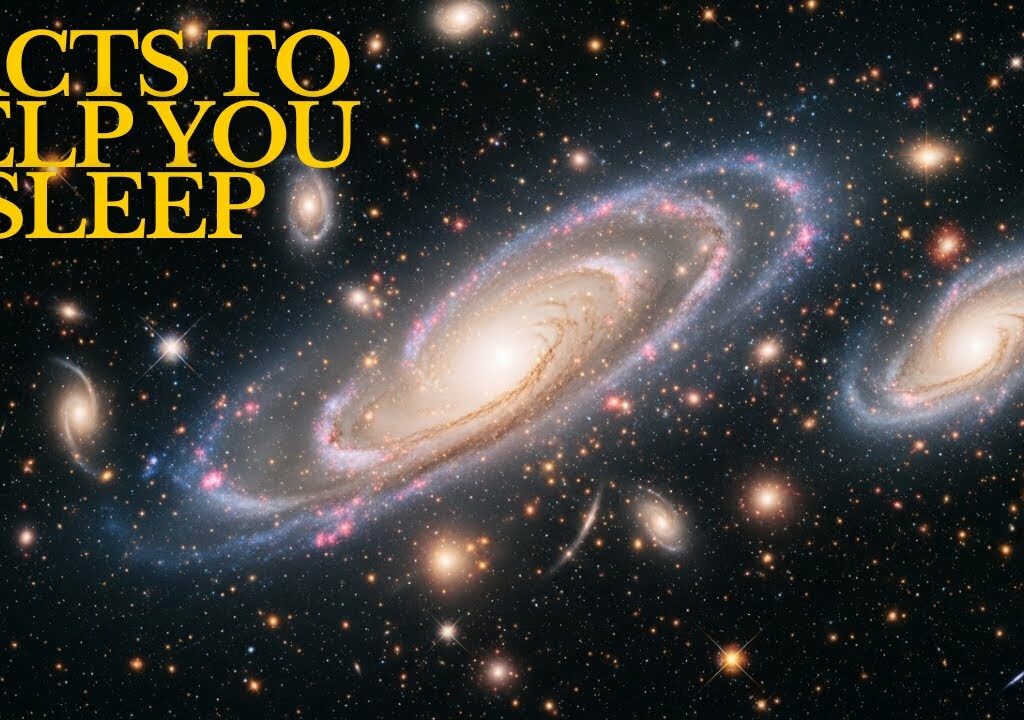
The universe extends far beyond the limits of human comprehension, revealing a realm filled with extraordinary phenomena that challenge our fundamental understanding of reality. This vast expanse is governed by principles that often contradict everyday logic, presenting paradoxes and mysteries that push the boundaries of scientific inquiry and imagination alike.
The Immensity of the Universe
The scale of the cosmos is not just immense; it is almost impossible for the human mind to fully grasp. Distances between celestial bodies, such as galaxies, are measured in millions or even billions of light-years. Given that light travels at approximately 186,000 miles per second, observing distant stars and galaxies means looking back in time, witnessing events that occurred billions of years ago. In this way, the universe functions as a natural time machine, offering glimpses into the ancient past long before humanity existed.
The Fabric of Spacetime and Gravity
At the core of cosmic weirdness lies the dynamic nature of spacetime itself. Contrary to the notion of space and time as fixed entities, Einstein’s theory of general relativity reveals that gravity warps the four-dimensional fabric of spacetime. Massive objects like stars and galaxies bend this continuum, producing effects such as gravitational lensing, where light curves around massive bodies, distorting the images of distant objects. This phenomenon demonstrates how reality can be twisted in ways imperceptible to our senses but measurable through scientific observation.
Composition of the Universe: Beyond Ordinary Matter
While everyday matter-planets, stars, and living beings-forms the visible universe, it accounts for less than 5% of the total cosmic content. The majority consists of dark matter and dark energy, elusive substances that cannot be directly observed but whose presence is inferred from their gravitational effects. Dark matter acts as an invisible framework holding galaxies together, whereas dark energy drives the accelerated expansion of the universe, pushing galaxies apart at an increasing rate. These mysterious components remain some of the greatest puzzles in modern astrophysics.
Quantum Mechanics: The Subatomic Strangeness
Delving into the microscopic realm, quantum mechanics introduces a level of unpredictability and peculiarity that defies classical physics. Particles such as electrons do not follow fixed orbits but exist as probabilistic clouds, blurring the line between presence and absence. Quantum entanglement, famously described by Einstein as “spooky action at a distance,” reveals instantaneous connections between particles separated by vast distances, challenging conventional ideas about causality and the speed of information transfer.
Black Holes: Cosmic Mysteries of Extreme Gravity
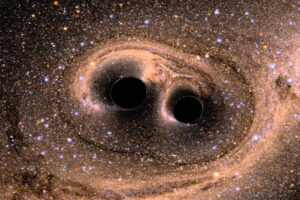
Black holes represent some of the most enigmatic objects in the universe. Their immense gravitational pull is so strong that not even light can escape, creating regions known as event horizons beyond which information is lost to outside observers. At their centers lie singularities-points of infinite density where known physical laws cease to apply. These phenomena raise profound questions about the nature of information, the limits of physics, and the possibility of alternate realities or unknown cosmic pathways.
The Multiverse Hypothesis
Expanding the scope of cosmic weirdness, some theories propose the existence of a multiverse-a collection of multiple universes, each potentially governed by different physical laws and constants. This concept suggests that our universe is just one bubble in an infinite cosmic foam, opening up possibilities of parallel dimensions, alternate timelines, and diverse realities. Such ideas challenge the uniqueness of our existence and invite both scientific and philosophical exploration.
Cosmic Inflation and the Universe’s Early Expansion
Shortly after the Big Bang, the universe underwent a phase of rapid expansion known as cosmic inflation. This hyper-accelerated growth shaped the large-scale structure of the cosmos and explains the remarkable uniformity observed in the cosmic microwave background radiation. Inflation also highlights the fine-tuning of physical constants that allow for the emergence of complexity and life, raising questions about the underlying principles that govern the cosmos.
Patterns and Symmetry in the Universe
Despite its apparent chaos, the universe exhibits remarkable order and symmetry. From the hexagonal storm patterns on Saturn’s north pole to the fractal-like distribution of galaxy clusters, these recurring structures suggest an underlying cosmic code. This intricate web of forces, particles, and energies operates cohesively across vast scales, prompting reconsideration of randomness and determinism on a universal level.
Future Prospects in Cosmic Exploration
Advancements in technology, such as gravitational wave detectors, large radio telescopes, and space observatories, are poised to deepen our understanding of the universe’s strange phenomena. These tools enable the study of events like neutron star mergers, black hole formation, and primordial cosmic fluctuations, continuously reshaping our cosmic perspective and revealing that the universe’s strangeness is an intrinsic characteristic rather than an anomaly.
The Significance of Cosmic Mystery
The profound oddities of the universe inspire both humility and awe, reminding us that certainty is fleeting in the face of vast unknowns. The interplay of fundamental particles, cosmic structures, and universal forces weaves a narrative that is both alien and magnificent. This ongoing enigma fuels endless curiosity, encouraging exploration and imagination beyond current scientific horizons.
Embracing the Universe’s Intrinsic Weirdness
Ultimately, the defining feature of the cosmos may be its inherent mystery. The strange and often counterintuitive phenomena that permeate spacetime are not obstacles but gateways to creativity, insight, and discovery. This perspective shifts our understanding from rigid certainty to boundless possibility, inviting us to view the universe as a limitless domain of wonder, whose depths humanity has only begun to explore.
Leave a Reply