
Short Answer
Definition and Overview of the James Webb Space Telescope’s Orbit
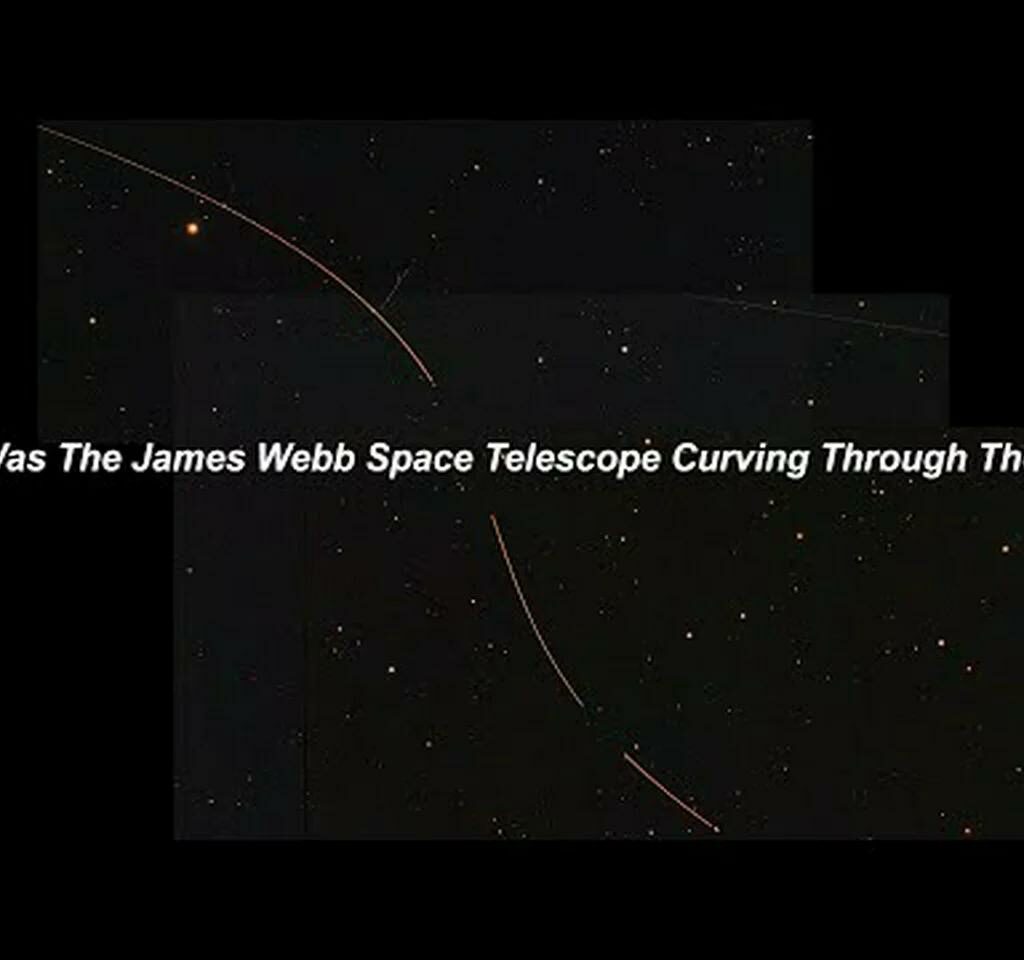
The James Webb Space Telescope (JWST) operates in a unique and carefully maintained position far beyond Earth, enabling it to observe the universe with exceptional clarity. Rather than remaining fixed in space, the JWST follows a complex orbital path around a gravitational equilibrium point known as the second Lagrange point (L2). This location, approximately 1.5 million kilometers from Earth on the side opposite the Sun, provides a stable environment where the gravitational forces of the Earth and Sun balance with the telescope’s orbital motion, allowing it to move synchronously with Earth as it orbits the Sun.
Understanding the L2 Lagrange Point
The L2 point is a gravitationally balanced region in space where the combined pull of Earth and the Sun creates a “sweet spot” for spacecraft. This equilibrium allows the JWST to maintain a relatively constant position relative to Earth and the Sun, minimizing gravitational disturbances and solar interference. However, the telescope does not remain perfectly stationary at L2; instead, it follows a halo orbit around this point.
- Location:
Approximately 1.5 million kilometers from Earth, directly opposite the Sun. - Gravitational Balance:
The forces from Earth and the Sun counterbalance the centripetal force needed for the JWST to orbit in sync with Earth. - Orbital Path:
The JWST traces an elliptical halo orbit around L2, avoiding Earth’s shadow and ensuring continuous solar power.
Halo Orbit: The JWST’s Dynamic Path
Rather than remaining fixed at L2, the JWST travels in a halo orbit-a three-dimensional, elliptical trajectory encircling the L2 point. This orbit is essential for several reasons:

- It prevents the telescope from entering Earth’s shadow, ensuring uninterrupted sunlight for its solar panels.
- It allows the sunshield to consistently face the Sun, maintaining the telescope’s instruments at ultra-cold temperatures necessary for infrared observations.
- It leverages the delicate balance of gravitational forces and orbital mechanics, a principle rooted in classical physics established by Newton and Kepler.
Challenges to Orbital Stability
Despite the gravitational equilibrium at L2, the JWST faces continuous, subtle forces that threaten to alter its position. These include:
- Solar Radiation Pressure:
Photons from the Sun exert a small but persistent force on the telescope’s surfaces. - Gravitational Influences:
Minor tugs from other planets and celestial bodies can cause slight deviations. - Outgassing:
The release of gases from the telescope’s materials can produce tiny thrusts affecting its trajectory.
Station-Keeping Mechanisms
To maintain its precise orbit, the JWST employs an active station-keeping system. This system includes:
- Hydrazine Thrusters:
Small rocket engines that perform fine adjustments to correct any drift from the desired orbit. - Micro-Propulsion Design:
The propulsion system is lightweight and efficient, conserving mass to maximize scientific payload capacity. - Periodic Maneuvers:
Brief, calculated firings of thrusters counteract external forces, ensuring the telescope remains centered in its halo orbit.
Thermal and Attitude Control Systems
Maintaining the JWST’s orientation and temperature stability is as critical as its orbital position. Key components include:
- Sunshield:
A five-layer, tennis court-sized shield that blocks solar heat, keeping the telescope’s instruments at cryogenic temperatures and reducing thermal distortion. - Reaction Wheels:
Flywheel devices that adjust the telescope’s pointing direction by spinning to generate torque, enabling precise targeting without using fuel. - Desaturation Maneuvers:
Occasional thruster firings relieve built-up momentum in reaction wheels, maintaining their effectiveness.
Scientific Significance of JWST’s Orbit and Stability
The JWST’s carefully maintained position at L2 and its stable orientation are fundamental to its mission. Freed from Earth’s atmospheric interference and thermal noise, the telescope can:
- Observe the earliest galaxies formed after the Big Bang.
- Study star formation processes in unprecedented detail.
- Analyze the atmospheres of exoplanets, searching for signs of habitability.
These capabilities rely on the telescope’s ability to remain stable and precisely pointed, a feat achieved through the interplay of orbital mechanics, propulsion, and thermal control.
Common Misconceptions About JWST’s Positioning
The JWST is fixed and motionless at L2.
The telescope follows a halo orbit around L2, continuously moving to maintain optimal conditions.
The JWST’s thrusters are large and frequently used.
The propulsion system is minimal and thruster firings are brief and infrequent, designed only to counteract small perturbations.
Reaction wheels alone control the telescope’s orientation.
While reaction wheels provide fine control, thrusters are necessary to manage momentum buildup and maintain long-term stability.
Why JWST’s Orbital Precision Matters
The JWST’s ability to maintain a stable orbit and precise orientation is not merely a technical achievement but a cornerstone of its scientific mission. This stability enables the telescope to capture faint infrared signals from the distant universe without interference, pushing the boundaries of human knowledge about cosmic origins, planetary systems, and the fundamental nature of the cosmos. The delicate balance of forces and the continuous micro-adjustments exemplify the fusion of advanced engineering and astrophysical insight, making the JWST a landmark in space exploration.





Leave a Reply