

Short Answer
Overview of the Gemini Telescope
The Gemini Telescope marks a pivotal advancement in the field of observational astronomy, designed to deepen our comprehension of celestial phenomena. Having recently completed its initial operational evaluations successfully, it has generated considerable excitement regarding its scientific potential and the broader implications for astrophysics. This achievement not only highlights a triumph in engineering and technological innovation but also opens new avenues for uncovering the universe’s hidden mysteries.
Definition and Location
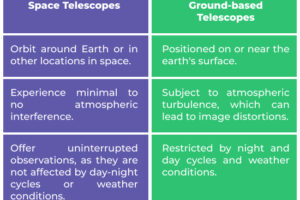
The Gemini Telescope is a state-of-the-art astronomical instrument equipped to observe the cosmos with exceptional clarity. It is strategically positioned at high-altitude sites, chosen to maximize atmospheric conditions favorable for astronomical observations. These locations reduce atmospheric distortion, allowing the telescope to capture clearer images of distant celestial objects.
- High-altitude placement:
Positioned on mountain peaks to minimize atmospheric interference and light pollution. - Advanced instrumentation:
Incorporates cutting-edge sensors and optics to detect a broad spectrum of electromagnetic radiation, including infrared light.
Infrared Astronomy and Its Significance
One of the Gemini Telescope’s most remarkable features is its ability to observe in the infrared spectrum. Infrared astronomy is crucial for studying objects and phenomena that are invisible or obscured in visible light. This capability allows astronomers to peer through cosmic dust clouds and examine cooler celestial bodies that emit primarily infrared radiation.
- Studying star formation:
Infrared detection enables observation of young stars forming within dense clouds of gas and dust, which are otherwise hidden from optical telescopes. - Exploring dusty galaxies:
Infrared light penetrates dust-enshrouded regions, revealing the structure and activity within galaxies.
Technical Validation and Performance
The Gemini Telescope’s initial testing phase demonstrated exceptional sensitivity and resolution. These tests confirmed the precise alignment and calibration of its optical components, ensuring that the data collected meets stringent scientific standards. Early observations have revealed faint astronomical features critical to advancing our understanding of cosmic phenomena and fundamental physics.
- Optical calibration:
Ensures accurate focusing and image clarity. - Data sensitivity:
Capable of detecting subtle signals from distant and dim objects.
Scientific Impact and Research Opportunities
With its enhanced observational capabilities, the Gemini Telescope is poised to contribute significantly to several key areas of astrophysical research. It offers new insights into dark matter and dark energy, as well as conditions prevalent in the early universe. Additionally, it supports the search for exoplanets by analyzing atmospheric compositions, potentially identifying biosignatures indicative of life beyond Earth.
Exoplanet Exploration
The telescope’s ability to study the chemical makeup of exoplanet atmospheres opens promising pathways for detecting signs of life. This research could revolutionize our understanding of biology’s potential diversity across the cosmos, transforming speculative ideas into empirical science.
Interdisciplinary Collaboration
The Gemini Telescope serves as a focal point for collaborative efforts that integrate astrophysics, chemistry, and philosophy. This multidisciplinary approach enriches the scientific process, fostering a comprehensive understanding of the universe. Researchers worldwide unite in their quest to decode cosmic mysteries, transcending traditional academic boundaries.
Human Curiosity and the Quest for Knowledge
Beyond its technical achievements, the Gemini Telescope symbolizes humanity’s enduring desire to explore and comprehend the cosmos. Since ancient times, people have looked skyward, seeking answers about existence and the nature of reality. This telescope embodies that spirit of inquiry, enabling us to address profound questions about the universe’s origins, the fabric of time, and the possibility of extraterrestrial life.
Societal Importance and Future Prospects
The success of the Gemini Telescope underscores the vital role of public support and funding in advancing scientific research. It acts as a beacon of hope amid challenges such as financial constraints and political pressures. By captivating public imagination with the wonders of space, it inspires future generations to pursue careers in science, technology, engineering, and mathematics (STEM).
Conclusion: A New Chapter in Cosmic Exploration
The Gemini Telescope’s successful initial tests represent more than a technological feat; they highlight humanity’s intrinsic curiosity and drive to explore the universe. As it embarks on its operational mission, the telescope invites us to not only observe but also reflect on our place within the vast cosmic landscape. Through the integration of precise technology, interdisciplinary research, and philosophical inquiry, the Gemini Telescope advances our understanding of the universe and enriches the dialogue between science and humanity.
FAQ
What is the primary purpose of the Gemini Telescope?
The primary purpose of the Gemini Telescope is to observe celestial phenomena in the infrared spectrum, enabling studies of obscured objects and cosmic events.
Where is the Gemini Telescope located?
The Gemini Telescope is strategically positioned on high-altitude mountain peaks to minimize atmospheric interference and light pollution.
What are the implications of its research?
The research conducted by the Gemini Telescope has significant implications for understanding dark matter, exoplanets, and the early universe.




Leave a Reply