
Short Answer
Understanding Atomic Nuclei: An Overview
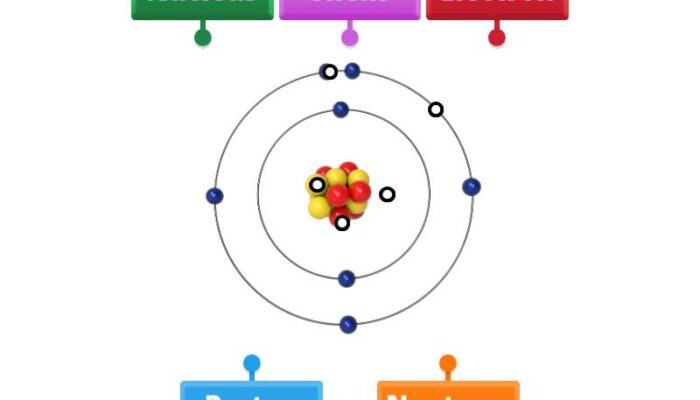
The atom, the fundamental building block of matter, harbors a dense core known as the nucleus. This nucleus contains subatomic particles-protons and neutrons-that are essential in defining the properties and stability of elements. Exploring these particles reveals the intricate forces and structures that govern the very fabric of matter.
Definition of Protons and Neutrons
Within the nucleus, two primary particles exist:
- Protons:
Positively charged particles that determine the atomic number and identity of an element. - Neutrons:
Electrically neutral particles that contribute to the atomic mass and provide stability to the nucleus.
Together, protons and neutrons, collectively called nucleons, account for nearly all the mass of an atom.
Atomic Identity and the Role of Protons
The number of protons in an atom’s nucleus, known as the atomic number, uniquely identifies each element. For instance, hydrogen, the simplest element, contains a single proton, while uranium, one of the heaviest naturally occurring elements, has 92 protons. This proton count not only defines elemental identity but also influences chemical behavior and placement within the periodic table.
Neutrons: The Stabilizing Agents
Neutrons, despite lacking electric charge, play a crucial role in maintaining nuclear stability. They counterbalance the electrostatic repulsion between positively charged protons, preventing the nucleus from disintegrating. Without sufficient neutrons, the repulsive forces would cause the nucleus to break apart, disrupting the structure of matter.
Substructure of Nucleons: Quarks and Gluons
Protons and neutrons are not elementary particles; they belong to a class called baryons, composed of three quarks held together by the strong nuclear force. Specifically:
- Protons:
Made up of two ‘up’ quarks and one ‘down’ quark. - Neutrons:
Composed of one ‘up’ quark and two ‘down’ quarks.
These quarks are bound by gluons, massless particles that mediate the strong force, ensuring the cohesion of quarks within nucleons.
The Strong Nuclear Force: Binding the Nucleus
The strong nuclear force is one of the four fundamental forces of nature and is responsible for holding quarks together inside protons and neutrons, as well as binding these nucleons within the nucleus. Operating over extremely short distances, this force overcomes the electromagnetic repulsion between protons, providing the necessary attraction to maintain nuclear integrity.
Isotopes and Nuclear Stability
As atoms grow heavier, maintaining nuclear stability becomes more complex. Larger nuclei require a higher neutron-to-proton ratio to offset the increasing repulsive forces among protons. This balance leads to the formation of isotopes-atoms of the same element with identical proton numbers but varying neutron counts. While isotopes demonstrate nuclear adaptability, some are unstable and undergo radioactive decay, emitting radiation as they transform into more stable forms.
Implications of Subatomic Particle Research
Understanding the composition and interactions of protons, neutrons, quarks, and gluons has far-reaching consequences across multiple scientific disciplines. In quantum physics, it deepens our grasp of fundamental forces; in chemistry, it explains elemental behavior; and in cosmology, it sheds light on stellar nucleosynthesis-the process by which stars forge new elements, influencing the evolution of the universe.
Common Misconceptions About Atomic Nuclei
Protons and neutrons are indivisible particles.
Both are composite particles made of quarks bound by gluons.
Neutrons have no significant role since they are neutral.
Neutrons are vital for nuclear stability, preventing repulsive forces from breaking the nucleus apart.
The number of neutrons does not affect an element’s properties.
Different neutron counts create isotopes, which can have distinct physical and radioactive characteristics.
Why Studying Protons and Neutrons Matters
Investigating the particles within the nucleus is fundamental to advancing technology, medicine, and energy production. Nuclear reactors, medical imaging, and radiation therapies all rely on principles derived from nuclear physics. Moreover, this knowledge fuels ongoing research into particle physics, potentially unlocking new technologies and deepening our understanding of the universe’s origins and structure.
Future Perspectives in Nuclear Science
As scientific tools and methodologies evolve, future research promises to uncover further secrets of the subatomic world. Enhanced particle accelerators and quantum computing may reveal new particles or interactions, refining our models of matter and energy. These advancements could revolutionize fields ranging from materials science to cosmology, reshaping our comprehension of reality itself.
FAQ
What particles make up the nucleus of an atom?
The nucleus contains protons and neutrons, collectively known as nucleons.
How do protons and neutrons stay together in the nucleus?
They are held together by the strong nuclear force, which overcomes the repulsion between positively charged protons.
What are protons and neutrons made of?
Protons and neutrons are baryons composed of three quarks bound by gluons.
Why are neutrons important in the nucleus?
Neutrons stabilize the nucleus by reducing proton repulsion and enable the existence of isotopes.
What is an isotope?
An isotope is an atom of the same element with a different number of neutrons, affecting its stability.






Leave a Reply