
Short Answer
Definition of Cosmic Rays and Their Detection
Cosmic rays are highly energetic particles, predominantly protons and atomic nuclei, that originate from sources beyond Earth’s atmosphere. Traveling at speeds near that of light, these particles provide crucial information about the universe’s formation and the fundamental forces governing it. To study these elusive particles, scientists have developed specialized instruments-often referred to as “ray guns” in space-that detect and analyze cosmic rays, enabling a deeper understanding of cosmic phenomena.
Origins and Characteristics of Cosmic Rays
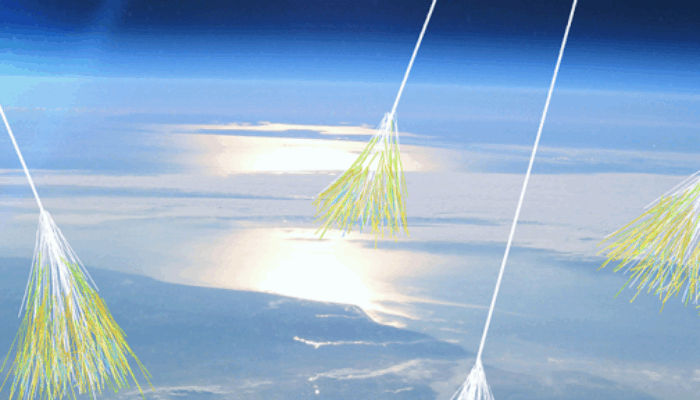
Cosmic rays are primarily composed of charged particles such as protons and heavier atomic nuclei that journey through interstellar space at relativistic speeds. Their exact sources remain a subject of ongoing research, with leading hypotheses pointing to explosive events like supernovae, energetic regions around active galactic nuclei, or even exotic objects such as primordial black holes. When these particles collide with Earth’s atmosphere, they initiate complex cascades of secondary particles and electromagnetic radiation, which can be detected and studied to reveal the properties of the original cosmic rays.
Varieties of Cosmic Ray Detectors
Over decades, a range of detection technologies has been engineered to capture and analyze cosmic rays, each tailored to specific scientific goals. These detectors differ in their operational principles and the type of data they provide, collectively enriching our knowledge of cosmic ray behavior and composition.
- Scintillation Detectors:
These devices employ materials that emit photons when struck by charged particles. The intensity and timing of the emitted light allow researchers to determine the energy and identity of incoming cosmic rays. Their high sensitivity and rapid response make them invaluable in space-based experiments. - Gas Cherenkov Detectors:
Utilizing the Cherenkov effect, these detectors measure the light produced when charged particles travel faster than the speed of light in a gaseous medium. By analyzing this radiation, scientists can accurately infer the velocity and energy of cosmic rays. - Water Cherenkov Detectors:
Operating on the same principle as gas Cherenkov detectors, these instruments use large volumes of water to detect the faint light generated by cosmic ray interactions. Their extensive size enhances the detection of rare, high-energy cosmic events, often employed in ground-based observatories. - Magnetic Spectrometers:
These sophisticated devices apply magnetic fields to bend the trajectories of charged particles. By measuring the curvature, researchers can deduce particle momentum and charge, enabling differentiation between protons and heavier nuclei, which is critical for understanding cosmic ray composition. - Muon Detectors:
Muons, secondary particles produced during cosmic ray interactions, penetrate materials deeply. Detectors focusing on muons exploit this property to study cosmic ray sources and propagation by measuring muon flux and energy distributions.
Historical Progression of Cosmic Ray Detection Technology
The field of cosmic ray research has evolved dramatically, beginning with rudimentary detection methods such as photographic plates and simple electronic counters. Technological advancements have since led to the development of highly sensitive, digital detectors capable of real-time data acquisition and complex analysis. This progression has significantly enhanced the precision and scope of cosmic ray studies.
Key Space Shuttle Missions and Their Scientific Contributions
The deployment of cosmic ray detectors aboard NASA’s Space Shuttle missions marked a pivotal advancement in space-based cosmic ray research. Missions like STS-67 and STS-91 carried instruments that gathered extensive data on cosmic ray isotopic composition and energy spectra.
One notable example is the Cosmic Ray Energetics and Mass (CREAM) experiment, installed on the International Space Station. CREAM’s array of advanced detectors has provided unprecedented insights into the elemental makeup and energy variations of cosmic rays as they interact with Earth’s atmosphere. The integration of multiple detection technologies on these missions has enabled comprehensive analyses, deepening our understanding of cosmic ray phenomena.
Scientific and Technological Significance of Cosmic Ray Research
Studying cosmic rays is fundamental to addressing profound questions in astrophysics, particle physics, and cosmology. Insights gained from cosmic ray detection contribute to our knowledge of dark matter, cosmic evolution, and the limits of known physics. These instruments serve as critical tools bridging observational gaps and fostering interdisciplinary research.
Future Directions and Research Implications
Continued deployment of cosmic ray detectors on current and future space missions promises to expand our understanding of high-energy cosmic phenomena. By combining data from space-based instruments with terrestrial observatories, scientists aim to unravel the complexities of cosmic ray origins and interactions. This synergy enhances the potential for groundbreaking discoveries that could redefine our comprehension of the universe.
Common Misconceptions About Cosmic Rays
Cosmic rays are rays of light.
Despite the name, cosmic rays are not electromagnetic radiation but high-energy charged particles.
Cosmic rays originate only from the Sun.
While solar particles contribute to cosmic rays, most originate from distant astrophysical sources such as supernovae and active galaxies.
Conclusion
The evolution of cosmic ray detectors launched on space shuttles exemplifies human innovation in the pursuit of cosmic knowledge. Each technological advancement brings us closer to deciphering the mysteries of cosmic rays, illuminating the fundamental nature of our universe and expanding the horizons of scientific exploration.
FAQ
What are cosmic rays?
Cosmic rays are highly energetic charged particles, mainly protons and atomic nuclei, that originate from outside Earth’s atmosphere.
How do cosmic ray detectors work?
Cosmic ray detectors use various technologies such as scintillation, Cherenkov radiation, magnetic spectrometry, and muon detection to identify and analyze cosmic rays’ energy, velocity, and composition.
Why are cosmic ray studies important?
Studying cosmic rays helps scientists understand fundamental astrophysical processes, particle physics phenomena, and can provide insights into dark matter and cosmic evolution.
What role did the Space Shuttle missions play in cosmic ray research?
Space Shuttle missions deployed advanced cosmic ray detectors in orbit, enabling high-precision measurements and expanding knowledge about cosmic ray origins and behavior.
Are cosmic rays rays of light?
No, despite the name, cosmic rays are not electromagnetic radiation but high-energy charged particles.




Leave a Reply