
Short Answer
Understanding the Universe: An Overview
The universe presents itself as a vast and intricate cosmic mosaic, filled with mysteries and grandeur that extend far beyond human comprehension. Its immense scale and complexity reveal a reality where each region pulses with phenomena that challenge our knowledge and spark curiosity. This boundless expanse of stars, galaxies, and cosmic wonders invites us to explore and appreciate the profound nature of existence.
Cosmic Expansion and the Role of Dark Energy
Visualize the universe as an invisible balloon that is continuously inflating in all directions, with its surface expanding faster than the speed of light. This accelerated growth is propelled by an enigmatic force known as dark energy. As a result, galaxies are moving away from each other at speeds exceeding light’s velocity, making some parts of the cosmos permanently inaccessible. This phenomenon defies traditional concepts of space and time, fundamentally altering our understanding of the universe’s evolving dynamics.
Black Holes: Distorters of Space and Time
Black holes can be imagined as voracious cosmic whirlpools that consume everything in their vicinity while bending the fabric of space-time itself. Beyond their immense gravitational pull, black holes slow down time near their event horizons, a prediction rooted in Einstein’s theory of relativity. To an outside observer, time appears to nearly stop at the boundary of these enigmatic regions, creating a domain where conventional physical laws no longer apply.
The Cosmic Microwave Background: A Glimpse into the Universe’s Origins
The universe is permeated by a faint, omnipresent radiation known as the Cosmic Microwave Background (CMB). This relic radiation, emitted approximately 380,000 years after the Big Bang, serves as a cosmic imprint of the universe’s infancy. The CMB provides crucial evidence about the early conditions of the cosmos and continues to be a cornerstone in cosmological research.
Neutron Stars: Dense Remnants of Stellar Explosions
Neutron stars are incredibly compact objects formed from the remnants of supernova explosions. Despite their small size, a mere teaspoon of neutron star material would weigh billions of tons on Earth. These stellar remnants possess magnetic fields trillions of times stronger than our planet’s and rotate at extraordinary speeds, emitting beams of radiation that sweep through space like cosmic lighthouses.
The Immensity of Stars in the Universe
The number of stars scattered throughout the observable universe surpasses the grains of sand found on all Earth’s beaches combined. Estimated to be around a septillion (1 followed by 24 zeros), this staggering quantity highlights the vastness of the cosmos and the potential for countless worlds, some possibly harboring life or unknown phenomena.
Dark Matter: The Invisible Framework of Galaxies
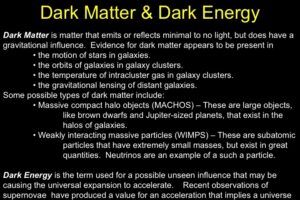
Dark matter is a mysterious substance that neither emits nor absorbs light, making it invisible to conventional telescopes. It acts as the gravitational backbone of galaxies, shaping their formation and movement. Despite its crucial role in cosmic structure, dark matter remains one of the most profound puzzles in modern astrophysics.
The Concept of an Infinite Universe
The idea of infinity, often abstract, may be a literal characteristic of the universe itself. If the cosmos extends without boundary or center, it could contain an endless variety of galaxies, stars, and potentially other life forms. This concept challenges human imagination and expands the scope of existential inquiry.
Quasars: The Brightest Beacons in the Cosmos
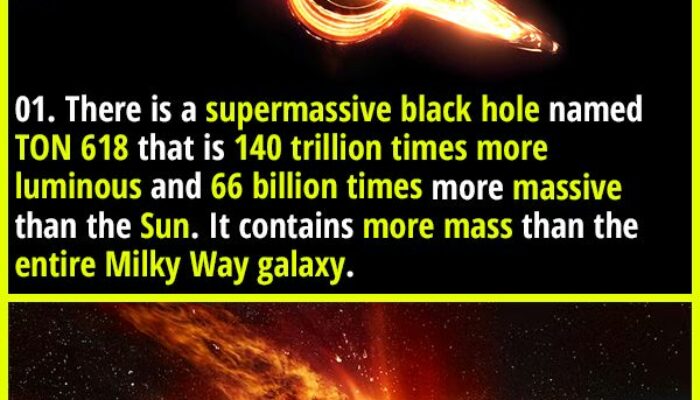
Quasars are extraordinarily luminous objects found at the centers of some distant galaxies. Powered by supermassive black holes consuming surrounding matter, quasars emit light that outshines billions of stars combined. These cosmic lighthouses serve as markers of galactic evolution and provide insights into the early universe.
Elemental Composition of the Universe
The universe’s elemental makeup is surprisingly simple, dominated by hydrogen and helium, which together constitute over 98% of ordinary matter. These light elements were primarily formed during the Big Bang and laid the foundation for the creation of galaxies, stars, and the essential components of life.
Cosmic Rays: High-Energy Particles Traversing Space
Cosmic rays are charged particles traveling through space at nearly the speed of light. Originating from energetic events such as supernovae or active galactic nuclei, these particles carry information about violent astrophysical processes. When they collide with Earth’s atmosphere, they generate cascades of secondary particles detectable by scientific instruments, offering valuable clues about distant cosmic phenomena.
The Cosmic Dark Age: A Time Before Starlight
Following the Big Bang, the universe experienced a prolonged period known as the Cosmic Dark Age, during which neutral hydrogen atoms filled space and no stars had yet formed. This era lasted hundreds of millions of years until the first stars ignited, ending the darkness and initiating a phase called cosmic reionization, which transformed the universe into a luminous expanse.
The Origin of Time Linked to the Big Bang
Time, as a concept of past and future, began with the Big Bang. Prior to this event, time did not exist in any conventional sense. The birth of the universe marked the inception of time, intertwining it with space to form the space-time continuum that governs all cosmic phenomena.
Rogue Planets: Wandering Worlds Without Stars
Scattered throughout interstellar space are rogue planets-celestial bodies that drift freely without orbiting any star. These solitary wanderers challenge traditional planetary system models and raise intriguing questions about the dynamics and diversity of planetary formation and movement.
Gamma-Ray Bursts: Intense Cosmic Explosions
Gamma-ray bursts are brief yet extraordinarily powerful events that release more energy in seconds than the Sun will emit over its entire lifetime. Originating from massive stellar collapses or neutron star mergers, these bursts illuminate the cosmos with intense radiation, offering unique opportunities to study extreme physics and cosmic evolution.
The Cosmic Web: The Universe’s Large-Scale Structure
On the grandest scales, galaxies are interconnected by a vast cosmic web composed of filaments of dark matter and gas stretching across hundreds of millions of light-years. This intricate network forms the structural framework of the universe, dictating the distribution and clustering of galaxies within the cosmos.
Significance of Understanding the Universe
Exploring the universe deepens our comprehension of fundamental physical laws and the origins of existence. It fuels technological advancements, inspires scientific inquiry, and enriches our perspective on humanity’s place in the cosmos. Each discovery reveals new layers of complexity and wonder, encouraging us to continually expand our horizons and embrace the mysteries of the vast universe that surrounds us.



Leave a Reply