
Short Answer
Understanding Dimensionality
Dimensionality refers to the number of independent directions or coordinates needed to specify a point within a given space. In everyday life, humans navigate a three-dimensional environment characterized by length, width, and height. These three dimensions enable us to perceive and interact with the physical world around us. Conversely, two-dimensional spaces, such as a flat sheet of paper or a digital screen, possess only length and width, lacking depth and thus offering a more limited representation of reality. Beyond these familiar dimensions lies the concept of a fourth dimension, which is often interpreted as either time or an additional spatial axis that transcends human sensory experience, adding layers of complexity to our understanding of the universe.
Exploring the Fourth Dimension
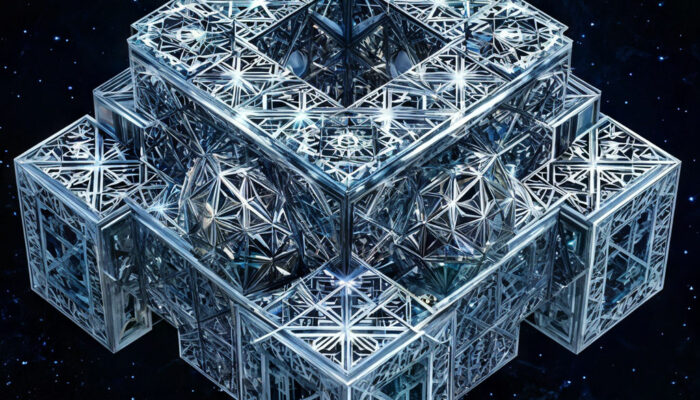
The fourth dimension is a theoretical extension beyond the three spatial dimensions we inhabit. In mathematical and physical contexts, it is sometimes visualized as a spatial dimension orthogonal to the other three, or as time integrated into the fabric of space-time. A four-dimensional entity, often symbolized by constructs like the tesseract or hypercube, would possess the ability to move and perceive in ways incomprehensible to three-dimensional beings. This higher-dimensional perspective would fundamentally alter how such a being experiences reality, much like how a person with color vision might struggle to convey the richness of a sunset to someone who sees only in grayscale.
Mediums of Expression Across Dimensions
When considering how a four-dimensional being might choose to record or communicate its thoughts, the choice between two-dimensional and three-dimensional media becomes significant. Two-dimensional surfaces, such as paper or screens, provide a flat plane for conveying information. While limited in depth, these media allow for organized, linear presentations of ideas-such as diagrams, equations, or written language-that can serve as snapshots of complex hyper-spatial concepts.
In contrast, three-dimensional media introduce depth, enabling a richer and more nuanced expression of ideas. For a four-dimensional entity, three-dimensional forms could serve as dynamic canvases that capture the interplay of multiple dimensions simultaneously. Sculptures, layered holograms, or volumetric displays could embody the intricate relationships between concepts, emotions, and experiences, offering a more faithful representation of the being’s multi-layered cognition.
Communication and Audience Considerations
The choice of medium is also influenced by the intended audience. If a four-dimensional creature aims to communicate with three-dimensional beings, it must consider the perceptual limitations of its recipients. Three-dimensional media may act as a bridge, translating complex four-dimensional ideas into forms accessible to three-dimensional observers. This translation is crucial for fostering understanding and dialogue across dimensional boundaries, even if the full depth of the original message remains partially obscured.
Implications of Dimensional Expression
Writing or inscribing thoughts in any dimension implies a relationship between the creator and their creation. For a four-dimensional being, this relationship could extend beyond spatial constraints to encompass temporal layers, allowing the entity to embed meaning across time and space simultaneously. From a three-dimensional perspective, such inscriptions might appear chaotic or enigmatic, reflecting the profound complexity of higher-dimensional cognition.
Summary: The Preference for Three-Dimensional Media
While a four-dimensional being could theoretically utilize either two-dimensional or three-dimensional media to express its ideas, the latter offers a more comprehensive platform for capturing the depth and intricacy of its experiences. Just as artists select mediums that best convey their vision, a four-dimensional entity would likely favor three-dimensional forms to fully articulate its multi-faceted thoughts. This preference underscores the broader significance of dimensionality in shaping not only perception but also the very nature of communication and understanding across different realms of existence.
FAQ
What surfaces can a four-dimensional being use to express ideas?
A four-dimensional being could use both two-dimensional surfaces like paper and three-dimensional forms like sculptures to express ideas.
Why might a four-dimensional creature prefer 3D media?
Three-dimensional media allow for a richer representation of complex ideas, capturing depth that two-dimensional surfaces cannot.



Leave a Reply