

Short Answer
Overview of the Nancy Grace Roman Space Telescope
The Nancy Grace Roman Space Telescope is set to revolutionize astronomical research by ushering in a new era of space observation. Often likened to the James Webb Space Telescope, the Roman telescope is expected to surpass its predecessor not only in capability but also in the variety and depth of data it will collect. This mission is poised to significantly broaden our cosmic knowledge, establishing itself as a pivotal tool for future scientific investigations.
Technical Specifications and Innovations
At the heart of the Roman Space Telescope lies a sophisticated integration of advanced optical technology and an exceptionally wide field of view. While the James Webb Space Telescope boasts a large 6.5-meter primary mirror optimized for high-resolution deep space imaging, the Roman telescope offers a different approach. It features a moderately sized 2.4-meter aperture combined with a field of view that is vastly larger than many previous space telescopes. This design enables rapid, large-scale sky surveys, allowing astronomers to map extensive regions of the universe with remarkable detail and speed.
Wide Field Instrument (WFI)
The telescope’s Wide Field Instrument is equipped with state-of-the-art infrared detectors, providing expansive panoramic imaging capabilities. This instrument is crucial for conducting comprehensive galactic surveys and time-domain astronomy, capturing wide-field infrared data with exceptional spatial resolution. The volume of space surveyed will far exceed current mappings, offering a robust statistical foundation for studying galaxy formation and evolution.
Coronagraph Instrument
Another groundbreaking feature is the coronagraph, which enables direct imaging of exoplanets across near-ultraviolet, visible, and near-infrared wavelengths. This technology allows scientists not only to detect distant planets but also to analyze their atmospheric compositions, potentially identifying chemical signatures indicative of habitability. Unlike the Webb telescope’s focus on narrow, deep-field observations, the Roman coronagraph will explore a broader array of planetary systems, enhancing comparative studies in exoplanetology and astrobiology.
Scientific Contributions and Data Output
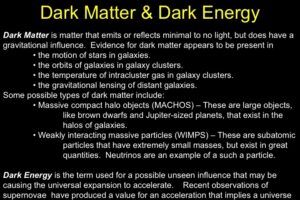
The Roman Space Telescope will generate a diverse array of scientific data, ranging from extensive sky surveys to high-resolution spectral information. One of its key contributions will be detailed maps of dark matter distribution through gravitational lensing, shedding light on the mysterious forces driving the accelerated expansion of the universe. The telescope’s datasets will be vast yet accessible, empowering researchers to conduct large-scale statistical analyses.
Additionally, the combination of detailed imaging and spectroscopic data will provide insights into stellar life cycles, the structure of nebulae, and the evolution of galaxies, constructing a comprehensive picture of cosmic history.
Public Engagement and Accessibility
The Roman telescope is expected to captivate the public with its stunning wide-field images of the cosmos, showcasing vibrant celestial structures and dynamic phenomena. Unlike specialized observations that often require expert interpretation, these panoramic views will be accessible and engaging for a broad audience. Interactive platforms are planned to leverage this wealth of imagery and data, offering educators, students, and citizen scientists intuitive tools for exploration and real-time discovery.
Collaborative Data Sharing and Integration
Emphasizing openness and collaboration, the Roman telescope’s data pipeline will facilitate rapid scientific progress through democratized access. Its data repository is designed to integrate seamlessly with existing astronomical archives, enabling cross-mission studies that combine the strengths of the Roman telescope with those of the Webb, Hubble, and other observatories. This interconnected approach will enhance scientific output and promote interdisciplinary research across astrophysics, cosmology, planetary science, and fundamental physics.
Synergy with Ground-Based Observatories
The Roman Space Telescope is engineered to complement ground-based observatories and upcoming survey projects. By providing wide-field infrared context, it will help identify targets for detailed examination by more specialized instruments. This cooperative framework increases the efficiency and scope of observational campaigns, positioning the Roman telescope as a vital component of a global astronomical network.
Potential for Groundbreaking Discoveries
With its superior sensitivity and expansive survey capabilities, the Roman telescope holds the promise of uncovering phenomena that challenge current scientific paradigms. It may detect rare or transient cosmic events that defy existing models, such as novel star formation processes, unexpected gravitational effects, or unusual atmospheric characteristics on exoplanets. These discoveries could lead to paradigm shifts in our understanding of the universe.
Significance and Future Impact
The Nancy Grace Roman Space Telescope represents a remarkable fusion of technological advancement and scientific ambition. Its unique ability to observe the universe with an unprecedented blend of depth, breadth, and precision marks a transformative milestone in astronomy. Far from merely being “larger” than the James Webb Space Telescope, it is expected to have a far greater influence due to the richness, diversity, and accessibility of its data. By bridging profound cosmic mysteries with expansive observational power, the Roman telescope is poised to illuminate the universe in ways never before possible, inspiring humanity to explore and understand the cosmos with renewed enthusiasm.
FAQ
What is the main purpose of the Nancy Grace Roman Space Telescope?
The main purpose is to conduct wide-field surveys of the universe, enhancing our understanding of cosmic phenomena and supporting various astronomical studies.
How does the Roman Space Telescope compare to the James Webb Space Telescope?
While the Webb telescope focuses on high-resolution deep space imaging, the Roman telescope offers a wider field of view for large-scale sky surveys.


Leave a Reply