
Short Answer
Definition of Multi-Electron Atom Spectra
The spectra of multi-electron atoms refer to the characteristic patterns of light absorption and emission produced by atoms containing more than one electron. These spectral lines arise from electronic transitions between energy levels within the atom, revealing intricate details about atomic structure and electron interactions. Unlike single-electron atoms, multi-electron systems exhibit complex spectral features due to the interplay of multiple electrons influencing each other’s energy states.
Fundamental Principles of Atomic Structure
Understanding the spectra of multi-electron atoms requires a solid grasp of atomic structure fundamentals. While hydrogen, with its single electron, allows for relatively straightforward spectral predictions using basic quantum mechanics, atoms with multiple electrons introduce additional layers of complexity. Each electron contributes its own energy levels, but more importantly, electrons interact through repulsive forces, exchange interactions, and shielding effects. These phenomena necessitate advanced quantum mechanical models to accurately describe the resulting energy states and spectral lines.
- Electron-Electron Repulsion:
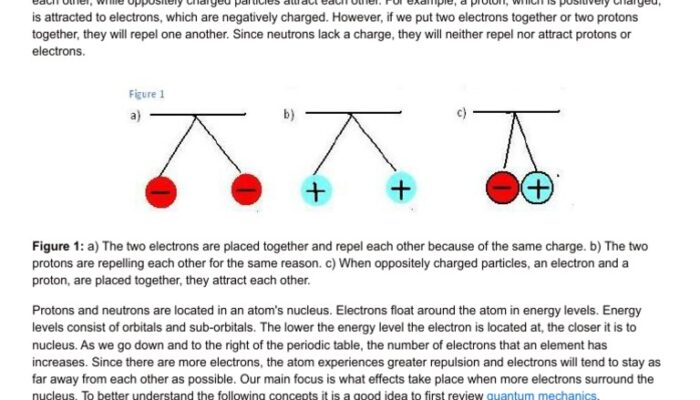
The mutual repulsion between negatively charged electrons alters energy levels, complicating spectral predictions. - Screening Effect:
Inner electrons partially shield outer electrons from the nucleus, modifying effective nuclear charge and energy states. - Exchange Interaction:
Quantum mechanical effects arising from electron indistinguishability influence energy configurations.
Historical Development of Theoretical Models
The journey to explain multi-electron atom spectra began with early atomic models and evolved through groundbreaking quantum theories. Niels Bohr’s atomic model, successful for hydrogen, laid the groundwork but could not accommodate the complexities of electron interactions in multi-electron atoms. This limitation spurred the development of quantum mechanics, with Erwin Schrödinger’s wave equation providing a more robust framework to describe atomic orbitals and energy levels.
Wolfgang Pauli’s formulation of the Pauli Exclusion Principle further refined the theory by establishing that no two electrons can share identical quantum states. This principle introduced the concept of electron configurations, which are essential for predicting allowed electronic transitions and thus the spectral lines of multi-electron atoms.
Advanced Quantum Mechanical Approaches
Despite the power of Schrödinger’s equation, accurately modeling multi-electron atoms requires addressing electron correlation effects-how the motion of one electron is influenced by others. The Hartree-Fock method approximates these interactions by treating electrons in an average field created by all others, but it falls short of capturing all correlation nuances.
To overcome these limitations, more sophisticated computational techniques have been developed:
- Configuration Interaction (CI):
Incorporates multiple electron configurations to better represent correlated electron behavior. - Coupled Cluster (CC) Methods:
Employs an exponential ansatz to systematically include electron correlation effects, enhancing accuracy.
Role of Spectroscopy in Validating Theories
Spectroscopic techniques serve as critical tools for testing and refining theoretical models of multi-electron atoms. By observing the wavelengths of light absorbed or emitted during electronic transitions, scientists can compare experimental data with theoretical predictions. Advances such as laser-induced fluorescence and high-resolution spectroscopy have significantly improved the precision of these measurements, enabling deeper insights into atomic structure and electron dynamics.
Applications Across Scientific Disciplines
The analysis of multi-electron atomic spectra has far-reaching implications beyond atomic physics. In astrophysics, spectral data allow researchers to determine the elemental composition of stars and galaxies, expanding our understanding of the universe’s makeup. In condensed matter physics, electron configurations inferred from spectra help explain material properties, linking microscopic atomic behavior to macroscopic phenomena.
Challenges and Ongoing Research
Despite substantial progress, fully deciphering the spectra of multi-electron atoms remains an ongoing scientific challenge. The intricate quantum effects and electron correlations present in these systems resist complete analytical solutions. Continuous advancements in computational methods and experimental techniques are essential to unraveling these complexities, with each breakthrough revealing new questions and avenues for exploration.
Summary and Outlook
The explanation of multi-electron atom spectra is a multifaceted endeavor shaped by the contributions of numerous physicists and evolving theoretical frameworks. While current models provide valuable insights, the quest for a comprehensive understanding persists, driven by the complexity of electron interactions and the precision of spectroscopic observations. This dynamic field continues to inspire research, promising further discoveries in atomic and molecular physics.
FAQ
What causes the complexity in the spectra of multi-electron atoms?
The complexity arises from electron-electron repulsion, screening effects by inner electrons, and quantum exchange interactions, which alter energy levels and make spectral lines more intricate than those of single-electron atoms.
Which quantum mechanical methods are used to model multi-electron atom spectra?
Methods include the Hartree-Fock approximation, Configuration Interaction (CI), and Coupled Cluster (CC) techniques, which progressively improve the accuracy of electron correlation representation.
How does spectroscopy help in understanding multi-electron atoms?
Spectroscopy measures the wavelengths of absorbed or emitted light during electronic transitions, allowing scientists to validate theoretical models and gain insights into atomic structure and electron dynamics.
Why can't the Bohr model explain multi-electron atom spectra?
The Bohr model only accounts for single-electron systems like hydrogen and cannot handle the complex electron interactions in multi-electron atoms, necessitating advanced quantum mechanical frameworks.





Leave a Reply