
Short Answer
Definition of Atomic Stability
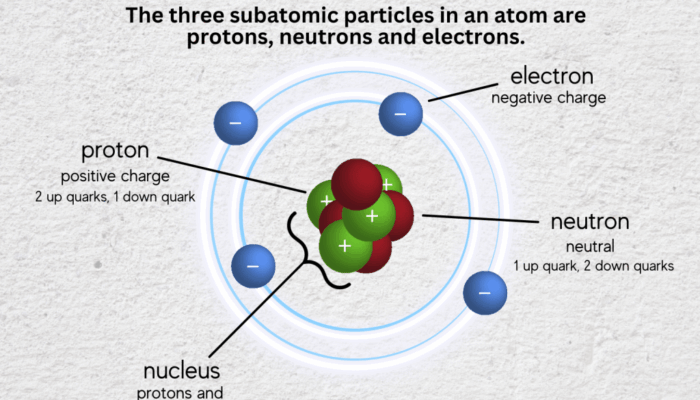
Atomic stability refers to an atom’s ability to maintain its structure without spontaneously undergoing radioactive decay or transformation. This stability is determined by the composition and interactions of its subatomic particles-protons, neutrons, and electrons-and the forces that govern their behavior. A stable atom preserves its chemical identity and properties, while instability can lead to changes that affect its reactivity and existence.
Subatomic Particles and Their Roles
Protons: Defining the Element
Protons are positively charged particles located within the atomic nucleus. The total number of protons, known as the atomic number, uniquely identifies each chemical element and influences its chemical characteristics. For example, hydrogen contains a single proton, whereas carbon has six. Despite their like charges, protons remain clustered in the nucleus due to the presence of powerful nuclear forces.
Neutrons: The Nuclear Stabilizers
Neutrons are neutral particles that share the nucleus with protons. Their primary function is to enhance nuclear stability by offsetting the electrostatic repulsion between positively charged protons. By contributing to the strong nuclear force without adding electrical charge, neutrons help bind the nucleus together. The ratio of neutrons to protons is critical; an optimal balance prevents instability, while deviations can lead to radioactive decay.
Electrons: Governing Chemical Behavior
Electrons are negatively charged particles that orbit the nucleus in defined energy levels or shells. Although they contribute minimally to atomic mass, electrons determine how atoms interact chemically. The arrangement of electrons, especially in the outermost shell, influences an atom’s tendency to form bonds by gaining, losing, or sharing electrons to achieve a stable electron configuration.
Forces Influencing Atomic Stability
Strong Nuclear Force
This is a short-range but extremely powerful force that acts between protons and neutrons within the nucleus. It overcomes the repulsive electromagnetic force between protons, effectively holding the nucleus together. The strong nuclear force operates only at very small distances, which is why nucleons must be closely packed for the nucleus to remain intact.
Electromagnetic Force
The electromagnetic force governs interactions between charged particles, including the repulsion between protons in the nucleus and the attraction between electrons and the positively charged nucleus. This force extends over longer distances and plays a key role in chemical bonding and electron arrangement.
Mechanisms Behind Atomic Stability
Atomic stability arises from a delicate balance between the attractive strong nuclear force and the repulsive electromagnetic force within the nucleus, combined with the arrangement of electrons in energy levels. When the neutron-to-proton ratio is within a certain range, the strong nuclear force effectively counteracts proton repulsion, resulting in a stable nucleus. Electrons occupying filled outer shells further contribute to the atom’s overall stability by minimizing reactive tendencies.
Mathematical Perspective: Nuclear Binding Energy
The concept of nuclear binding energy quantifies the stability of a nucleus. It is the energy required to disassemble a nucleus into its individual protons and neutrons. The binding energy per nucleon is a key indicator of nuclear stability.
- Binding Energy (B):
The total energy holding the nucleus together. - Mass Defect (Δm):
The difference between the mass of the nucleus and the sum of the masses of its individual nucleons. - Einstein’s Equation:
B = Δm × c², where c is the speed of light.
A higher binding energy per nucleon generally corresponds to a more stable nucleus.
Real-World Examples of Atomic Stability
Carbon isotopes illustrate the impact of neutron number on stability. Carbon-12, with six protons and six neutrons, is stable and abundant, whereas carbon-14, containing two extra neutrons, is radioactive and undergoes beta decay. Similarly, uranium isotopes with varying neutron counts exhibit different stability levels, influencing their use in nuclear reactors and dating techniques.
Common Misconceptions About Atomic Stability
Protons repel each other and should cause the nucleus to explode.
The strong nuclear force counterbalances proton repulsion, maintaining nuclear cohesion.
Electrons determine the mass of an atom.
Electrons have negligible mass compared to protons and neutrons; the nucleus accounts for nearly all atomic mass.
All isotopes of an element are stable.
Many isotopes are unstable and radioactive due to imbalanced neutron-to-proton ratios.
Significance of Atomic Stability
Understanding atomic stability is fundamental to fields such as chemistry, physics, and nuclear science. It explains why elements behave differently, how radioactive decay occurs, and underpins technologies like nuclear energy and medical imaging. Stability also influences the formation of matter in the universe and the chemical reactions essential to life.
FAQ
What determines the stability of an atom?
The stability of an atom is determined by the balance of protons and neutrons in the nucleus and the arrangement of electrons in shells, governed by the strong nuclear and electromagnetic forces.
Why do neutrons contribute to atomic stability?
Neutrons reduce the repulsive electromagnetic force between protons by adding nuclear binding without contributing charge, helping maintain nuclear integrity.
How do electrons influence atom stability?
Electrons influence chemical stability by filling or emptying electron shells, affecting how atoms bond and interact chemically.
What happens if the neutron-to-proton ratio is off?
An imbalance can lead to nuclear instability, causing the atom to undergo radioactive decay to reach a more stable configuration.






Leave a Reply