
Short Answer
Definition of Atoms and Molecules
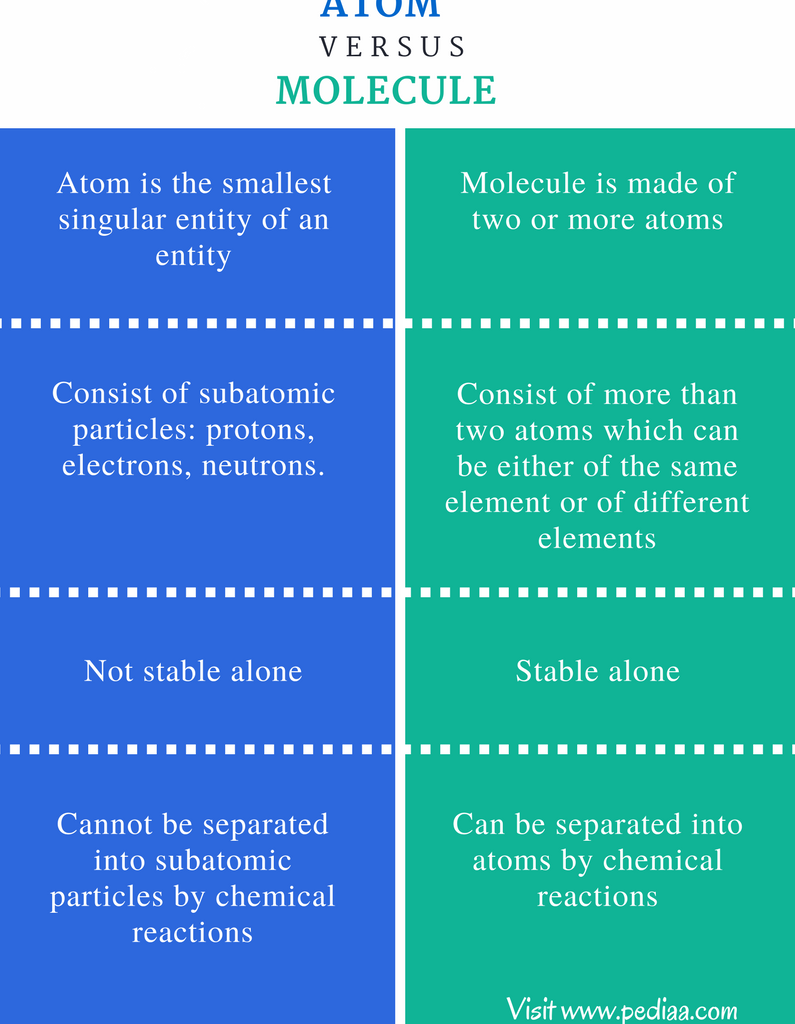
Understanding the difference between atoms and molecules is essential to grasp their respective masses. An atom is the smallest unit of matter that retains the properties of an element. It consists of a dense nucleus made up of protons and neutrons, surrounded by a cloud of electrons. The nucleus accounts for nearly all of the atom’s mass, while electrons contribute minimally.
A molecule, on the other hand, is a chemical entity formed when two or more atoms bond together. These atoms can be identical, as in diatomic oxygen (O2), or different, as in water (H2O), which contains hydrogen and oxygen atoms. Molecules represent the smallest units of compounds that maintain their chemical properties.
Atomic and Molecular Mass Explained
Mass in atomic and molecular contexts is typically measured in atomic mass units (amu), a standard unit that quantifies the mass of atoms and molecules relative to carbon-12. The atomic mass of an atom is primarily determined by the sum of protons and neutrons in its nucleus. For example, hydrogen, the lightest element, has an atomic mass close to 1 amu, while carbon’s atomic mass is approximately 12 amu.
When atoms combine to form molecules, the molecular mass is calculated by adding the atomic masses of all constituent atoms. For instance, a water molecule, composed of two hydrogen atoms and one oxygen atom, has a molecular mass of about 18 amu (1 amu per hydrogen atom plus 16 amu for oxygen). This aggregation of atomic masses means molecules generally have greater mass than any single atom within them.
Examples of Molecular Masses
Examining various molecules highlights how atomic composition influences molecular mass. Methane (CH4), for example, consists of one carbon atom (12 amu) and four hydrogen atoms (4 amu total), resulting in a molecular mass of 16 amu. Although individual atoms have relatively small masses, their combination creates a molecule with a significantly larger mass.
More complex molecules, such as polymers, demonstrate how molecular mass can increase dramatically. Polyethylene, a polymer made from repeating ethylene units (C2H4), can accumulate very high molecular masses due to the large number of bonded atoms, illustrating the impact of molecular size on mass.
Influence of Environmental and Isotopic Variations
Environmental conditions and isotopic differences add layers of complexity to the mass comparison between atoms and molecules. Noble gases like neon and argon typically exist as single atoms under normal atmospheric conditions, but can form diatomic or polyatomic molecules under specific circumstances. This variability affects how their mass is represented in different states.
Isotopes, which are atoms of the same element with varying numbers of neutrons, also influence mass. Carbon-12 and carbon-14 are isotopes differing by two neutrons, resulting in different atomic masses. When isotopes are incorporated into molecules, they alter the overall molecular mass and can affect the physical and chemical properties of the compound.
Molecular Mass Versus Molecular Properties
While molecular mass is a fundamental characteristic, it is not the sole determinant of a molecule’s behavior. The structure, bonding, and electronegativity of atoms within a molecule play crucial roles in defining its reactivity and interactions. For example, large biomolecules such as enzymes and proteins have substantial masses, but their function depends heavily on their three-dimensional shapes and chemical environments rather than mass alone.
Summary: Comparing Atomic and Molecular Mass
In conclusion, molecules generally have a greater mass than the individual atoms that compose them due to the additive nature of atomic masses. However, this straightforward comparison masks the intricate relationships and variations introduced by isotopes, molecular complexity, and environmental factors. The study of atomic and molecular mass not only clarifies fundamental concepts in chemistry and physics but also opens avenues for deeper exploration into the nature of matter.
Significance of Understanding Atomic and Molecular Mass
Grasping the distinctions between atomic and molecular mass is vital across scientific disciplines. It underpins chemical stoichiometry, enabling precise calculations in reactions, and informs fields such as materials science, pharmacology, and environmental science. Moreover, appreciating these concepts enhances our comprehension of the microscopic world, fostering advancements in technology and contributing to innovations that impact everyday life.
FAQ
What is the difference between an atom and a molecule?
An atom is the smallest unit of matter that retains the properties of an element, while a molecule is formed when two or more atoms bond together.
How is molecular mass calculated?
Molecular mass is calculated by adding the atomic masses of all the constituent atoms in a molecule.





Leave a Reply