
Short Answer
Understanding the Debate: Physics vs. Biology
The ongoing discussion about which scientific discipline holds greater fundamental importance often centers on physics and biology. These two fields represent distinct philosophical approaches and investigative methods, yet they are deeply interconnected within the broader framework of scientific knowledge. This debate transcends academic curiosity, touching on profound questions about the essence of existence itself.
Definition and Scope of Physics
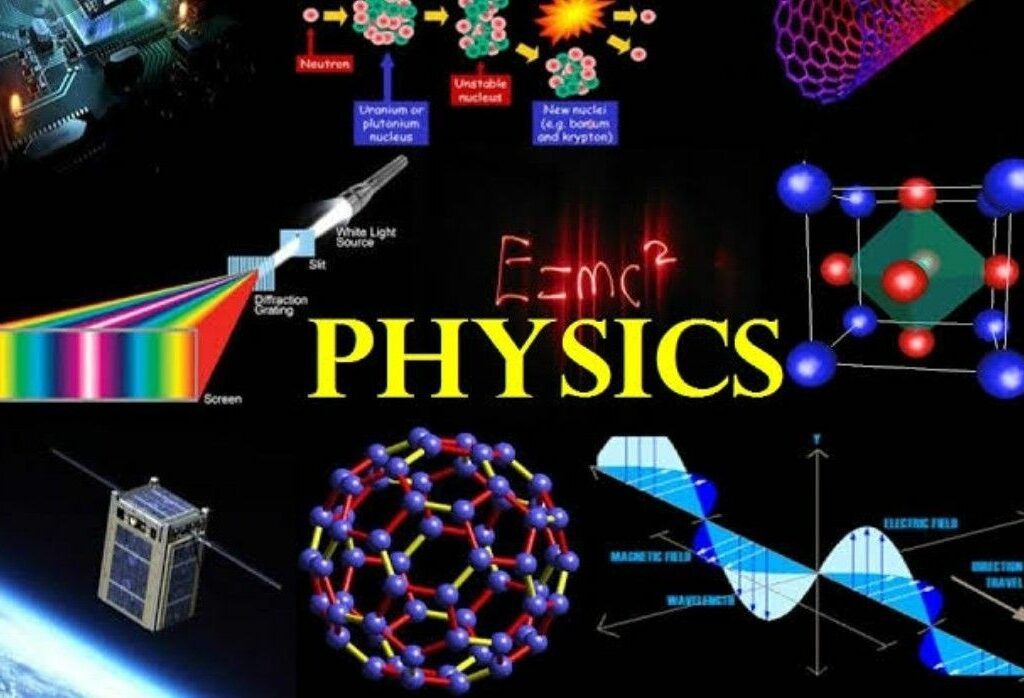
Physics is widely regarded as the foundational science due to its role in uncovering the basic laws that govern the universe. It deals with universal concepts such as force, energy, and matter interactions, which form the underlying principles for all natural phenomena. These principles extend beyond specific cases, providing a comprehensive framework that supports other sciences, including chemistry and biology.
- Core Focus:
The study of matter, energy, and the fundamental forces shaping the cosmos. - Methodology:
Employs rigorous experimentation and mathematical modeling to predict natural behaviors. - Applications:
Explains phenomena from planetary motion to atomic interactions.
Definition and Scope of Biology
Biology is the scientific study of life in all its diversity, encompassing organisms, their behaviors, and their environments. Although it may appear more specialized, biology’s complexity lies in understanding how matter is organized within living systems, from genetic molecules to entire ecosystems. It often uses a reductionist approach to dissect organisms into parts, aiming to explain emergent properties such as consciousness and adaptation.
- Core Focus:
Exploration of living organisms and their interactions with the environment. - Methodology:
Combines reductionist and holistic approaches to study life’s complexity. - Applications:
Investigates genetics, physiology, ecology, and evolutionary processes.
Interdisciplinary Connections: The Intersection of Physics and Biology
The convergence of physics and biology is exemplified by fields like biophysics, which applies physical laws to understand biological phenomena. Researchers in this area analyze forces and energy transformations within biomolecules, utilizing thermodynamics and quantum mechanics to decode life’s mechanisms. This synergy demonstrates that while physics provides the fundamental laws, biology reveals their dynamic manifestations in living systems.
Biophysics: Bridging Two Worlds
Biophysics integrates principles from both disciplines to explore how physical forces influence biological structures and functions. For example, the study of protein folding, cellular mechanics, and neural signaling relies heavily on physical concepts to explain biological complexity.
Philosophical Perspectives: Reductionism vs. Holism
The debate also highlights a philosophical contrast between reductionism and holism. Physics traditionally adopts a reductionist stance, breaking down complex phenomena into simpler components for analysis. Biology, however, often embraces a holistic viewpoint, recognizing that life’s full understanding requires considering the interactions and emergent properties that arise from complex systems. This philosophical divergence underscores the importance of interdisciplinary collaboration to address profound scientific questions.
Evolutionary Significance in Biology
Biology’s evolutionary framework provides a historical context for understanding life’s diversity and interconnectedness. The theory of evolution, one of biology’s most significant contributions, explains how species change over time and relate to one another. This perspective enriches our comprehension of life’s place in the universe and introduces ethical, ecological, and philosophical dimensions to scientific inquiry.
Technological and Societal Impacts
Both physics and biology have driven transformative technological advancements that shape modern society. Physics has enabled breakthroughs in energy production, electronics, and quantum computing, fundamentally altering how we live and work. Meanwhile, biological sciences have revolutionized medicine, agriculture, and environmental conservation, promoting health and sustainability. The mutual influence of these fields highlights that neither can be deemed solely fundamental; instead, they complement and enhance each other’s contributions.
Why the Question of Fundamentality is Complex
Asking whether physics or biology is more fundamental may oversimplify the intricate relationship between these sciences. Physics aims to reveal the universal laws governing matter and energy, while biology focuses on the complexities of living systems and their interactions. This inquiry reflects humanity’s deep-seated desire to construct a unified understanding of existence. Exploring both the cosmic scale and the microscopic intricacies of life reveals a richly interconnected scientific tapestry, driven by human curiosity and the quest for knowledge.
FAQ
What distinguishes physics from biology in terms of scientific approach?
Physics often uses reductionist methods focusing on universal laws, while biology embraces complexity and holism to understand living systems.
Why is biophysics important?
Biophysics bridges physics and biology, applying physical principles to explain biological phenomena, enhancing understanding of life processes.
How do physics and biology contribute to technology?
Physics has led to advances like quantum computing and energy technologies; biology contributes to medicine, agriculture, and ecological sustainability.




Leave a Reply