
Short Answer
Definition of the Speed of Light
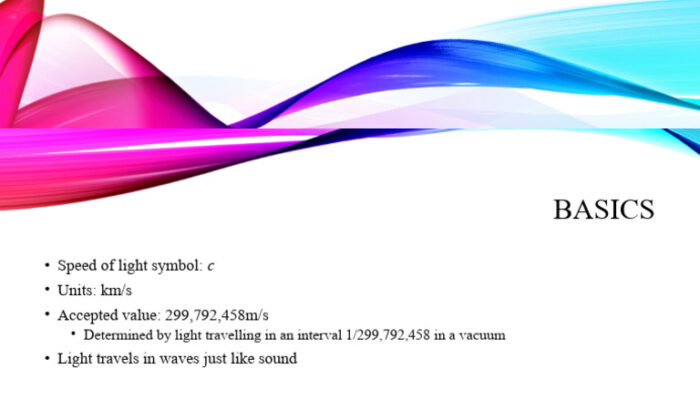
The speed of light is a fundamental constant in physics, representing the maximum velocity at which electromagnetic waves propagate through a vacuum. It is approximately 299,792 kilometers per second (about 186,282 miles per second). This constant underpins many scientific theories and principles, serving as a cornerstone in fields ranging from classical mechanics to modern cosmology.
Historical Context and Early Attempts to Measure Light Speed
For centuries, the nature and velocity of light intrigued philosophers and scientists alike. Early civilizations often regarded light as instantaneous or infinite in speed, with explanations steeped in mythology rather than empirical evidence. It was not until the 17th century that experimental approaches emerged, marking a pivotal shift from speculation to measurement. Among the earliest scientific instruments designed to quantify light speed was the rotating mirror apparatus, which revolutionized the understanding of light’s finite velocity.
Rotating Mirror Method and Michelson’s Contributions
Albert A. Michelson, a pioneering American physicist, significantly advanced the precision of light speed measurements using the rotating mirror technique. His experimental design involved directing a beam of light toward a rapidly spinning mirror. The light would travel a long distance, reflect off a stationary surface, and return to the rotating mirror. By carefully adjusting the mirror’s angular velocity, Michelson ensured that the returning light beam aligned perfectly with the mirror’s position at the moment of reflection. This method allowed for highly accurate determination of the speed of light, laying the groundwork for future research.
Modern Techniques for Measuring the Speed of Light
Contemporary science has expanded the array of tools available to measure light speed, incorporating advanced technologies that offer greater precision and versatility.
Time-of-Flight Measurements
This technique involves emitting light pulses and recording the time taken for them to travel to a target and back. Utilizing lasers and ultra-fast detectors, time-of-flight methods can measure light speed with remarkable accuracy. These measurements are often employed in astronomical observations and laboratory experiments alike.
Femtosecond Laser Technology
Femtosecond lasers generate optical pulses lasting less than one quadrillionth of a second, enabling scientists to probe light’s behavior on incredibly short timescales. By directing these ultrafast pulses toward reflective surfaces and capturing their return with high-speed cameras, researchers can obtain precise measurements of light speed and explore its properties in practical applications.
LIDAR Systems
Originally developed for topographic mapping, Light Detection and Ranging (LIDAR) technology uses laser pulses to measure distances by timing the reflection of light from objects. Beyond mapping, LIDAR’s ability to calculate the time delay of returning light pulses provides valuable data on light speed. This technology has found widespread use in autonomous vehicle navigation, atmospheric research, and environmental monitoring.
Optical Cavities and Resonance
Optical cavities consist of two or more mirrors arranged to trap light, causing it to oscillate between them. This resonance amplifies the light signal, allowing physicists to detect subtle variations in light speed caused by environmental factors or material properties. The principle is analogous to musical resonance, where precise vibrations produce harmonious effects, illustrating the interplay between theoretical physics and experimental practice.
Light Speed in Astrophysics and Cosmology
In the vast expanse of the universe, measuring the speed of light becomes more complex due to cosmic phenomena. The Cosmological Constant, which relates to the universe’s accelerated expansion, influences how light travels across immense distances. Astronomers study cosmic microwave background radiation and redshift effects to understand how light’s speed interacts with gravitational fields and the fabric of spacetime, revealing that light’s behavior can vary under extreme cosmic conditions.
Quantum Optics and Single-Photon Detection
Quantum mechanics introduces a nuanced perspective on light measurement. Quantum optics employs devices such as single-photon detectors to capture individual photons, enabling the study of light’s dual wave-particle nature. This approach bridges classical physics with quantum theory, offering insights into the fundamental properties of light and refining speed measurements at the quantum level.
Significance of Measuring the Speed of Light
Determining the speed of light is not merely an academic exercise; it holds profound implications across science and technology. Accurate knowledge of this constant is essential for the synchronization of global positioning systems (GPS), telecommunications, and the calibration of scientific instruments. Moreover, understanding light’s speed deepens our comprehension of the universe’s structure, the behavior of electromagnetic radiation, and the limits of physical laws.
Common Misconceptions About the Speed of Light
Light speed is infinite.
Light travels at a finite speed of approximately 299,792 km/s in a vacuum, which has been precisely measured through various experimental methods.
The speed of light can vary arbitrarily.
While light speed is constant in a vacuum, it can appear to change when passing through different media due to refraction, but its fundamental speed limit remains unchanged.
Measuring light speed is straightforward.
Accurately measuring the speed of light requires sophisticated instruments and techniques due to the extremely high velocity and the need for precise timing.
Conclusion: The Ongoing Quest to Understand Light’s Velocity
The endeavor to measure the speed of light encapsulates a rich history of scientific innovation and discovery. From early philosophical musings to cutting-edge quantum experiments, the pursuit has continually evolved, enhancing our grasp of one of nature’s most fundamental constants. As technology advances, new methods and instruments will further refine our understanding, illuminating the intricate nature of light and its role in the cosmos.
FAQ
What is the speed of light?
The speed of light is approximately 299,792 kilometers per second (about 186,282 miles per second).
What instruments are used to measure the speed of light?
Instruments such as rotating mirrors, femtosecond lasers, LIDAR systems, and optical cavities are used to measure the speed of light.
Why is measuring the speed of light important?
Measuring the speed of light is crucial for various scientific applications, including GPS synchronization, telecommunications, and understanding the universe’s structure.

Leave a Reply