
Short Answer
Definition of Stellar Death
Stellar death refers to the final stages in the life cycle of a star, marking the end of its nuclear fusion processes and the transition into remnants such as neutron stars or black holes. This phase is characterized by dramatic physical transformations and explosive events that profoundly influence the cosmos.
- Star:
A massive, luminous sphere of plasma held together by gravity, undergoing nuclear fusion in its core. - Stellar Death:
The process by which a star exhausts its nuclear fuel and undergoes collapse or explosion, leading to the formation of compact remnants. - Supernova:
A powerful and luminous explosion marking the death of a massive star, dispersing elements into space.
Fundamental Forces Governing a Star’s Life
At the core of a star, a delicate equilibrium exists between two opposing forces: the outward pressure generated by nuclear fusion reactions and the inward gravitational pull. This balance sustains the star’s radiance over millions to billions of years. As the star consumes hydrogen and begins fusing heavier elements, this equilibrium shifts, initiating profound changes in its structure and stability.
Stages Leading to Stellar Demise
When a massive star depletes its hydrogen fuel, it transitions to fusing helium and subsequently heavier elements in a sequence of increasingly complex nuclear reactions. This phase can be compared to an artist layering vibrant colors, each fusion stage producing new elements and altering the star’s internal dynamics. However, once the core accumulates iron, fusion no longer yields energy, destabilizing the star and setting the stage for collapse.
Expansion into a Red Supergiant
As instability grows, the star’s outer layers expand and cool, transforming it into a red supergiant. This swelling resembles an aging giant enveloping itself in glowing gas, creating a visually stunning but precarious state. This expansion is a precursor to the star’s ultimate collapse, much like a dam under increasing pressure before it bursts.
The Cataclysmic Collapse and Supernova Explosion
In the final moments, the star’s core succumbs to gravitational forces, compressing matter to extraordinary densities and triggering the formation of neutrons. This implosion culminates in a supernova-a brilliant explosion that can outshine entire galaxies briefly. The supernova disperses vast amounts of gas and dust, enriching the surrounding space with heavy elements synthesized during the star’s life and death.
Post-Supernova Remnants
Following the supernova, the core’s fate depends on its remaining mass:
- Neutron Star:
If the core retains sufficient mass but below a critical threshold, it compresses into a neutron star-an incredibly dense object where matter is packed beyond atomic nuclei density. - Black Hole:
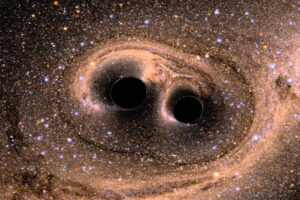
Should the core’s mass exceed this limit, it collapses further into a black hole, a region of spacetime with gravity so intense that not even light can escape.
Role of Stellar Death in Cosmic Recycling
The material expelled during a supernova plays a crucial role in the cosmic ecosystem. These remnants seed the interstellar medium with heavy elements, providing the essential building blocks for new stars, planets, and ultimately, life. This cyclical process of destruction and renewal is fundamental to the ongoing evolution of the universe.
Scientific Significance of Studying Stellar Death
Investigating the death of stars offers critical insights into the chemical evolution of galaxies and the universe’s history. The distribution of elements produced in supernovae informs astronomers about the conditions of the early cosmos and the lifecycle of matter. Each observed supernova acts as a cosmic timestamp, helping to map the development and composition of distant celestial structures.
Common Misconceptions About Stellar Death
All stars end their lives in supernova explosions.
Only massive stars undergo supernovae; smaller stars like the Sun end as white dwarfs without explosive deaths.
Black holes are cosmic vacuum cleaners that suck in everything around them.
Black holes exert gravitational pull like any other mass; objects must cross the event horizon to be irretrievably captured.
Why Understanding Stellar Death Is Important
The study of how stars die is vital for comprehending the universe’s grand narrative of creation and destruction. These processes influence the formation of new celestial bodies and the distribution of elements essential for life. Moreover, stellar death phenomena provide natural laboratories for physics under extreme conditions, advancing our knowledge of fundamental forces and matter.
FAQ
What happens during the final stages of a star's life?
During the final stages, a star exhausts its nuclear fuel, undergoes core collapse, and may explode as a supernova, leaving behind remnants such as neutron stars or black holes.
Do all stars end their lives in supernova explosions?
No, only massive stars end in supernova explosions. Smaller stars like the Sun end as white dwarfs without explosive deaths.
What is the difference between a neutron star and a black hole?
A neutron star is an incredibly dense remnant formed when the core mass is below a critical threshold, whereas a black hole forms when the core mass exceeds this limit, creating a region from which not even light can escape.
Why is studying stellar death important?
Studying stellar death helps us understand the chemical evolution of the universe, the lifecycle of matter, and fundamental physics under extreme conditions.



Leave a Reply