
Short Answer
Definition and Origins of CERN
The European Organization for Nuclear Research, widely known as CERN, stands as a monumental institution dedicated to exploring the fundamental particles and forces that constitute the universe. Its inception is deeply rooted in the post-World War II era, reflecting a collective ambition to advance scientific knowledge through international cooperation. Rather than a simple historical timeline, CERN’s foundation embodies the geopolitical, intellectual, and collaborative spirit of mid-20th century Europe.
Historical Context and Founding Vision
In the aftermath of World War II, Europe was marked by devastation but also a strong desire for reconstruction and progress. Around 1949, leading physicists, including Isidor Isaac Rabi, began advocating for a pan-European laboratory focused on nuclear research. This initiative was driven by the recognition that scientific advancement could serve as a unifying force, fostering peace and rebuilding intellectual capital across national boundaries.
The formal establishment of CERN was realized with the signing of the CERN Convention on July 29, 1953. This treaty laid the legal and organizational groundwork for an institution devoted to fundamental nuclear and particle physics research, setting the stage for decades of scientific breakthroughs.
Site Selection and Early Construction
The choice of Geneva, Switzerland, as the location for CERN was both strategic and symbolic. Switzerland’s neutrality and central position in Europe made it an ideal hub for international collaboration. Construction began in 1954, with multiple member states contributing not only financial resources but also scientific expertise, underscoring the collective nature of the project.
By 1957, CERN had made significant strides with the completion of its first major particle accelerator, the synchrocyclotron. This device enabled physicists to investigate the atomic nucleus with unprecedented precision, marking the beginning of CERN’s role as a leader in particle physics research.
Challenges in Development and Expansion
The timeline of CERN’s construction was shaped by numerous challenges. Financial limitations, shifting scientific objectives, and rapid technological advancements required continual reassessment of plans. As particle physics evolved, the complexity of accelerators increased, demanding innovative engineering solutions and greater investment.
Member states faced scrutiny over funding commitments, especially given Europe’s ongoing recovery from wartime devastation. Despite these hurdles, CERN’s collaborative framework allowed it to adapt and grow, reflecting the dynamic nature of scientific inquiry.
Advancements in Accelerator Technology
During the 1960s, CERN expanded its capabilities with the development of more advanced accelerators. The Proton Synchrotron, operational from 1959, exemplified this progress. It became a critical tool for probing hadrons and the strong nuclear force, contributing significantly to the understanding of fundamental particles and interactions.
The Large Hadron Collider and Modern CERN
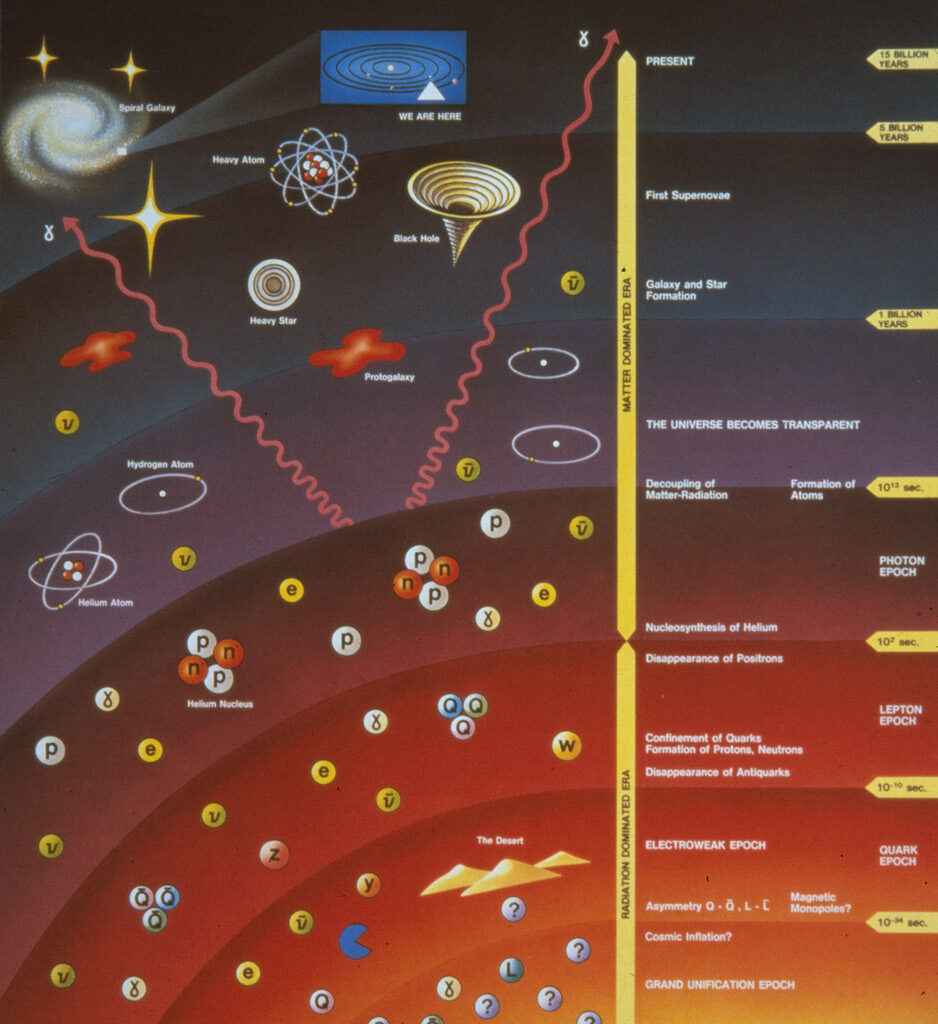
Over the decades, CERN evolved into the world’s largest particle physics laboratory. The construction of the Large Hadron Collider (LHC), which began in 2007, represents the pinnacle of this evolution. The LHC is engineered to collide protons at energies previously unattainable, recreating conditions similar to those just after the Big Bang and enabling groundbreaking discoveries in particle physics.
Scientific and Societal Impact
CERN’s journey is not only a story of scientific achievement but also one of international cooperation and societal progress. It exemplifies how shared intellectual pursuits can transcend political and cultural differences. However, the organization has faced criticism regarding the allocation of resources and ethical considerations surrounding high-energy experiments, sparking ongoing debates about the balance between fundamental research and societal priorities.
Common Misconceptions About CERN’s Construction
CERN was established immediately after World War II.
While the idea emerged soon after the war, formal establishment occurred in 1953 after years of planning and negotiation.
CERN’s construction was a straightforward process.
The development involved complex challenges including financial constraints, evolving scientific goals, and technological hurdles.
Why CERN’s Establishment Remains Significant
The creation and growth of CERN highlight the power of international collaboration in advancing human knowledge. It serves as a beacon of scientific innovation, pushing the boundaries of our understanding of the universe. Beyond its scientific contributions, CERN symbolizes the potential for peaceful cooperation and shared progress in a world often divided by conflict.
Looking Forward: The Legacy and Future of CERN
From its mid-20th century origins to its current status as a global research powerhouse, CERN’s history is a testament to visionary ambition and collective effort. As new discoveries emerge and technologies evolve, CERN continues to inspire curiosity and challenge the limits of human understanding, inviting future generations to explore the mysteries of the cosmos.
FAQ
When did the construction of CERN officially begin?
CERN's construction officially began in 1954 after the CERN Convention was signed in 1953.
What was the first major accelerator built at CERN?
The synchrocyclotron, inaugurated in 1957, was CERN's first major accelerator.
Where is CERN located?
CERN is located near Geneva, Switzerland.
What is the CERN Convention?
The CERN Convention is the treaty signed in 1953 that established CERN as a European research organization.
When did the Large Hadron Collider construction start?
Construction of the LHC began in 2007.






Leave a Reply