

Short Answer
Understanding Earth-Like Exoplanets
Earth-like exoplanets are celestial bodies that share key characteristics with our home planet, primarily being rocky in composition and situated within the habitable zone of their parent star. This habitable zone, often referred to as the “Goldilocks zone,” is the orbital region where temperatures could allow liquid water to exist on the planet’s surface-an essential ingredient for life as we understand it. However, defining an Earth analog extends beyond mere location; it encompasses factors such as atmospheric makeup, planetary mass, and the nature of the host star.
- Rocky Composition:
These planets are primarily composed of silicate rocks and metals, distinguishing them from gas giants. - Habitable Zone:
The orbital range where conditions might support liquid water, influenced by stellar luminosity and planetary atmosphere. - Atmospheric and Geophysical Factors:
The presence and composition of an atmosphere, magnetic fields, and geological activity all affect habitability.
Techniques for Detecting Exoplanets
Discovering planets beyond our solar system relies on sophisticated observational methods that infer their presence indirectly or capture their images directly. Among these, the transit method has become a cornerstone of exoplanet detection.
- Transit Method:
This technique monitors the slight dimming of a star’s brightness as a planet crosses its face, requiring highly sensitive instruments to detect changes often less than 1%. - Radial Velocity:
Measures the star’s wobble caused by gravitational pull from orbiting planets, providing data on planetary mass and orbit. - Direct Imaging:
Involves capturing actual images of exoplanets by filtering out the overwhelming light from their host stars, aided by technologies like adaptive optics and interferometry.
Challenges in Characterizing Exoplanet Atmospheres
Analyzing the atmospheres of distant exoplanets presents significant hurdles. The faint signals embedded in the light spectra during planetary transits require exceptional precision to decode chemical compositions. Current instruments face limitations in resolving these subtle features, and the interference from the host star’s light complicates interpretation.
- Signal Weakness:
Atmospheric signatures are often faint and easily masked by stellar radiation. - Technological Constraints:
Existing telescopes and spectrometers have limited resolution and sensitivity for detailed atmospheric analysis. - Ambiguity in Data:
Similar spectral features can arise from different atmospheric processes, making definitive conclusions challenging.
Advancements in Observational Technology
Recent progress in astronomical instrumentation has enhanced our ability to study exoplanets more directly and in greater detail. Adaptive optics systems correct for atmospheric distortion, while interferometry combines signals from multiple telescopes to improve resolution. These innovations enable clearer imaging of exoplanets and more accurate measurements of their properties.
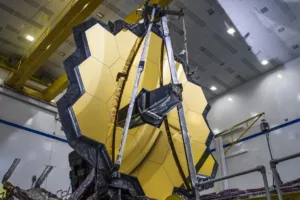
Looking ahead, the James Webb Space Telescope (JWST) is poised to revolutionize exoplanet research. Its advanced infrared sensors will probe exoplanet atmospheres with unprecedented sensitivity, potentially identifying molecules such as methane, oxygen, and ozone-possible biosignatures indicative of life processes.
The Role of Artificial Intelligence in Exoplanet Research
The vast datasets generated by space missions and ground-based observatories necessitate efficient analysis techniques. Artificial intelligence (AI), particularly machine learning algorithms, is increasingly employed to sift through this data, identifying patterns and prioritizing promising exoplanet candidates for further study. While AI accelerates discovery, it also raises concerns about transparency and the potential for biases embedded in training data to influence outcomes.
Philosophical and Ethical Dimensions of the Search
The pursuit of an Earth 2.0 transcends scientific inquiry, touching on profound questions about humanity’s place in the cosmos. Discovering a truly habitable world could reshape our understanding of life’s uniqueness and longevity. It also prompts reflection on our responsibilities as caretakers of Earth and the ethical considerations surrounding potential contact with extraterrestrial life forms.
Significance of Finding Earth-Like Worlds
Identifying planets similar to Earth holds immense value for multiple disciplines. It enriches planetary science by expanding knowledge of planetary formation and evolution. From an astrobiological perspective, it opens avenues to explore the prevalence of life beyond our solar system. Moreover, it fuels philosophical discourse on existence and survival, inspiring technological innovation and international collaboration.
Frequently Asked Questions (FAQ)
What characteristics define an Earth-like exoplanet?
An Earth-like exoplanet is generally a terrestrial planet located within the habitable zone of its star, possessing conditions that could support liquid water and having atmospheric and geological features comparable to Earth.
Which methods are primarily used to detect exoplanets?
Exoplanets are commonly detected through the transit method, radial velocity measurements, and direct imaging, each providing different insights into planetary properties.
What obstacles exist in studying exoplanet atmospheres?
Challenges include the faintness of atmospheric signals, interference from the host star’s light, and the limited resolution of current observational instruments.
How will the James Webb Space Telescope enhance exoplanet studies?
JWST’s infrared capabilities will allow detailed examination of exoplanet atmospheres, improving detection of molecules that may indicate habitability or biological activity.
Why is the search for Earth 2.0 crucial?
Discovering Earth-like planets advances our understanding of planetary environments, the potential for extraterrestrial life, and raises important philosophical and ethical questions about humanity’s future and cosmic role.
FAQ
What defines an Earth-like exoplanet?
An Earth-like exoplanet is typically a rocky planet located within its star's habitable zone, where conditions may allow for liquid water, with atmospheric and geophysical properties similar to Earth.
What methods are used to detect exoplanets?
Common methods include the transit method, which measures star brightness dips caused by a planet passing in front, radial velocity measurements, and direct imaging techniques.
What challenges exist in studying exoplanet atmospheres?
Studying exoplanet atmospheres requires high precision to detect chemical signatures from distant light spectra, often complicated by interference from the host star and limitations of current technology.
How will the James Webb Space Telescope aid exoplanet research?
The JWST's infrared capabilities will allow detailed characterization of exoplanet atmospheres, potentially detecting molecules associated with life and improving our understanding of habitability.
Why is the search for Earth 2.0 important?
Finding Earth-like exoplanets broadens our understanding of planetary science, the potential for life beyond Earth, and raises philosophical and ethical questions about humanity's place in the universe.




Leave a Reply