

Short Answer
Definition of Clouds and Their Role in Astronomy
Clouds are visible masses of tiny water droplets or ice crystals suspended in the Earth’s atmosphere. They come in various forms and altitudes, each with distinct physical characteristics that influence weather and visibility. In the context of astronomy, clouds represent a significant obstacle, as they can obscure the view of celestial bodies and interfere with the accuracy of observations.
- Composition:
Clouds consist primarily of condensed water vapor, either as liquid droplets or ice crystals, depending on altitude and temperature. - Classification:
Common cloud types include cirrus, cumulus, stratus, and nimbostratus, each differing in appearance, altitude, and atmospheric impact.
Types of Clouds and Their Impact on Astronomical Observations
High-Altitude Cirrus Clouds
Cirrus clouds are thin, wispy formations found at high elevations, composed mainly of ice crystals. While they often indicate stable weather, their presence can scatter starlight and other celestial emissions, complicating precise astronomical measurements. Astronomers must often differentiate between the intrinsic brightness of stars and the distortions caused by these clouds.
Mid-Level Cumulus Clouds
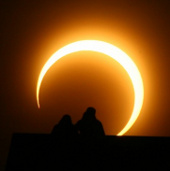
Cumulus clouds are characterized by their fluffy, cotton-like appearance and typically form through thermal convection during the day. These clouds can grow into towering structures that cast shadows and block the sky, hindering observations of transient events such as eclipses and meteor showers by obstructing the line of sight.
Low-Lying Stratus Clouds
Stratus clouds form a uniform, gray layer close to the Earth’s surface, often resulting in overcast conditions. Their diffuse nature softens incoming light, making it difficult to distinguish individual stars and complicating the collection of photometric data essential for studying stellar properties.
Thick Nimbostratus Clouds
Nimbostratus clouds are dense, moisture-rich layers that produce widespread precipitation. Their substantial thickness traps heat and moisture, creating an environment that severely limits the observation of infrared emissions from celestial objects, which are crucial for understanding star formation and cosmic evolution.
Noctilucent Clouds: A Unique Atmospheric Phenomenon
Noctilucent clouds appear at very high altitudes during polar summer months and are composed of ice crystals that reflect sunlight after the sun has set below the horizon. Their glowing, ethereal appearance poses observational challenges but also provides valuable insights into upper atmospheric conditions and potential climate change effects.
Interaction Between Clouds and Electromagnetic Radiation
Clouds influence the transmission and scattering of electromagnetic waves across various wavelengths, affecting the spectral data astronomers collect. This interaction can distort the spectral signatures of stars and other celestial bodies, introducing uncertainties in the interpretation of astrophysical phenomena. Consequently, astronomers must develop sophisticated atmospheric models and observational techniques to correct for these interferences.
Technological Solutions to Overcome Cloud Interference
Space-Based Observatories
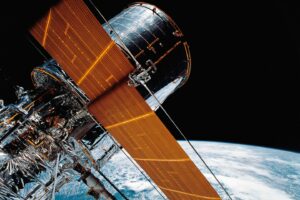
To bypass the limitations imposed by Earth’s atmosphere, astronomers utilize space telescopes such as the Hubble Space Telescope and the James Webb Space Telescope. Operating above the cloud layer, these instruments provide unobstructed views of the universe, enabling high-resolution imaging and data collection free from atmospheric distortion.
Ground-Based Adaptive Technologies
Despite the advantages of space telescopes, ground-based observatories remain vital. To counteract cloud cover and atmospheric turbulence, astronomers employ adaptive optics and specialized sensors that adjust in real-time to changing conditions, enhancing image clarity and data quality. However, unpredictable weather patterns still require flexible scheduling and observation strategies.
Integrating Meteorology and Astronomy
Analyzing historical weather data helps astronomers anticipate cloud behavior during significant celestial events. By correlating meteorological records with past astronomical observations, researchers develop predictive models that improve planning and data acquisition. This interdisciplinary approach underscores the importance of collaboration between atmospheric scientists and astronomers to mitigate observational challenges.
Why Understanding Clouds Is Crucial for Astronomy
Clouds, while visually captivating, present substantial obstacles to astronomical research by obscuring and altering the light from celestial objects. A comprehensive understanding of cloud types, their formation, and their interaction with electromagnetic radiation is essential for improving observational accuracy. Advances in technology and interdisciplinary research continue to enhance our ability to peer through or circumvent these atmospheric barriers, deepening our knowledge of the cosmos and its underlying mysteries.
FAQ
What challenges do astronomers face due to clouds?
Astronomers face challenges such as obscured visibility, scattered light, and difficulties in photometric data collection due to clouds.
What are space-based observatories?
Space-based observatories are telescopes positioned above the Earth's atmosphere to provide clear views of celestial objects without atmospheric interference.

Leave a Reply