
Short Answer
Overview of the James Webb Space Telescope
The James Webb Space Telescope (JWST) stands as the most advanced and sophisticated space observatory ever deployed. Its mission is to explore the cosmos with unprecedented clarity, unveiling phenomena that could fundamentally alter our comprehension of the universe. Early findings from JWST have already presented astonishing insights, some of which challenge long-standing astronomical and physical theories, hinting at cosmic mysteries far beyond previous expectations.
Definition and Capabilities of JWST
The JWST is a space-based telescope designed primarily to observe the universe in the infrared spectrum. This capability allows it to penetrate cosmic dust clouds and detect faint light emitted billions of years ago, light that has been stretched and cooled due to the universe’s expansion. By accessing this spectral range, JWST reveals celestial events and structures that were previously hidden from view, offering a new window into the universe’s earliest epochs.
- Infrared Observation:
Enables detection of ancient, redshifted light from the early universe. - High Sensitivity:
Captures faint signals obscured by cosmic dust and gas. - Deep Space Reach:
Observes galaxies and phenomena formed shortly after the Big Bang.
Exploring Cosmic Shockwaves
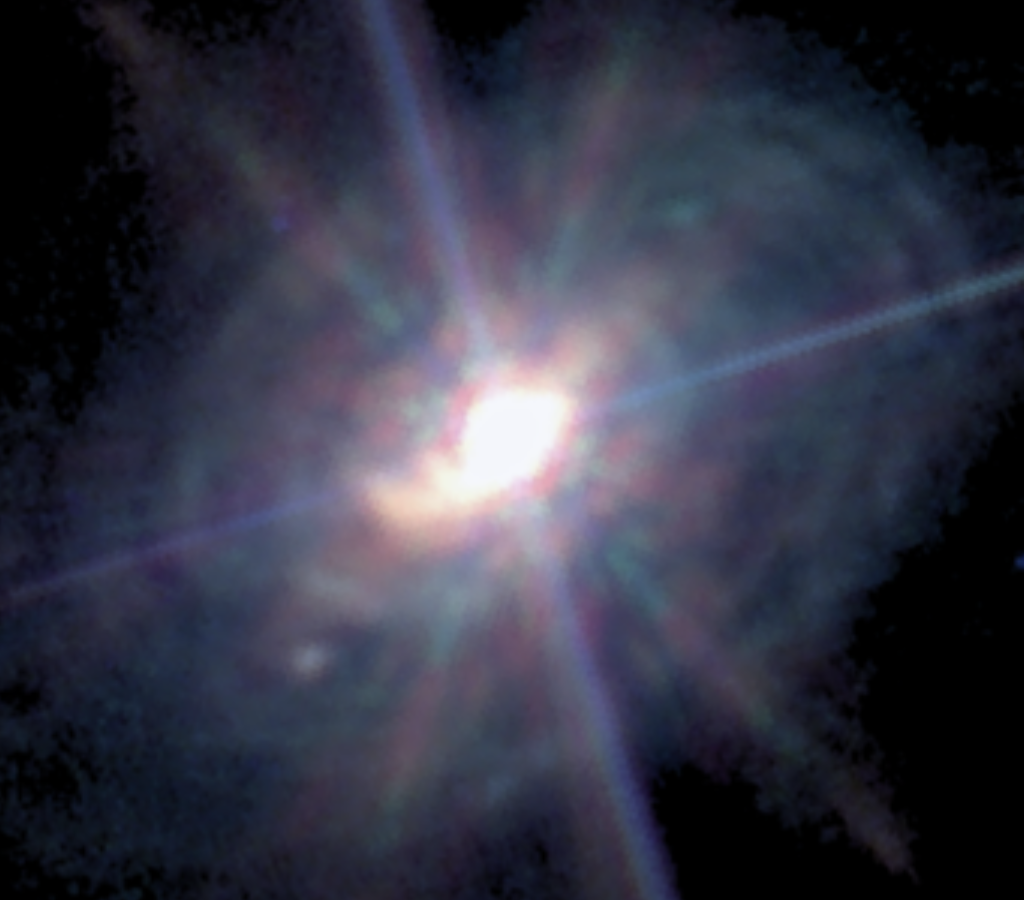
One of JWST’s groundbreaking discoveries involves the detection of a shockwave near a distant nebula. Shockwaves in space typically arise from violent cosmic events such as supernova explosions, where stellar material is ejected at high speeds, creating turbulent interactions with surrounding interstellar matter. However, the shockwave observed by JWST exhibits unusual properties that challenge existing astrophysical models, suggesting more complex dynamics at play in the interstellar medium.
These shockwaves are crucial in shaping the lifecycle of stars and galaxies. They influence star formation by compressing gas clouds and triggering gravitational collapse, thereby affecting the distribution and evolution of cosmic matter. JWST’s ability to observe these processes in real-time offers a unique opportunity to refine our understanding of stellar and galactic development.
JWST’s Insights into Exoplanetary Atmospheres
The telescope has also provided detailed analyses of exoplanet atmospheres, revealing the presence of molecules such as water vapor, methane, and carbon dioxide. These chemical signatures offer clues about the planets’ atmospheric composition and potential habitability. Intriguingly, some exoplanet atmospheres display characteristics that do not fit neatly into current planetary classification systems, prompting new questions about planetary formation and environmental diversity beyond our solar system.
Observing Early Galaxy Formation
JWST has captured images of galaxies that formed just a few hundred million years after the Big Bang. Contrary to previous expectations, these early galaxies appear surprisingly mature and massive, suggesting that the universe’s initial stages were marked by rapid and prolific structure formation. This challenges conventional cosmological models and raises the possibility of previously unknown mechanisms accelerating galaxy growth in the young universe.
Probing Dark Matter and Dark Energy
By examining distant galaxy clusters and the gravitational lensing effects they produce, JWST offers new empirical data to investigate dark matter and dark energy-two mysterious components that dominate the universe’s mass-energy content and drive its accelerated expansion. The telescope’s precise measurements may validate or contest prevailing cosmological theories, potentially leading to significant revisions in our understanding of the universe’s fundamental forces.
Scientific and Philosophical Implications
The discoveries made by JWST not only push the boundaries of astrophysics but also provoke profound philosophical reflections about humanity’s place in the cosmos. As the telescope reveals more about the universe’s complexity and diversity, it fuels debates on whether Earth is unique or part of a vast, life-bearing cosmic tapestry. These insights bridge scientific inquiry with existential questions, enriching both domains.
Challenges and Future Prospects
Interpreting JWST’s data presents a formidable challenge, as many observations defy existing scientific paradigms. This necessitates the development of new theoretical frameworks and models to accommodate unexpected phenomena. The ongoing dialogue between observation and theory exemplifies the dynamic nature of scientific progress, driving humanity toward deeper cosmic comprehension.
Conclusion: JWST as a Cosmic Storyteller
The James Webb Space Telescope transcends its role as a mere observational tool; it acts as a narrator of the universe’s history, decoding messages encoded in light, dust, and cosmic forces. The shockwaves and spectral signatures it uncovers are echoes of the universe’s vibrant and evolving nature, inviting us to expand our horizons and embrace the mysteries that lie beyond current knowledge. As JWST continues its mission, it promises to reshape our understanding of the cosmos and inspire generations to come.
FAQ
What discoveries has the James Webb Space Telescope made?
JWST has made discoveries related to shockwaves, the atmospheres of exoplanets, early galaxy formations, and the investigation of dark matter and dark energy.
How does JWST observe distant galaxies?
JWST uses infrared observation to penetrate cosmic dust and detect faint light from ancient galaxies, allowing it to observe structures formed shortly after the Big Bang.




Leave a Reply