
Short Answer
Definition of Measurement Tools in Computer Engineering
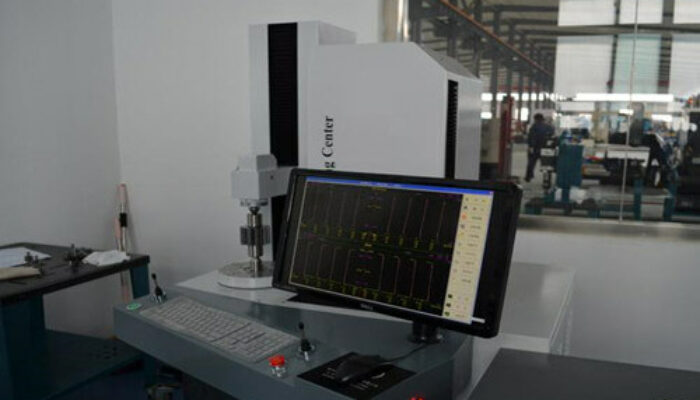
Measurement tools in computer engineering encompass a variety of instruments designed to evaluate and analyze both hardware and software components. These tools are essential for ensuring that systems function correctly, efficiently, and reliably by providing precise data on electrical, thermal, digital, and network parameters. Their use spans from initial design and prototyping to testing, validation, and optimization of computer systems.
Key Types of Measurement Instruments
Multimeters
Multimeters are fundamental devices in the toolkit of any computer engineer. Available in analog and digital formats, they measure electrical quantities such as voltage, current, and resistance. These versatile instruments are crucial during circuit prototyping and troubleshooting, helping engineers verify that electronic components operate within specified limits.
Oscilloscopes
Oscilloscopes provide a graphical representation of electrical signals over time, allowing engineers to observe waveform characteristics. They come with various bandwidths and sampling rates, making them suitable for tasks ranging from simple diagnostics to complex signal analysis in communication systems. Advanced oscilloscopes often include mathematical functions and triggering capabilities to detect transient events and anomalies in circuits.
Thermal Measurement Devices
Managing heat is vital in computer system design to prevent component failure. Infrared thermometers enable non-contact measurement of surface temperatures, while thermal imaging cameras offer detailed visual maps of temperature distribution. These tools are indispensable during the testing of integrated circuits and printed circuit boards (PCBs) to ensure effective thermal performance.
Power Analyzers
Power analyzers measure detailed electrical power parameters such as active power, reactive power, and harmonic distortion. They provide insights into energy consumption and efficiency, assisting engineers in designing systems that meet regulatory standards like Energy Star. These instruments are critical for optimizing power usage and ensuring environmentally responsible designs.
Logic Analyzers
Logic analyzers capture and display multiple digital signal lines simultaneously, enabling engineers to examine logic states and transitions within digital circuits. They facilitate thorough analysis of timing and communication protocols, which is essential for debugging and optimizing interactions between integrated components.
Performance Profilers
Performance profilers focus on software efficiency by monitoring resource usage such as CPU cycles, memory allocation, and input/output operations. Integrated into development environments or available as standalone tools, they help developers optimize code performance and improve overall system responsiveness.
Network Analyzers
With the rise of Internet of Things (IoT) and distributed systems, network analyzers have become crucial. These tools assess network health by measuring throughput, latency, packet loss, and other key metrics, enabling engineers to maintain robust connectivity and troubleshoot data transmission issues.
Data Acquisition Systems
Data acquisition systems collect and digitize measurements from various sensors, including those for temperature, humidity, and pressure. By compiling extensive datasets, these systems support calibration, simulation verification, and real-world performance analysis, bridging physical phenomena with digital processing.
Calibrated Standards
Calibrated standards such as precision weights and reference resistors are used to ensure the accuracy and reliability of measurement instruments. Regular calibration against these standards maintains data integrity across all engineering measurements.
How Measurement Tools Function in Computer Engineering
Each measurement instrument operates based on specific principles tailored to the parameter it assesses. Electrical tools like multimeters and oscilloscopes detect and quantify voltage, current, and signal waveforms through sensors and electronic circuits. Thermal devices use infrared radiation detection to measure temperature without contact. Power analyzers analyze electrical signals to determine power quality and consumption. Logic analyzers sample digital signals to decode logic states and timing. Performance profilers monitor software execution metrics by interfacing with system resources. Network analyzers capture and analyze data packets to evaluate network performance. Data acquisition systems convert analog sensor outputs into digital data for processing and analysis. Calibration standards provide reference points to adjust and verify the accuracy of these instruments.
Mathematical and Technical Foundations
Measurement tools rely on various formulas and technical concepts to quantify parameters accurately:
- Ohm’s Law:
V = I × R, where V is voltage, I is current, and R is resistance, fundamental for multimeter measurements. - Signal Analysis:
Oscilloscopes use sampling theory and Fourier transforms to analyze waveform frequency components. - Thermal Radiation:
Infrared thermometers apply Planck’s law to measure emitted radiation and infer temperature. - Power Calculations:
Active power (P) = V × I × cos(φ), reactive power (Q) = V × I × sin(φ), where φ is the phase angle, essential for power analyzers. - Digital Logic Timing:
Logic analyzers measure timing intervals and state transitions to verify protocol compliance. - Performance Metrics:
Profilers calculate CPU utilization as (CPU time / total time) × 100% to assess efficiency. - Network Metrics:
Throughput = total data transferred / time, latency = delay between sending and receiving packets.
Practical Applications and Examples
Measurement tools are employed across various stages of computer engineering:
- Prototyping Circuits:
Multimeters and oscilloscopes verify electrical parameters and signal integrity during hardware development. - Thermal Testing:
Thermal cameras identify hotspots on PCBs to improve cooling solutions. - Energy Efficiency:
Power analyzers help design low-power devices compliant with environmental standards. - Debugging Digital Systems:
Logic analyzers detect timing errors in microprocessor communication. - Software Optimization:
Performance profilers guide developers in reducing memory leaks and CPU bottlenecks. - Network Troubleshooting:
Network analyzers diagnose connectivity issues in IoT deployments. - System Calibration:
Data acquisition systems ensure sensor accuracy in environmental monitoring setups.
Common Misunderstandings About Measurement Tools
- Misconception: Multimeters can measure all types of signals accurately.
Correction: Multimeters are limited to steady-state electrical quantities and cannot capture transient or high-frequency signals effectively, which require oscilloscopes. - Misconception: Thermal cameras measure internal component temperatures.
Correction: Thermal imaging only captures surface temperatures; internal temperatures require embedded sensors or other methods. - Misconception: Logic analyzers are only useful for simple digital circuits.
Correction: Logic analyzers are essential for complex digital systems, including microprocessors and communication protocols. - Misconception: Performance profilers slow down software significantly.
Correction: While profiling introduces some overhead, modern tools minimize impact and provide valuable optimization insights.
Significance of Measurement Tools in Computer Engineering
Measurement instruments are indispensable in computer engineering, underpinning the design, testing, and refinement of both hardware and software systems. Accurate measurements ensure system reliability, efficiency, and compliance with standards, directly influencing product quality and innovation. As technology advances, the role of these tools becomes even more critical, enabling engineers to tackle increasingly complex challenges and drive progress in computing technology.
FAQ
What are the main types of measurement tools used by computer engineers?
The main types include multimeters, oscilloscopes, thermal measurement devices, power analyzers, logic analyzers, performance profilers, network analyzers, data acquisition systems, and calibrated standards.
Why are thermal measurement devices important in computer engineering?
They help manage heat dissipation in components like integrated circuits and PCBs to prevent failures and ensure reliable operation.
Can a multimeter measure all electrical signals accurately?
No, multimeters are limited to steady-state electrical quantities and cannot capture transient or high-frequency signals, which require oscilloscopes.
How do performance profilers assist software development?
Performance profilers monitor resource usage such as CPU cycles and memory allocation, helping developers optimize code efficiency and system responsiveness.
What role do calibrated standards play in measurement?
Calibrated standards ensure the accuracy and reliability of measurement instruments through regular calibration, maintaining data integrity.

Leave a Reply