
Short Answer
Definition of Dark Matter and Dark Energy
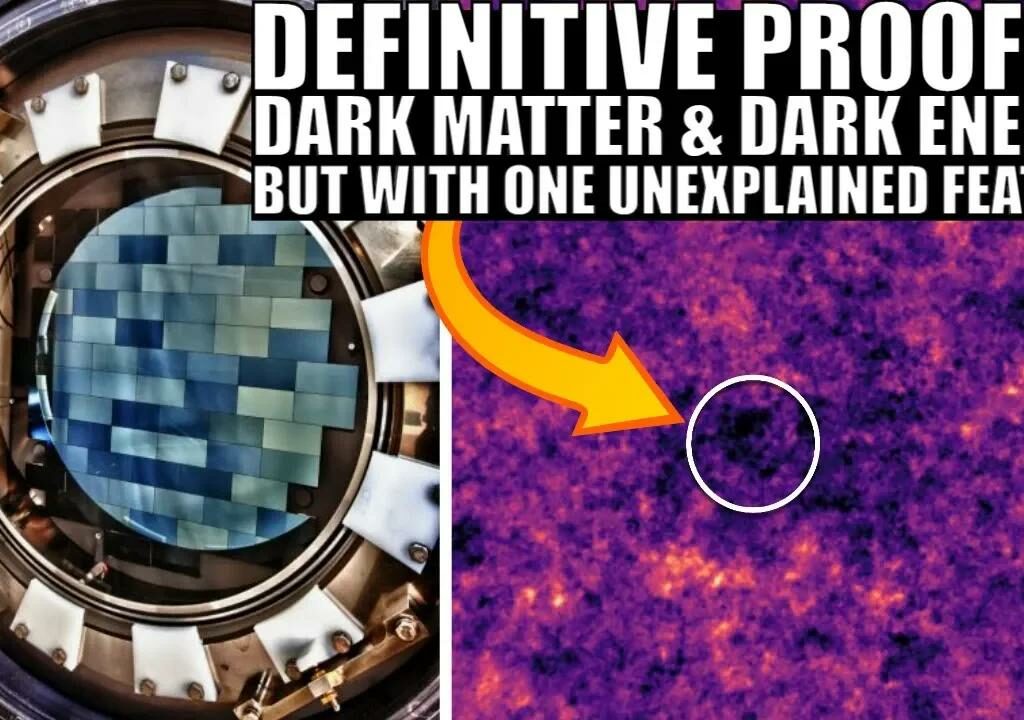
Dark matter and dark energy are fundamental yet mysterious components of the cosmos, together constituting about 95% of the universe’s total mass-energy content. Despite their overwhelming presence, these entities remain largely undetectable through conventional observational methods, posing one of the greatest challenges in modern cosmology.
- Dark Matter:
An invisible form of matter that does not emit, absorb, or reflect light, making it undetectable by electromagnetic observations. Its existence is inferred from gravitational effects on visible matter and light. - Dark Energy:
A mysterious force responsible for the accelerated expansion of the universe, acting as a repulsive pressure that counterbalances gravitational attraction on cosmic scales.
Characteristics and Detection of Dark Matter
Dark matter is characterized by its invisibility to electromagnetic radiation, which means it neither emits nor interacts with light. Its presence is deduced primarily through gravitational influences, such as the unexpectedly high rotational speeds of galaxies and the bending of light (gravitational lensing) around massive galaxy clusters. Unlike ordinary baryonic matter, which forms stars, planets, and living organisms, dark matter interacts predominantly through gravity, eluding direct detection.
Theoretical Candidates for Dark Matter
The leading hypothesis suggests that dark matter is composed of exotic particles that interact very weakly with electromagnetic forces. Among the most studied candidates are Weakly Interacting Massive Particles (WIMPs) and axions. These particles are believed to have originated in the early universe, shortly after the Big Bang, emerging from quantum fluctuations in a hot, dense primordial environment. Despite extensive experimental efforts-including underground detectors and particle accelerators-no conclusive direct evidence for these particles has yet been found.
Understanding Dark Energy and Its Role in Cosmic Expansion
Dark energy is an even more perplexing phenomenon than dark matter. It acts as a repulsive force that accelerates the expansion of the universe, opposing the gravitational pull that would otherwise slow it down. The nature of dark energy remains uncertain, with theories ranging from it being a cosmological constant-an inherent energy density of empty space-to a dynamic field known as quintessence that changes over time. This enigmatic force permeates spacetime itself, influencing the universe on the largest scales.
Emerging Perspectives on the Origins of Dark Matter and Dark Energy
Recent advances in observational cosmology have revealed subtle anomalies that challenge traditional models of dark matter and dark energy. These findings have prompted some physicists to explore more profound origins that integrate quantum mechanics, general relativity, and emergent properties of spacetime geometry. In this view, dark matter and dark energy may not be isolated particles or fields but manifestations of a deeper quantum gravitational framework.
Quantum Gravity and the Holographic Principle
Within this innovative framework, dark matter could arise from modifications to inertial mass at galactic scales or from entropic forces linked to the holographic principle, which posits that all information within a volume of space can be encoded on its boundary. This approach challenges the traditional particle-centric view, suggesting a complex cosmological structure woven from information and geometry.
Dark Energy as Quantum Vacuum Fluctuations
Similarly, dark energy might be interpreted as fluctuations in the quantum vacuum, related to the zero-point energy of spacetime. However, these fluctuations may operate beyond the scope of conventional quantum field theory, indicating a dynamic interaction between matter, energy, and the curvature of spacetime.
Alternative Hypotheses and Theoretical Explorations
Other speculative theories include the multiverse hypothesis, which proposes that the observed value of dark energy is a statistical outcome among many universes with different physical constants. Additionally, some researchers suggest that dark matter could be composed of primordial black holes-ancient collapsed regions of spacetime formed before stars existed. This idea bridges astrophysics and quantum gravity, implying that dark matter’s roots lie in the early universe’s complex spacetime dynamics.
Significance of Understanding Dark Matter and Dark Energy
Deciphering the true nature of dark matter and dark energy is crucial for a comprehensive understanding of cosmic evolution, from the universe’s explosive beginnings to its ultimate destiny. These investigations transcend pure academic interest, touching on fundamental questions about the structure and fate of the cosmos and humanity’s place within it.
Future Directions in Research
As cosmologists and physicists continue to utilize advanced observational tools and develop sophisticated theoretical models, the quest to unify diverse findings into a coherent explanation for dark matter and dark energy intensifies. The forthcoming years hold promise for breakthroughs that may revolutionize our cosmic perspective, potentially revealing the intricate mechanisms behind these elusive phenomena.
Common Misconceptions
Dark matter is simply ordinary matter that is hidden or dark.
Dark matter is fundamentally different from baryonic matter; it does not interact with light and cannot be detected by conventional means.
Dark energy is just a form of dark matter.
Dark energy and dark matter are distinct; dark energy drives cosmic acceleration, while dark matter exerts gravitational attraction.
FAQ
What is dark matter?
Dark matter is an invisible form of matter that does not emit, absorb, or reflect light, making it undetectable by electromagnetic observations.
What role does dark energy play in the universe?
Dark energy is responsible for the accelerated expansion of the universe, acting as a repulsive force that counterbalances gravitational attraction.
How do scientists detect dark matter?
Scientists deduce the existence of dark matter through its gravitational effects on visible matter, such as the rotational speeds of galaxies and gravitational lensing.
What are the leading candidates for dark matter particles?
The leading candidates for dark matter include Weakly Interacting Massive Particles (WIMPs) and axions.
What are some misconceptions about dark matter and dark energy?
A common misconception is that dark matter is just ordinary matter that is hidden, and dark energy is merely a form of dark matter. In reality, they are distinct entities with different properties.

Leave a Reply