

Short Answer
Definition of Gravity and Its Variability
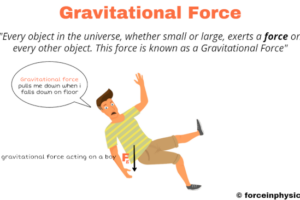
Gravity is the fundamental force of attraction that exists between masses, binding objects to the Earth and governing the motion of celestial bodies. While commonly perceived as a constant and uniform force, gravity actually exhibits subtle variations across different locations on the planet. These fluctuations arise from the Earth’s unique physical characteristics, including its shape, internal composition, and rotational dynamics.
Earth’s Shape and Its Influence on Gravity
The Earth is not a perfect sphere but an oblate spheroid, meaning it is slightly flattened at the poles and bulges at the equator due to its rotation. This shape affects gravitational strength in several ways:
- Oblate Spheroid:
The equatorial bulge increases the distance from the Earth’s center of mass, reducing gravitational pull at the equator compared to the poles. - Centrifugal Force:
The Earth’s spin generates an outward centrifugal force strongest at the equator, which counteracts gravity and further diminishes the effective gravitational pull in these regions.
Subsurface Density Variations and Gravitational Anomalies
Gravity is also influenced by the distribution of mass beneath the Earth’s surface. Variations in density within the crust and mantle create localized differences in gravitational strength, known as gravitational anomalies:
- High-Density Regions:
Areas with dense rock formations, such as mountain ranges, exert a stronger gravitational pull. - Low-Density Regions:
Oceanic trenches and regions with less dense materials correspond to weaker gravitational fields.
The Geoid: Earth’s Gravity-Based Shape
The geoid is a theoretical surface representing mean sea level extended across continents, shaped by Earth’s gravitational field rather than topography. It undulates globally, reflecting the uneven distribution of mass within the planet:
- Gravity Constant Surface:
The geoid marks where gravitational potential is uniform, serving as a reference for measuring elevations and ocean circulation. - Mass Distribution Indicator:
Variations in the geoid reveal insights into Earth’s internal structure and mass anomalies.
Quantifying Gravity Variations
Although imperceptible in everyday life, gravity varies by approximately 0.5% between the poles and the equator. This difference has significant implications in scientific fields requiring high precision:
- Polar Gravity:
Gravity is stronger near the poles due to the Earth’s shape and reduced centrifugal force. - Equatorial Gravity:
Gravity is weaker at the equator because of the equatorial bulge and maximum centrifugal force.
Impact of Earth’s Rotation on Gravity
The Earth’s rotation introduces centrifugal force, which modifies the net gravitational force experienced on the surface:
- Centrifugal Effect:
This outward force reduces the apparent weight of objects, especially near the equator. - Shape Deformation:
Continuous spinning causes the Earth’s shape to adjust, influencing the gravitational field dynamically.
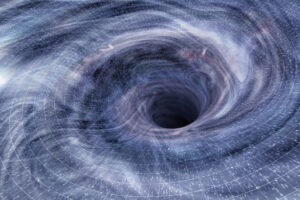
Gravity and the Fabric of Spacetime
According to Einstein’s general relativity, gravity is not just a force but a curvature of spacetime caused by mass. This curvature affects the flow of time itself:
- Time Dilation:
Clocks run slightly slower in stronger gravitational fields, such as near the poles, compared to weaker fields at the equator. - Technological Relevance:
These effects are critical for the accuracy of GPS satellites and other space-based technologies.
Scientific Applications of Gravity Variations
Studying gravitational differences provides valuable information about Earth’s internal processes and geological features:
- Geophysical Research:
Gravity measurements help identify tectonic activity, volcanic hotspots, and mineral deposits. - Regional Case Studies:
Areas like Hudson Bay and the Andes exhibit notable gravitational anomalies that inform scientists about subsurface structures.
Gravity’s Role in Earth’s Dynamic Systems
Variations in gravity influence natural phenomena beyond just physical measurements:
- Mantle Fluid Dynamics:
Gravity affects the movement of molten material within the Earth, impacting volcanic and seismic activity. - Environmental Shaping:
These forces indirectly mold landscapes and ecosystems by guiding geological processes.
Gravity Beyond Earth: Implications for Space Exploration
Understanding gravity’s local variations is crucial for missions beyond our planet:
- Human Movement:
Different gravitational strengths on the Moon or Mars alter how astronauts move and perform tasks. - Engineering Challenges:
Designing equipment and habitats requires precise knowledge of gravitational forces to ensure safety and functionality.
Common Misconceptions About Gravity
Gravity is the same everywhere on Earth.
Gravity varies slightly depending on location due to Earth’s shape, rotation, and internal mass distribution.
Gravity only pulls objects downward.
Gravity is a mutual attraction between masses and can be influenced by other forces like centrifugal force, affecting the net pull experienced.
Why Understanding Gravity’s Variability Matters
Recognizing that gravity is not uniform enhances our comprehension of Earth’s physical behavior and supports advancements in science and technology. From improving satellite navigation to informing geological exploration, these insights deepen our connection to the planet and enable more precise interaction with the natural world.
FAQ
Does gravity work the same everywhere on Earth?
No, gravity varies slightly depending on location due to factors like Earth’s shape, rotation, and internal mass distribution.
What causes variations in Earth's gravity?
Variations are caused by the Earth’s oblate spheroid shape, centrifugal force from rotation, and subsurface density differences.
How does gravity affect technology?
Understanding gravity’s variations is crucial for technologies like GPS and space exploration, where precision is essential.
Leave a Reply