
Short Answer
Definition of Instrumentation
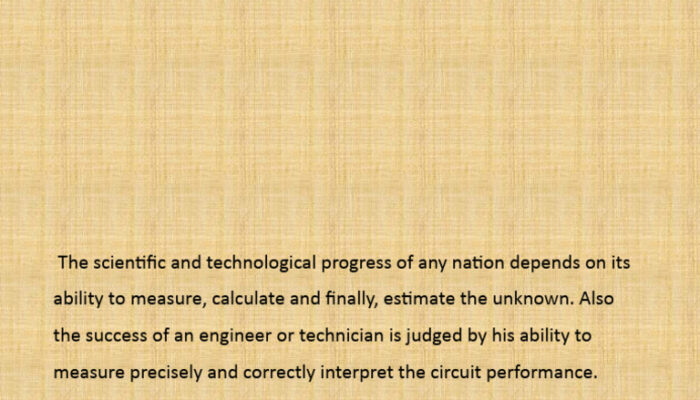
Instrumentation refers to the collection of tools, devices, and systems designed to measure, monitor, and control physical quantities in scientific and engineering contexts. It serves as a critical interface between technology and measurement, enabling precise data acquisition and analysis across diverse fields. Far beyond simple data collection, instrumentation acts as a catalyst for discovery, innovation, and enhanced understanding of natural phenomena.
Core Functions and Significance
The primary role of instrumentation is to deliver accurate and reliable measurements essential for scientific inquiry and technological development. Instruments quantify variables such as temperature, pressure, electrical resistance, and more, providing foundational data that supports research and practical applications.
- Precision Measurement:
Instruments like temperature sensors and pressure transducers offer exact readings that are vital for climate research, engineering design, and quality control. - Data Integrity:
Advanced calibration and standardization ensure that measurements remain consistent and reproducible, which is fundamental to scientific validity.
Instrumentation as a Gateway to New Knowledge
Beyond measurement, instrumentation enables the exploration of phenomena that would otherwise remain hidden. Sophisticated devices such as spectrometers reveal atomic and molecular structures, facilitating breakthroughs in fields like pharmacology and materials science. This ability to probe the microscopic and complex aspects of matter expands the frontiers of scientific understanding.
Evolution of Scientific Methodology Through Instrumentation
Instrumentation has transformed traditional experimental approaches by allowing remote and non-invasive observation. Technologies such as satellite imaging provide comprehensive data on environmental and geographic phenomena without direct physical interaction, opening new avenues for research in ecology, meteorology, and earth sciences.
Ensuring Reproducibility and Reliability
Reproducibility is a cornerstone of the scientific method, and instrumentation plays a vital role in maintaining this standard. Instruments equipped with precise calibration mechanisms guarantee that experimental results can be consistently replicated, which is especially critical in sensitive areas like pharmaceutical development and safety testing.
Integration of Artificial Intelligence in Instrumentation
The incorporation of AI and machine learning into instrumentation marks a significant advancement, enabling the analysis of large datasets and the extraction of complex patterns. These intelligent systems not only enhance measurement accuracy but also facilitate predictive modeling and process optimization, effectively transforming instruments into collaborative partners in scientific research.
Societal Impact of Instrumentation
Instrumentation extends its influence beyond laboratories, affecting public health, safety, and urban development. Environmental sensors monitor air quality to inform health policies, while smart infrastructure relies on instrumentation to optimize resource management and improve living conditions. These applications underscore the role of instrumentation in fostering sustainable development and informed governance.
Educational Implications and Future Directions
As instrumentation technology advances, educational systems must evolve to prepare future professionals. Curricula should integrate both theoretical knowledge and practical experience with modern instruments, cultivating a workforce proficient in emerging technologies. This instrumental literacy is essential for driving innovation and maintaining competitiveness in a data-centric world.
Why Instrumentation Matters
Instrumentation is fundamental to the pursuit of knowledge, enabling precise measurement and exploration of the natural world. It bridges technology and human curiosity, facilitating discoveries that challenge existing paradigms and expand scientific horizons. Its importance spans scientific research, technological innovation, and societal progress, making it indispensable in understanding and shaping our environment.
Summary and Outlook
In summary, instrumentation is much more than a means of quantifying physical variables; it is a multifaceted tool that drives exploration, innovation, and societal advancement. Recognizing its diverse roles helps us appreciate how instrumentation shapes our comprehension of the universe and influences future discoveries. As technology continues to evolve, instrumentation will remain at the forefront of scientific and technological progress, inspiring curiosity and enabling breakthroughs across disciplines.
FAQ
What is instrumentation?
Instrumentation refers to the tools and systems used for measuring and controlling physical quantities.
Why is instrumentation important?
It provides accurate measurements essential for scientific research and technological advancement.
How has instrumentation evolved?
Instrumentation has integrated AI and advanced technologies to enhance data analysis and measurement accuracy.
What are common applications of instrumentation?
Instrumentation is used in fields like environmental monitoring, medical physics, and engineering.


Leave a Reply