

Short Answer
Definition of Reading Error in Measurements
Reading error in measurements refers to the difference between the actual value of a quantity and the value recorded by a measuring instrument. This discrepancy arises when the indicated measurement deviates from the true measurement, often due to various influencing factors. These errors can stem from the instrument’s limitations, environmental conditions, or the observer’s interpretation, all of which affect the accuracy and reliability of experimental data.
Types of Reading Errors
Reading errors are generally divided into two main categories: systematic errors and random errors.
- Systematic Errors:
These are consistent, repeatable inaccuracies caused by flaws in the measurement system, such as miscalibrated instruments or defective equipment. For example, a scale that always reads two grams heavier than the actual weight introduces a bias that skews all measurements in the same direction. - Random Errors:
These errors occur unpredictably due to fluctuating environmental factors like temperature, humidity, or electrical noise. They cause variations in measurements that are not consistent and can differ each time a measurement is taken.
Human Factors Influencing Reading Errors
The observer’s role is critical in the measurement process, as human perception and interpretation can introduce additional errors. Visual limitations, unfamiliarity with the instrument, or misreading complex scales-such as non-linear or finely graduated thermometers-can lead to inaccurate data recording. This human element adds complexity to ensuring precise measurements and highlights the need for careful observation and training.
Methods to Minimize Reading Errors
Several approaches can be implemented to reduce the impact of reading errors and improve measurement accuracy:
- Instrument Calibration:
Regular calibration ensures that instruments provide measurements close to the true value, correcting any biases or deviations. - Use of Digital Instruments:
Digital devices often display clear numerical values, reducing the chance of misinterpretation compared to analog scales. - Multiple Observers:
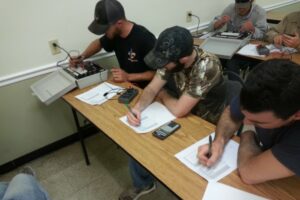
Having several individuals independently measure the same quantity allows averaging of results, which helps mitigate individual biases and random errors. - Training and Familiarization:
Educating users about instrument operation, limitations, and environmental influences fosters more accurate readings and critical evaluation of data. - Redundancy in Measurement:
Employing multiple measurement techniques for the same parameter provides cross-verification and reduces reliance on a single potentially flawed method.
Quantifying and Understanding Reading Errors
While it is impossible to completely eliminate reading errors, understanding their magnitude and influence is essential. Statistical tools and error propagation models help quantify how individual measurement uncertainties affect overall data quality. These analyses enable researchers to assess the reliability of their results and make informed decisions about data interpretation.
Significance of Reading Errors in Scientific Research
Reading errors underscore the delicate balance between human judgment and instrument precision in scientific inquiry. Recognizing and addressing these errors is vital for maintaining the integrity of experimental findings. This awareness promotes rigorous methodologies and continuous improvement in measurement techniques, ultimately advancing the pursuit of accurate and trustworthy scientific knowledge.
Summary and Final Thoughts
Reading error in measurements represents a multifaceted challenge involving instrument limitations, environmental factors, and human interpretation. By identifying the sources and types of these errors, and applying strategies such as calibration, training, and redundancy, researchers can enhance data accuracy. Embracing the complexity of reading errors not only refines measurement practices but also deepens the philosophical understanding of precision and objectivity in science.
FAQ
What causes reading errors in measurements?
Reading errors can be caused by instrument limitations, environmental conditions, or human factors such as misinterpretation.
How can reading errors be minimized?
Reading errors can be reduced by regular instrument calibration, using digital instruments, employing multiple observers, providing training, and using redundancy in measurements.

Leave a Reply