
Short Answer
Definition of Gravitational Force Between Earth and the Sun
The gravitational force between Earth and the Sun is a fundamental natural phenomenon where two massive bodies attract each other through an invisible force. This attraction is the essential mechanism that maintains Earth’s orbit around the Sun, ensuring the planet’s stable path through space and supporting the conditions necessary for life. It is a universal force acting between any two objects with mass, governing the motion of celestial bodies within the solar system.
Fundamental Principles of Gravitational Interaction
Gravity is an invisible pull that exists between all objects possessing mass. Sir Isaac Newton’s law of universal gravitation provides the foundational explanation for this force. The Sun, containing approximately 99.86% of the solar system’s total mass, exerts a powerful gravitational influence on Earth. Although Earth also exerts a gravitational pull on the Sun, its effect is comparatively negligible due to the vast difference in their masses. This mutual attraction prevents Earth from drifting away into space or falling into the Sun, maintaining a delicate orbital balance.
Mathematical Representation of Gravitational Force
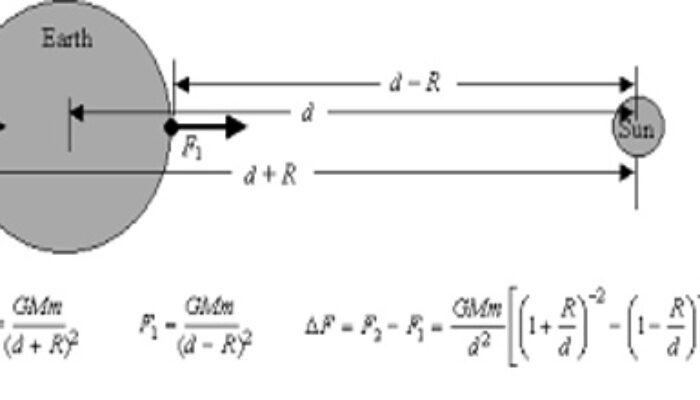
The gravitational force between Earth and the Sun can be precisely calculated using the formula:
F = G * (m₁ * m₂) / r²
- F: Gravitational force between the two bodies
- G: Gravitational constant, a universal value that quantifies the strength of gravity
- m₁ and m₂: Masses of Earth and the Sun, respectively
- r: Distance between the centers of Earth and the Sun
This formula follows the inverse square law, indicating that the gravitational force decreases rapidly as the distance between the two objects increases. Even minor changes in this distance can significantly affect the strength of the gravitational pull.
Quantifying the Gravitational Force
To understand the scale of this force, consider the following values:
- Earth’s mass: Approximately 5.97 × 10²⁴ kilograms
- Sun’s mass: Roughly 1.989 × 10³⁰ kilograms
- Average distance (Astronomical Unit): About 149.6 million kilometers
Substituting these into the gravitational formula yields a force magnitude near 3.54 × 10²² newtons. Despite its enormous size, this force operates quietly behind the scenes, influencing phenomena such as tides and orbital stability.
Orbital Dynamics and Seasonal Effects
The gravitational pull from the Sun governs Earth’s elliptical orbit, causing variations in orbital speed. Earth moves faster when it is closest to the Sun at perihelion (around January) and slows down at aphelion (around July). This orbital motion is responsible for the cyclical changes in seasons and climate patterns, creating a stable environment that has allowed life to flourish over millions of years.
Significance of the Gravitational Relationship
This gravitational connection acts as a cosmic lifeline, positioning Earth within the Sun’s habitable zone-a region where conditions are just right to sustain life. The Sun’s gravity ensures Earth is neither too close to experience extreme heat nor too distant to freeze, enabling processes like photosynthesis and regulating ocean tides that influence biological rhythms.
Applications in Science and Space Exploration
Understanding the gravitational forces between Earth and the Sun is crucial for astrophysics and space missions. It allows scientists to predict planetary orbits, plan spacecraft trajectories, and assess potential threats from near-Earth objects. This knowledge underpins satellite navigation, climate modeling, and the long-term study of Earth’s environmental stability.
Gravitational Variability and Long-Term Climate Impact
While gravity provides a stable orbital framework, it also permits subtle fluctuations that influence Earth’s climate over geological timescales. Phenomena such as Milankovitch cycles arise from slight changes in Earth’s orbit and axial tilt, driven in part by gravitational interactions with other planets. These cycles contribute to periodic ice ages and climate shifts, highlighting the dynamic nature of the solar system’s gravitational interplay.
Cosmic Perspective on Earth-Sun Gravity
The gravitational force linking Earth and the Sun embodies a profound balance of power and subtlety. It is a constant yet evolving force that anchors our planet’s journey through space while allowing the fluidity necessary for natural cycles. This invisible bond shapes our understanding of the universe and inspires awe at the intricate design of celestial mechanics.
Conclusion: The Enduring Role of Gravity in Earth’s Journey
As Earth continues its perpetual orbit around the Sun, gravity remains both the tether and the impetus for this cosmic voyage. It ensures the regular succession of days, nights, and seasons, maintaining the intimate connection between the Sun’s radiant energy and Earth’s vibrant ecosystems. This gravitational relationship stands as a testament to the elegant forces that govern the cosmos and sustain life on our planet.
FAQ
What is the gravitational force between Earth and the Sun?
It is the attractive force between Earth and the Sun due to their masses, responsible for Earth's orbit around the Sun.
How is the gravitational force between Earth and the Sun calculated?
Using Newton's law of universal gravitation: F = G * (m₁ * m₂) / r².
Why does Earth's orbit vary in speed?
Because of Earth's elliptical orbit, it moves faster at perihelion and slower at aphelion due to gravitational pull variations.
How does gravity influence Earth's climate?
Gravity affects Earth's orbit and axial tilt, which contribute to climate cycles like the Milankovitch cycles.
Why is understanding Earth-Sun gravity important?
It is crucial for astrophysics, space mission planning, satellite navigation, and understanding Earth's environmental stability.
Leave a Reply