
Short Answer
Definition and Overview
Quantum mechanics presents a fascinating framework that reshapes our comprehension of the physical world. Central to this domain are two pivotal concepts: atoms and qubits. While both serve as foundational elements in their respective fields-matter and information-they possess distinct characteristics and roles. This article delves into the differences between atoms and qubits, highlighting their unique properties and significance across scientific disciplines.
Fundamental Characteristics
Atoms: The Building Blocks of Matter
Atoms constitute the fundamental units of matter, composed of subatomic particles such as protons, neutrons, and electrons. These units combine to form molecules, which in turn create the diverse materials encountered in everyday life. The defining feature of an atom is its atomic number, representing the count of protons within its nucleus. The behavior of atoms is governed by a blend of classical physics and quantum mechanics, where electrons occupy discrete energy levels around the nucleus.
Qubits: The Core of Quantum Information
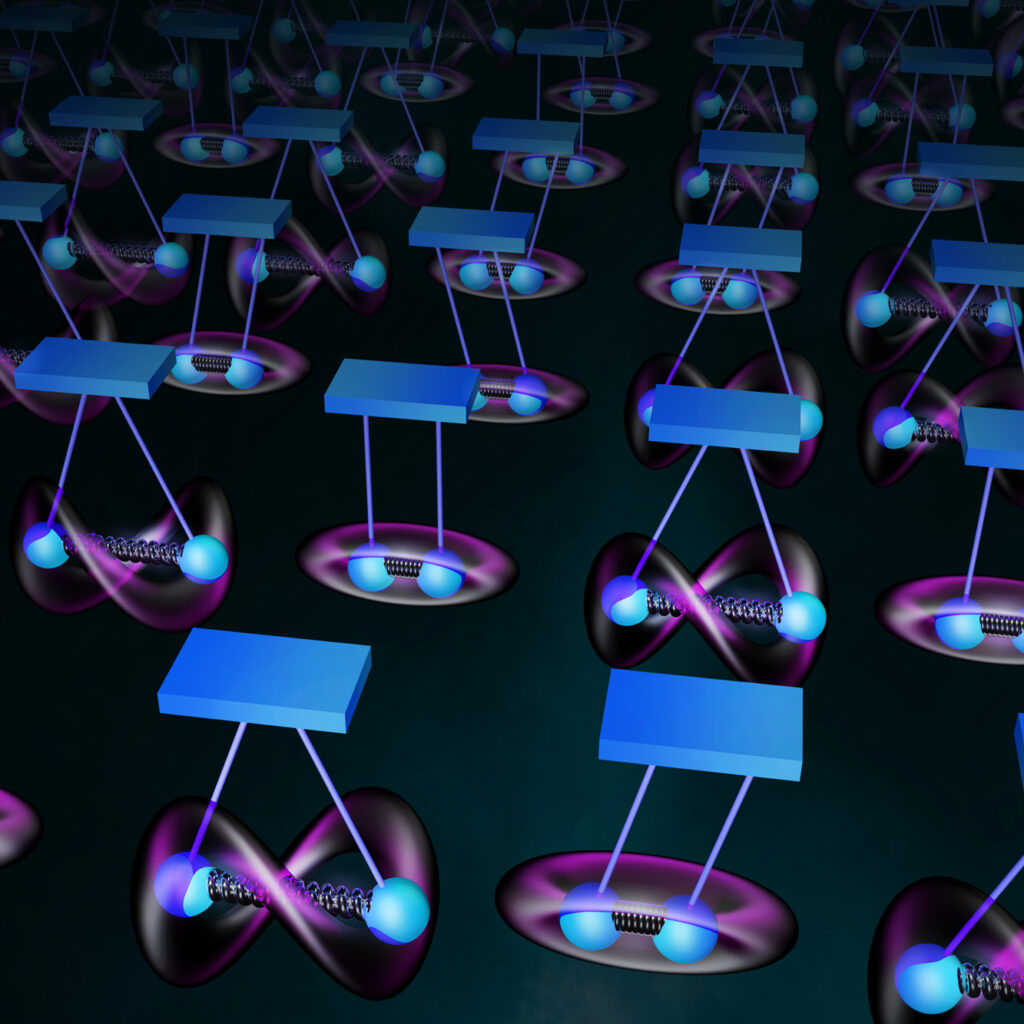
Qubits, or quantum bits, emerge from the principles underpinning quantum computing. Serving as the quantum analogue to classical bits, qubits possess enhanced capabilities due to phenomena like superposition and entanglement. Unlike classical bits restricted to binary states (0 or 1), qubits can exist in multiple states simultaneously, enabling complex computational processes unattainable by traditional systems.
Physical Manifestations
Observable Nature of Atoms
Atoms are tangible entities that can be observed and manipulated through various physical and chemical techniques. They exist in different states-solid, liquid, or gas-depending on environmental conditions such as temperature and pressure. For example, hydrogen atoms exist individually, while noble gases typically appear as single-atom molecules under standard conditions.
Implementations of Qubits
In contrast, qubits are often abstract representations realized through physical systems like photons, trapped ions, quantum dots, or superconducting circuits. Each implementation leverages unique quantum properties to encode and manipulate information. Qubits are controlled via quantum gates, which alter their states while preserving coherence and enabling entanglement with other qubits.
Behavioral Dynamics and Interactions
Atomic Interactions
Atoms interact primarily through electromagnetic forces, facilitating chemical bonding and the formation of complex molecules. These interactions involve electron exchanges that give rise to the physical and chemical properties of materials, influencing everything from structural integrity to reactivity.
Quantum Interactions of Qubits
Qubits engage through quantum mechanical principles that defy classical intuition. Measurement affects their states, a phenomenon known as the observer effect. Additionally, entanglement creates correlations between qubits over large distances, enabling revolutionary applications such as quantum teleportation and enhanced cryptographic protocols.
Computational Frameworks
Classical Computation Based on Atoms
Traditional computing relies on classical bits, which are implemented through transistors-devices fundamentally dependent on atomic-scale interactions. Classical computers excel at deterministic and linear processing tasks but face challenges in scaling and speed when addressing complex problems like artificial intelligence or large-scale data analysis.
Quantum Computing with Qubits
Quantum computing introduces a transformative approach by utilizing qubits capable of superposition and entanglement. This allows quantum algorithms, such as Shor’s algorithm for integer factorization, to outperform classical counterparts exponentially. The potential of quantum computing spans cryptography, optimization, and simulating quantum phenomena, promising breakthroughs across multiple sectors.
Coherence and Stability
Stability of Atoms
Atoms generally exhibit stable properties when isolated, maintaining consistent energy levels and structural integrity over time. This stability underpins predictable chemical reactions and material behaviors.
Challenges of Qubit Coherence
Qubits are highly sensitive to environmental disturbances, which can cause decoherence-the loss of quantum information. Maintaining qubit coherence is a major hurdle in quantum computing, necessitating advanced error correction methods and isolation techniques to prolong operational times and reliability.
Philosophical and Practical Significance
The contrast between atoms and qubits extends beyond scientific facts, inviting philosophical reflection on the nature of reality and knowledge. Atoms embody a deterministic and tangible aspect of the universe, while qubits represent probabilistic and interconnected phenomena that challenge classical understanding. This duality highlights the evolving landscape of science and technology, where exploring the interplay between classical and quantum realms drives innovation and deepens our grasp of the cosmos.
Why Understanding Atoms and Qubits Is Crucial
Grasping the distinctions between atoms and qubits is essential for advancing both fundamental science and emerging technologies. Atoms form the basis of chemistry, materials science, and classical computing hardware, while qubits are at the forefront of quantum information science, promising to revolutionize computation, secure communication, and simulation of complex systems. Together, they represent complementary facets of the physical and informational universe, shaping the future of research and application.
FAQ
What is an atom?
An atom is the smallest unit of matter made up of protons, neutrons, and electrons, forming the building blocks of substances.
What is a qubit?
A qubit is the fundamental unit of quantum information that can exist in multiple states simultaneously due to quantum superposition.
How do atoms and qubits differ in their behavior?
Atoms interact via electromagnetic forces forming molecules, whereas qubits interact through quantum phenomena such as entanglement and superposition.
Why is qubit coherence important?
Coherence maintains the quantum state of qubits, essential for reliable quantum computing; loss of coherence leads to errors.
What are some challenges faced by qubits?
Qubits face challenges like decoherence from environmental interference, requiring complex techniques for error correction and isolation.





Leave a Reply