
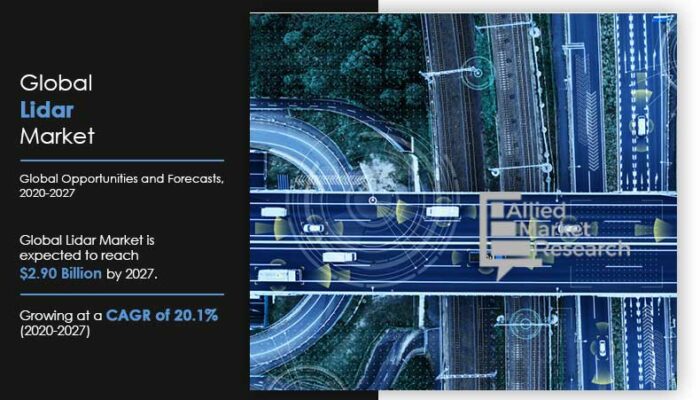
Short Answer
Definition of LiDAR Technology
Light Detection and Ranging, commonly abbreviated as LiDAR, is a remote sensing method that employs laser light pulses to measure distances to objects or surfaces. By emitting rapid laser pulses and analyzing the reflected signals, LiDAR systems generate precise three-dimensional representations of physical environments. This technology has become indispensable across various industries due to its ability to capture detailed spatial data efficiently and accurately.
Technological Innovations in LiDAR
At its core, LiDAR operates by sending out laser beams and measuring the time it takes for the light to bounce back from surfaces, enabling the creation of detailed 3D maps. Recent technological breakthroughs have significantly enhanced LiDAR’s capabilities and applications.
- Solid-State LiDAR:
Unlike traditional LiDAR systems that rely on mechanical parts to rotate the laser, solid-state LiDAR eliminates moving components, resulting in improved durability and reliability. This advancement is particularly beneficial for mobile platforms such as autonomous vehicles, where robustness is critical. - Frequency Modulated Continuous Wave (FMCW) LiDAR:
FMCW technology allows for the generation of high-resolution images even under challenging lighting and weather conditions. This method enhances the range and accuracy of LiDAR, broadening its usability in diverse environments. - Industry Leaders:
Companies like Velodyne and Luminar have been at the forefront of these innovations. Velodyne’s HDL-64E and Luminar’s Iris systems exemplify state-of-the-art LiDAR capable of delivering real-time, four-dimensional spatial data, pushing the boundaries of what is achievable in mapping and sensing.
Applications Across Different Fields
LiDAR’s versatility allows it to serve a wide array of sectors, from natural ecosystems to urban infrastructure development.
- Environmental Monitoring:
Airborne LiDAR has transformed forestry management by enabling precise measurement of forest biomass and health, aiding conservation efforts and resource management. - Urban Planning and Infrastructure:
Detailed topographic data from LiDAR supports city planners and engineers in designing and maintaining infrastructure, improving efficiency and safety. - Drone Integration:
The miniaturization of LiDAR units, such as those developed by senseFly, has made it feasible to equip lightweight drones with advanced mapping tools. This democratizes access to high-quality spatial data for smaller businesses and research groups.
Accuracy and Precision in LiDAR Systems
Accuracy is a fundamental attribute of LiDAR technology, as even slight measurement errors can lead to significant consequences in critical applications.
- Key Performance Metrics:
Important factors include point density (the number of data points collected per unit area), effective range, and resolution. High-performance systems like the Riegl VZ-400i are known for their ability to produce detailed 3D point clouds, even in complex terrains. - Multi-Sensor Fusion:
Combining LiDAR with complementary sensors such as cameras and GNSS/IMU units enhances data accuracy and reliability. This integrated approach enriches datasets, enabling more sophisticated analyses and applications.
Cost-Effectiveness and Accessibility
While LiDAR technology has traditionally been associated with high costs, recent developments have improved affordability and accessibility.
- Affordable Alternatives:
Systems like the GeoSLAM ZEB-HORIZON offer robust mapping capabilities at significantly reduced prices, making advanced LiDAR technology attainable for a broader range of users. - Flexible Acquisition Models:
Subscription-based and as-a-service options allow organizations to utilize LiDAR technology without large upfront investments. This model also helps mitigate risks related to rapid technological obsolescence.
Emerging Trends and Future Directions
The future of LiDAR is closely tied to advancements in artificial intelligence and communication technologies.
- AI Integration:
Machine learning algorithms are increasingly being incorporated to automate the processing of LiDAR data, enabling faster extraction of actionable insights from complex datasets. - 5G Connectivity:
The rollout of 5G networks facilitates real-time data transmission and processing, which is crucial for applications requiring immediate feedback, such as autonomous navigation and disaster response.
Common Misconceptions About LiDAR
LiDAR is only useful for autonomous vehicles.
While LiDAR is critical in self-driving cars, its applications extend to environmental monitoring, urban planning, agriculture, and more.
All LiDAR systems are prohibitively expensive.
The market now offers a range of cost-effective LiDAR solutions, including compact units for drones and subscription-based services.
Significance of LiDAR in Modern Technology
LiDAR technology plays a pivotal role in advancing scientific research, enhancing technological innovation, and improving everyday life. Its ability to provide precise spatial data supports safer autonomous navigation, better environmental stewardship, and smarter urban development. As LiDAR continues to evolve, it promises to unlock new possibilities in understanding and interacting with the physical world.
FAQ
What is LiDAR technology?
LiDAR (Light Detection and Ranging) is a remote sensing method that uses laser light pulses to measure distances and create detailed three-dimensional maps of environments.
What are the main types of LiDAR technology?
The main types include traditional mechanical LiDAR, solid-state LiDAR which has no moving parts, and Frequency Modulated Continuous Wave (FMCW) LiDAR which improves range and accuracy.
What industries use LiDAR technology?
LiDAR is widely used in autonomous vehicles, environmental monitoring, urban planning, forestry management, and drone-based mapping.
Is LiDAR technology expensive?
While historically expensive, recent developments have made LiDAR more affordable with options like subscription models and cost-effective systems for smaller users.
What are common misconceptions about LiDAR?
Common misconceptions include that LiDAR is only useful for autonomous vehicles and that all LiDAR systems are prohibitively expensive.






Leave a Reply