
Short Answer
Definition of Quantum Machine Learning
Quantum Machine Learning (QML) represents an innovative interdisciplinary field that merges the principles of quantum computing with the methodologies of machine learning. This fusion aims to harness the unique properties of quantum mechanics to enhance the performance and capabilities of traditional machine learning algorithms. By integrating quantum phenomena, QML aspires to revolutionize how data is analyzed and predictions are made in an era marked by increasingly complex and voluminous datasets.
Fundamental Concepts in Quantum Mechanics Relevant to QML
To fully comprehend QML, it is essential to understand key quantum mechanical concepts that underpin its functionality:
- Superposition:
Unlike classical bits that exist strictly as 0 or 1, quantum bits (qubits) can simultaneously occupy multiple states. This property allows quantum systems to process a vast number of possibilities concurrently, enabling parallel computation on an unprecedented scale. - Entanglement:
This phenomenon occurs when qubits become interlinked such that the state of one instantly influences the state of another, regardless of the physical distance between them. Entanglement facilitates complex correlations that can be exploited to design algorithms surpassing classical performance.
Overview of Machine Learning
Machine learning, a branch of artificial intelligence, involves algorithms that identify patterns and make decisions based on data. Traditional approaches, including linear regression and decision trees, have been effective but often struggle with high-dimensional or nonlinear data. QML offers a transformative approach by either enhancing these classical algorithms or introducing entirely new quantum-based models that can better handle complex data structures.
Categories of Quantum Machine Learning Approaches
Quantum Machine Learning can be broadly classified into two main approaches:
- Quantum-Enhanced Classical Algorithms:
These involve augmenting existing machine learning techniques with quantum processes. Examples include quantum adaptations of support vector machines and neural networks, which aim to accelerate training and improve scalability, especially for large datasets. - Quantum-Native Algorithms:
These are novel algorithms designed specifically to exploit quantum mechanics. For instance, the Quantum k-Means algorithm leverages qubits’ ability to represent data in high-dimensional spaces, potentially offering significant improvements in clustering efficiency and accuracy.
Mechanisms Behind Quantum Machine Learning
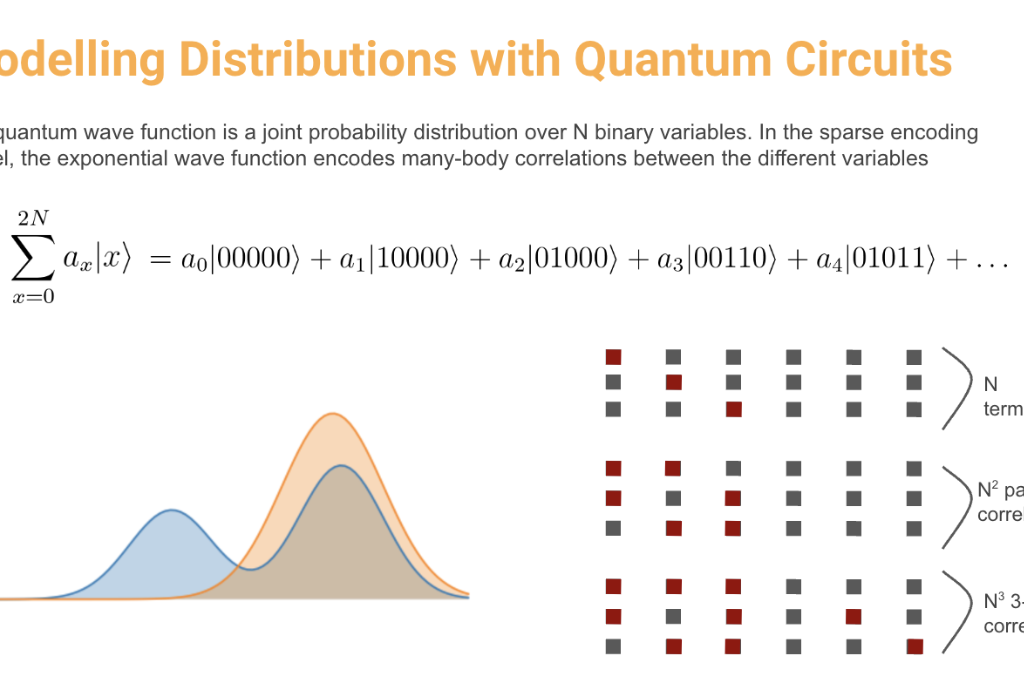
QML operates by utilizing quantum states and operations to perform computations that are either infeasible or inefficient on classical computers. Superposition enables simultaneous evaluation of multiple inputs, while entanglement allows for complex correlations that classical systems cannot replicate. These quantum effects can be embedded within machine learning frameworks to speed up data processing, optimize model training, and enhance pattern recognition capabilities.
Mathematical Foundations and Formulations
Quantum Machine Learning algorithms often rely on linear algebra and quantum circuit models. For example, a quantum state can be represented as a vector in a Hilbert space:
|ψ⟩ = α|0⟩ + β|1⟩
where |0⟩ and |1⟩ are basis states, and α, β are complex probability amplitudes satisfying |α|² + |β|² = 1. Quantum gates manipulate these states through unitary transformations, enabling the encoding and processing of data. Quantum algorithms such as the Quantum k-Means utilize these principles to perform clustering by mapping data points into quantum states and measuring their similarities.
Practical Applications of Quantum Machine Learning
The potential of QML extends across various domains where complex data analysis is critical:
- Drug Discovery:
Quantum simulations can model molecular interactions more efficiently than classical methods, accelerating the identification of promising pharmaceutical compounds. - Climate Modeling:
Enhanced computational power allows for more accurate simulations of climate systems, improving predictions and informing policy decisions. - Financial Market Analysis:
QML can uncover intricate patterns in market data, aiding in risk assessment and investment strategies. - Genomic Sequencing:
Quantum algorithms can process vast genetic datasets to identify correlations and mutations with greater speed and precision. - Autonomous Systems:
Real-time decision-making in robotics and self-driving vehicles can benefit from the rapid data processing capabilities of QML.
Challenges and Limitations in Quantum Machine Learning
Despite its promise, QML faces several obstacles:
- Hardware Maturity:
Current quantum computers are in early developmental stages, often plagued by noise and high error rates. - Decoherence:
Quantum states tend to lose coherence over time, limiting the duration of reliable quantum computations. - Error Correction:
Developing robust quantum error correction techniques is essential to maintain computational integrity. - Ethical and Societal Concerns:
Issues such as equitable access to quantum technologies and geopolitical implications must be addressed to ensure responsible advancement.
Common Misconceptions About Quantum Machine Learning
Quantum computers can instantly solve all machine learning problems.
While quantum computing offers speedups for certain tasks, it is not a universal solution and is limited by current hardware and algorithmic constraints.
QML is ready for widespread commercial use.
Practical applications are still in the research phase due to technological and theoretical challenges.
Significance and Future Outlook
The integration of quantum computing with machine learning heralds a paradigm shift in computational science. By enabling the analysis of complex, high-dimensional data with greater efficiency, QML has the potential to unlock new scientific discoveries and technological innovations. Its impact could transform industries ranging from healthcare to finance, fostering advancements that improve quality of life globally. Continued interdisciplinary research and collaboration will be vital to overcoming current limitations and realizing the full promise of this emerging field.
Frequently Asked Questions (FAQ)
What is Quantum Machine Learning?
Quantum Machine Learning is a cutting-edge discipline that combines quantum computing techniques with machine learning algorithms to enhance data processing and predictive capabilities by exploiting quantum mechanical properties.
How does quantum computing improve machine learning?
Quantum computing leverages phenomena such as superposition and entanglement to process large datasets more efficiently and to develop new algorithms that can outperform classical machine learning methods.
What obstacles does Quantum Machine Learning currently face?
Key challenges include the infancy of quantum hardware, susceptibility to noise and decoherence, and the need for advanced quantum error correction and fault-tolerant systems.
In which areas can Quantum Machine Learning be applied?
QML shows promise in fields like drug discovery, climate science, financial analytics, genomics, and autonomous technologies, where complex data analysis is essential.
FAQ
What is Quantum Machine Learning?
Quantum Machine Learning is a field combining quantum computing and machine learning to create algorithms that leverage quantum mechanics to improve data processing and predictive modeling.
How does quantum computing enhance machine learning?
Quantum computing enhances machine learning by using principles like superposition and entanglement to process large datasets more efficiently and create new quantum algorithms that outperform classical ones.
What are the challenges facing Quantum Machine Learning?
Challenges include the nascent stage of quantum hardware, issues with noise and decoherence, and the need for advancements in quantum error correction and fault-tolerant quantum computing.
What are some potential applications of Quantum Machine Learning?
Potential applications include drug discovery, climate modeling, financial analysis, genetic sequencing, and autonomous systems, where complex data analysis and pattern recognition are critical.






Leave a Reply