
Short Answer
Definition of Quantum Computing
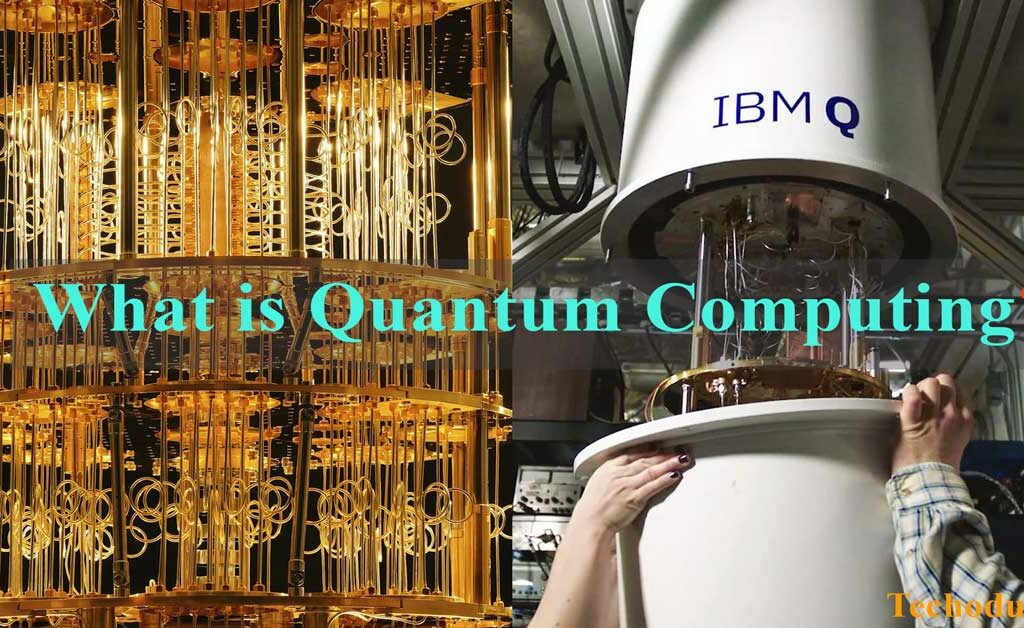
Quantum computing is an innovative computational paradigm that harnesses the principles of quantum mechanics to process information in ways that surpass the capabilities of classical computers. Unlike traditional computing, which relies on binary bits representing either 0 or 1, quantum computing utilizes quantum bits, or qubits, which can exist in multiple states simultaneously due to quantum phenomena. This fundamental difference enables quantum computers to tackle complex problems with unprecedented efficiency.
Fundamental Principles of Quantum Computing
Quantum computing is grounded in several key quantum mechanical concepts that distinguish it from classical computation:
- Superposition:
Qubits can exist in a combination of states at once, allowing quantum computers to perform many calculations simultaneously, exponentially increasing processing power. - Entanglement:
This phenomenon links qubits such that the state of one instantly influences the state of another, regardless of the distance separating them, enabling complex correlations that enhance computational capabilities. - Quantum Tunneling:
Particles can pass through energy barriers that would be insurmountable in classical physics, a property that quantum algorithms can exploit to explore solution spaces more efficiently.
Mechanisms Behind Quantum Computing
Quantum computers operate by manipulating qubits through quantum gates that exploit superposition and entanglement. These operations allow quantum algorithms to explore multiple computational paths simultaneously. Quantum tunneling further aids in navigating complex problem landscapes by enabling transitions that classical systems cannot easily achieve. Together, these mechanisms provide a foundation for solving certain classes of problems much faster than classical computers.
Mathematical Framework and Formulas
The state of a qubit can be mathematically represented as a vector in a two-dimensional complex Hilbert space:
|ψ⟩ = α|0⟩ + β|1⟩
- α and β: Complex probability amplitudes where |α|² + |β|² = 1, representing the probabilities of the qubit being measured in state |0⟩ or |1⟩ respectively.
- Quantum Gates: Unitary matrices that transform qubit states, such as the Hadamard gate (H), which creates superposition:
H = (1/√2) *
[[1, 1],
[1, -1]]
Entanglement is often described using tensor products of qubit states, and quantum algorithms leverage these mathematical constructs to perform computations.
Applications of Quantum Computing
Quantum computing holds transformative potential across various domains:
- Cryptography:
Quantum computers threaten current encryption methods by efficiently factoring large numbers, prompting the development of quantum-resistant cryptographic protocols. Simultaneously, quantum key distribution (QKD) offers theoretically unbreakable communication security. - Materials Science:
By accurately simulating molecular and atomic interactions, quantum computers can accelerate the discovery of new materials and drugs, improving energy storage and catalysis. - Medicine:
Quantum computing can analyze extensive biomedical data sets rapidly, enhancing personalized medicine through better understanding of genomics and disease patterns. - Artificial Intelligence:
Quantum algorithms can improve machine learning by speeding up training processes and increasing model accuracy, potentially revolutionizing AI applications.
Challenges in Quantum Computing Development
Despite its promise, quantum computing faces significant obstacles:
- Decoherence:
Qubits are extremely sensitive to environmental disturbances, causing loss of quantum information and errors. - Error Correction:
Developing robust quantum error correction techniques is critical to maintaining qubit stability and achieving fault-tolerant quantum computation. - Scalability:
Building large-scale quantum systems with high qubit connectivity and fidelity remains a formidable engineering challenge.
Common Misconceptions About Quantum Computing
Quantum computers will replace classical computers entirely.
Quantum computers are specialized devices designed to solve particular problems more efficiently; classical computers will remain essential for many everyday tasks.
Quantum computing is already widely available and practical.
While research has made significant progress, practical, large-scale quantum computers are still in development and not yet commercially widespread.
Significance of Quantum Computing
Quantum computing represents a revolutionary leap in computational science, with the potential to solve problems currently beyond reach. Its impact spans cryptography, scientific research, medicine, and artificial intelligence, promising advancements that could reshape technology and society. Understanding and overcoming its challenges is vital for unlocking these benefits while addressing ethical and security considerations.
Ethical and Societal Implications
As quantum technologies evolve, it is imperative to consider their broader effects on privacy, security, and ethical standards. Collaboration among scientists, ethicists, policymakers, and industry leaders is essential to ensure responsible development and deployment, balancing innovation with societal well-being.
Conclusion
Quantum computing stands at the frontier of scientific exploration, merging deep theoretical insights with practical aspirations. Its development not only advances computational capabilities but also enriches our understanding of the fundamental nature of reality, highlighting the profound interplay between human ingenuity and the quantum world.
FAQ
What is quantum computing?
Quantum computing is a computational paradigm that uses quantum-mechanical phenomena such as superposition and entanglement to perform operations on data, enabling it to solve certain problems faster than classical computers.
How does quantum computing differ from classical computing?
Quantum computing uses qubits that can exist in multiple states simultaneously due to superposition, whereas classical computing uses bits that are either 0 or 1.
What are the main challenges in developing quantum computers?
Key challenges include decoherence, error correction, and scalability of qubit systems.
What are some applications of quantum computing?
Applications include cryptography, materials science, medicine, and artificial intelligence.
Will quantum computers replace classical computers?
No, quantum computers are designed for specific complex problems, while classical computers will continue to be used for everyday tasks.






Leave a Reply