
Short Answer
Understanding a PhD in Physics
Pursuing a Doctor of Philosophy (PhD) in Physics represents an intricate and demanding academic journey, marked by both intellectual challenges and profound discoveries. This advanced degree goes beyond imparting specialized knowledge; it transforms the way candidates think about the fundamental principles of the physical universe. Unlike undergraduate studies that emphasize established theories and foundational concepts, doctoral research encourages scholars to critically examine and question the core assumptions of physics, fostering a deeper level of intellectual exploration and innovation.
Core Curriculum and Academic Foundations
At the beginning of their doctoral studies, students engage in intensive coursework aimed at sharpening their analytical capabilities and expanding their understanding of complex physical phenomena. The curriculum typically covers essential domains such as quantum mechanics, thermodynamics, and electromagnetism, requiring mastery of both theoretical frameworks and practical applications. Additionally, students often explore advanced and emerging fields like condensed matter physics, astrophysics, and particle physics, which broaden their academic horizons and equip them with sophisticated research methodologies.
Research and Mentorship: The Heart of Doctoral Training
The PhD experience extends well beyond classroom learning, serving as a crucible for original thought and scientific innovation. Doctoral candidates collaborate closely with faculty mentors-often leading experts in their specialties-who guide them through the intricacies of the research process. This mentorship encompasses critical stages such as conducting comprehensive literature reviews, formulating hypotheses, designing experiments, and analyzing data. Through this collaborative environment, students develop not only rigorous scientific skills but also the resilience needed to navigate the uncertainties and setbacks inherent in research.
Laboratory Work and Practical Application
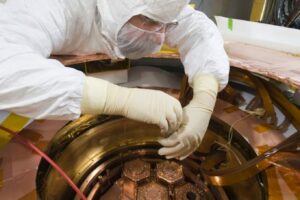
Hands-on experimentation is a vital component of doctoral training in physics. Laboratory sessions allow students to translate abstract theories into observable phenomena, testing hypotheses under controlled conditions. Utilizing advanced instruments-from particle accelerators to superconducting devices-students refine their technical expertise and cultivate problem-solving abilities. This empirical approach underscores physics as an experimental science grounded in observation, reinforcing the connection between theory and practice.
Independent Research and Dissertation Development
A defining feature of the PhD journey is the pursuit of independent research that contributes novel insights to the field. Identifying a unique research question requires extensive review of existing literature to pinpoint gaps and justify the study’s significance. This phase demands adaptability, as initial results may prompt revisions to hypotheses or methodologies. The culmination of this work is the dissertation, a comprehensive document that not only presents research findings but also situates them within the broader scientific context. Crafting the dissertation hones scholarly writing skills and deepens critical engagement with the subject matter.
Philosophical and Existential Dimensions
Beyond technical mastery, doctoral research in physics often prompts profound philosophical reflection. Grappling with fundamental questions about the nature of reality-ranging from subatomic behavior to cosmic dynamics-can lead to transformative shifts in worldview. This intellectual evolution may inspire contemplation of humanity’s role in the universe, the relationship between science and spirituality, and the ethical responsibilities accompanying scientific progress.
Professional Development and Academic Networking
The PhD pathway also cultivates essential professional skills. Participation in conferences, seminars, and workshops offers opportunities to present research, engage in scholarly dialogue, and build collaborative networks. These experiences enhance communication abilities and foster the exchange of innovative ideas within the global scientific community. Effective dissemination of complex concepts to diverse audiences is a critical competency developed during this stage.
Transferable Skills and Career Opportunities
Completing a PhD in Physics equips graduates with a versatile skill set applicable across various sectors. Analytical thinking, project management, and communication skills gained through research and teaching prepare individuals for careers in academia, industry, government, and beyond. Many alumni contribute to technological innovation, policy development, and education, leveraging their expertise to impact society broadly.
Significance of Pursuing a PhD in Physics
Embarking on a doctoral program in physics is more than an academic pursuit; it is a transformative odyssey that reshapes one’s understanding of the universe. Through rigorous study, experimental inquiry, and collaborative engagement, scholars advance both personal knowledge and the collective scientific narrative. This journey, marked by intellectual rigor and creative discovery, ultimately deepens appreciation for the complexities of the cosmos and invites ongoing exploration of the mysteries that lie beyond current comprehension.
FAQ
What is PhD level physics like?
PhD level physics is characterized by advanced coursework, independent research, hands-on laboratory work, and the creation of original scientific knowledge through a dissertation.
How challenging is a PhD in Physics?
It is highly challenging, requiring mastery of complex theories, technical skills, original research, and perseverance through setbacks.
What kind of research do PhD physics students conduct?
Research varies widely and may involve theoretical modeling, experimental investigations, or computational simulations in fields like quantum physics, condensed matter, or astrophysics.
What skills beyond physics knowledge do PhD students gain?
They develop problem-solving, critical thinking, project management, communication, and collaboration skills.



Leave a Reply