
Short Answer
Definition of NAMUR NE43
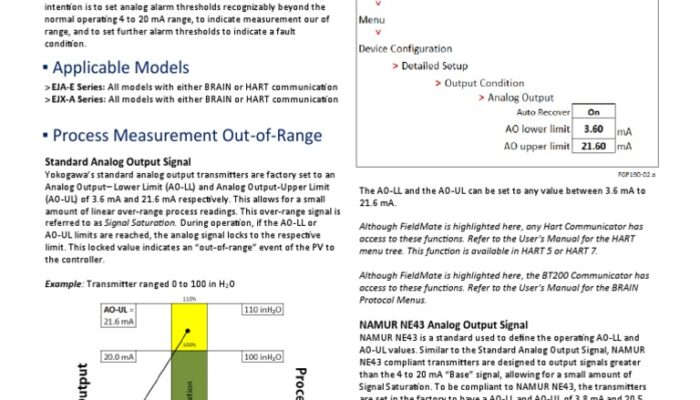
NAMUR NE43 is a recognized industrial standard that specifies the performance criteria for analog output signals generated by sensors used in process automation. It serves as a critical guideline for engineers and technicians, ensuring consistent and reliable communication between sensor devices and measurement instruments. This standard is fundamental for developing robust, cost-effective solutions in industrial sensing and control systems.
Significance in Industrial Automation
As industries increasingly adopt automation, the precision and clarity of data transmission from sensors to control systems become vital. Sensors act as the primary data collectors, capturing essential information about physical parameters such as temperature, pressure, and flow. NAMUR NE43 guarantees that these analog signals are transmitted with high fidelity, enabling accurate monitoring and control within automated environments.
Focus on Analog Signal Quality
Unlike discrete signals, analog output signals provide continuous data that reflect the subtle variations of real-world phenomena. NAMUR NE43 emphasizes the importance of these continuous signals, which allow for a more detailed and accurate representation of complex variables. This standard outlines technical requirements that ensure sensors produce analog outputs with minimal distortion and high reliability.
Technical Specifications and Compliance
NAMUR NE43 defines key parameters such as output impedance, response time, and linearity that sensors must meet to comply with the standard. Adherence to these specifications facilitates interoperability among devices from different manufacturers, streamlining production and integration processes. This uniformity is crucial in environments where timely and accurate data exchange directly impacts operational safety and efficiency.
Key Technical Parameters
- Output Impedance:
Ensures minimal signal loss and stable transmission. - Response Time:
Defines how quickly a sensor reacts to changes in the measured variable. - Linearity:
Guarantees that the output signal accurately corresponds to the input measurement across the sensor’s range.
Role of Signal Conditioning
Signal conditioning is a critical process associated with NAMUR NE43 compliance. It involves modifying sensor signals through amplification, filtering, and analog-to-digital conversion to meet the requirements of downstream equipment. Proper signal conditioning enhances the interpretability and usability of sensor data, improving overall system performance.
Impact on Predictive Maintenance
The high-quality analog signals ensured by NAMUR NE43 are instrumental in advancing predictive maintenance strategies. By feeding precise data into analytical models, these sensors help predict equipment failures before they occur, shifting maintenance from reactive to proactive. This approach conserves resources, reduces downtime, and enhances safety in industrial settings such as chemical plants and refineries.
Contribution to Sustainability Efforts
Accurate sensor data enabled by NAMUR NE43 supports environmental monitoring and control, aiding industries in reducing emissions and minimizing waste. Enhanced precision in measuring real-time variables allows for better regulation of processes, contributing to greener and more sustainable industrial operations worldwide.
Integration with Digital Technologies and Industry 4.0
In the era of Industry 4.0 and the Internet of Things (IoT), NAMUR NE43 plays a pivotal role in bridging traditional analog sensor outputs with modern digital infrastructures. The standard facilitates seamless interoperability between legacy analog systems and cutting-edge digital devices, enabling industries to adopt intelligent automation frameworks without sacrificing reliability.
Organizational Adoption and Cultural Shift
Maximizing the benefits of NAMUR NE43 requires organizations to embrace a culture that prioritizes precision and accuracy. This involves investing in training for personnel and upgrading systems capable of processing detailed sensor data. Such a mindset fosters operational excellence and innovation, ensuring that the full potential of compliant sensors is realized.
Summary and Future Outlook
NAMUR NE43 represents a milestone in the evolution of industrial instrumentation, promoting dependable analog output signals that underpin modern automation networks. Beyond a mere technical standard, it embodies a philosophy of quality and reliability essential for ongoing innovation and efficiency. As industries continue to evolve, adherence to NAMUR NE43 will remain a cornerstone for achieving superior operational performance and preparing for future technological advancements.
FAQ
What is NAMUR NE43?
NAMUR NE43 is an industrial standard that specifies performance criteria for analog output signals from sensors in process automation.
Why is NAMUR NE43 important?
It ensures reliable communication and accurate data transmission from sensors to control systems in industrial automation.
What are the key parameters defined by NAMUR NE43?
The key parameters include output impedance, response time, and linearity to ensure high-quality analog signals.
How does NAMUR NE43 contribute to predictive maintenance?
By providing precise data, it allows for better predictive maintenance strategies, helping to anticipate equipment failures.
What role does NAMUR NE43 play in Industry 4.0?
It facilitates interoperability between traditional analog systems and modern digital devices, enabling intelligent automation.


Leave a Reply