
Short Answer
Definition of Laser Measuring Equipment
Laser measuring equipment refers to devices that utilize laser technology to determine distances, dimensions, and spatial relationships with exceptional accuracy. By emitting coherent light beams and analyzing their reflections, these instruments provide precise measurements essential for various professional fields. The technology harnesses the principles of light amplification through stimulated emission of radiation, enabling measurements that surpass traditional methods in speed and reliability.
Fundamental Principles and Mechanism
At the heart of laser measuring devices lies the emission of a focused laser beam, which travels to a target and reflects back to the sensor. The equipment calculates the distance by measuring the time it takes for the light to return or by analyzing phase shifts in the laser wave. This non-contact measurement technique ensures minimal interference and high precision, making it suitable for diverse environments and materials.
Applications Across Industries
Construction and Architectural Design
In construction and architecture, laser measuring tools are indispensable for achieving structural accuracy and aesthetic precision. Laser distance meters enable rapid and exact measurement of lengths, heights, and depths, often reaching several hundred meters. Laser levels assist in establishing perfectly horizontal and vertical planes, ensuring that every structural element aligns correctly. These capabilities reduce errors that could lead to costly rework or compromised safety, thereby enhancing both efficiency and quality in building projects.
Land Surveying and Geospatial Mapping
Surveying has been revolutionized by laser technology, which replaces labor-intensive traditional methods with swift, high-resolution data acquisition. Laser scanners generate detailed three-dimensional representations of terrain, capturing topographical features and boundaries with remarkable accuracy. This digital mapping facilitates urban planning, environmental monitoring, and infrastructure development by providing comprehensive spatial data that supports informed decision-making.
Industrial Manufacturing and Quality Control
Precision is paramount in manufacturing, where components must meet stringent specifications. Laser measuring systems enable real-time, non-contact inspection of parts, detecting deviations at microscopic levels. This ensures that products-from automotive parts to electronic devices-adhere to quality standards, minimizing defects and production waste. The integration of laser measurement into production lines enhances process control and supports continuous improvement initiatives.
Medical and Healthcare Applications
Laser measurement technology plays a critical role in modern medicine, particularly in diagnostic imaging and treatment planning. Techniques such as laser triangulation are employed to map anatomical structures with high precision. For example, in ophthalmology, laser systems measure the corneal surface to identify irregularities that affect vision. These measurements enable tailored interventions and improve patient outcomes by providing detailed anatomical data.
Art Preservation and Cultural Heritage Conservation
In the fields of art and heritage conservation, laser measuring devices facilitate the creation of accurate three-dimensional models of artworks and historic sites. High-resolution laser scanning captures intricate details that may be imperceptible to the naked eye, aiding in documentation, restoration, and preservation efforts. This digital archiving protects cultural treasures from deterioration and allows for virtual access and study by future generations.
Scientific Research and Technological Development
Researchers across disciplines utilize laser measurement tools to explore phenomena at micro and nano scales. In physics, biology, and materials science, these devices enable precise characterization of structures and processes, advancing understanding in areas such as nanotechnology and cellular biology. The accuracy and versatility of laser measurements support experimental innovation and contribute to breakthroughs in science and engineering.
Mathematical Explanation and Measurement Techniques
Laser distance measurement often relies on the time-of-flight (ToF) principle or phase-shift analysis:
- Time-of-Flight (ToF):
The device emits a laser pulse and measures the time interval (Δt) until the reflected light returns. Distance (d) is calculated using the formula:
d = (c × Δt) / 2, where c is the speed of light. - Phase-Shift Method:
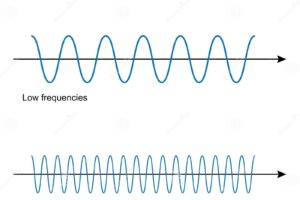
A continuous laser beam is modulated, and the phase difference between emitted and reflected waves is measured. This phase shift correlates to the distance, allowing for highly accurate measurements over shorter ranges.
Practical Examples of Laser Measuring Equipment
- Construction Site Layout:
A laser distance meter quickly measures the length of walls and heights of ceilings, ensuring compliance with design specifications. - Topographic Survey:
Laser scanners capture detailed 3D maps of uneven terrain, aiding in flood risk assessment and urban development planning. - Automotive Manufacturing:
Laser measurement systems inspect engine components for dimensional accuracy, preventing assembly errors. - Ophthalmic Diagnostics:
Laser devices map the corneal surface to assist in diagnosing keratoconus and planning corrective surgeries. - Historic Monument Preservation:
Laser scanning creates digital replicas of ancient sculptures, facilitating restoration without physical contact.
Common Misunderstandings About Laser Measuring Technology
- Misconception: Laser measuring devices are only useful for long-distance measurements.
Correction: These tools are versatile and effective for both short-range and long-range measurements, depending on the model and application. - Misconception: Laser measurements require direct contact with the object.
Correction: Laser measurement is a non-contact method, which allows for safe and accurate data collection without physical interference. - Misconception: Laser measuring equipment is too complex for everyday use.
Correction: Many laser measuring devices are designed for user-friendly operation, suitable for professionals and amateurs alike.
Significance and Impact of Laser Measuring Equipment
Laser measuring technology has become a cornerstone in advancing precision across multiple sectors. Its ability to deliver rapid, accurate, and non-invasive measurements enhances productivity, safety, and quality control. In construction, it ensures structural soundness; in healthcare, it improves diagnostic accuracy; in manufacturing, it guarantees product excellence; and in cultural preservation, it safeguards heritage. As technological innovation progresses, laser measuring equipment continues to expand its influence, driving scientific discovery and practical applications that shape the modern world.
FAQ
What industries use laser measuring equipment?
Industries such as construction, surveying, manufacturing, healthcare, and cultural preservation utilize laser measuring equipment.
How does laser measuring work?
It works by emitting a laser beam to a target and measuring the time taken for the light to return or analyzing phase shifts.
Are laser measuring devices user-friendly?
Yes, many laser measuring devices are designed for easy operation for both professionals and amateurs.

Leave a Reply