
Short Answer
Definition of Instrumentation in Physics
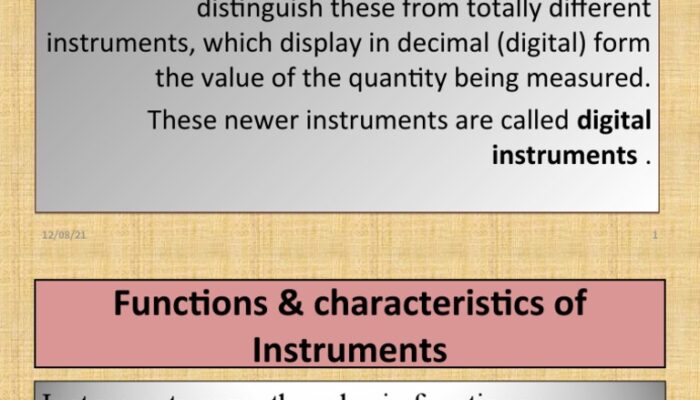
Instrumentation in physics encompasses the diverse collection of tools and devices designed to measure and quantify physical properties. These instruments act as essential intermediaries that translate theoretical concepts into measurable data, enabling scientists to observe, analyze, and validate physical phenomena. Without instrumentation, the empirical foundation of physics would be unattainable, making it a cornerstone of both experimental and theoretical investigations.
Historical Development of Measurement Tools
The journey of instrumentation dates back to ancient times, where early devices such as the astrolabe and barometer laid the groundwork for systematic measurement. These primitive yet innovative tools allowed early researchers to track celestial movements, measure time, and assess atmospheric pressure. Over centuries, advancements led to more sophisticated instruments like the microscope, which revealed microscopic life, and the spectroscope, which dissected light to uncover the elemental composition of stars and materials.
Categories and Types of Instruments
Modern physics employs a wide spectrum of instruments, each specialized for particular measurement tasks. These can be broadly classified into several categories:
- Mechanical Instruments:
Devices such as calipers and scales that measure physical dimensions and mass. - Electrical Instruments:
Tools like ammeters and voltmeters that quantify electrical currents and voltages, crucial for electronics and electromagnetism studies. - Optical Instruments:
Equipment including spectrometers and interferometers used to analyze light properties and wave phenomena. - Thermal Instruments:
Devices such as thermocouples and pyrometers that measure temperature and heat-related parameters.
The Role of Sensors in Modern Instrumentation
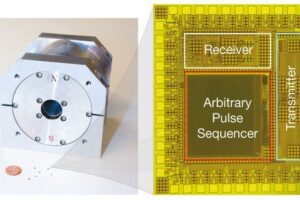
Sensors are pivotal components in contemporary measurement systems, converting physical quantities into electrical signals that can be easily recorded and analyzed. For example, thermocouples exploit the thermoelectric effect to measure temperature changes, while strain gauges detect material deformation by translating mechanical strain into electrical resistance variations. The integration of sensors with digital technologies has dramatically enhanced the precision and speed of data acquisition, ushering in a new era of real-time monitoring and control.
Instrumentation in Specialized Physics Fields
In advanced branches like quantum mechanics, instrumentation attains critical importance due to the need for ultra-precise measurements at atomic and subatomic scales. Instruments such as atomic force microscopes enable visualization and manipulation of individual atoms, providing insights into quantum behaviors. These tools not only facilitate experimentation but also challenge and expand our understanding of fundamental physical principles, such as wave-particle duality.
Challenges in Measurement: Noise and Signal Integrity
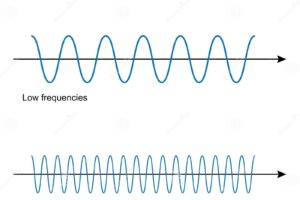
One of the foremost obstacles in instrumentation is the presence of noise-unwanted fluctuations that can mask or distort the true signal. Despite advances in detector technology and signal processing algorithms, achieving high fidelity in measurements remains a complex task. Scientists employ rigorous calibration, filtering techniques, and sophisticated data analysis to isolate meaningful information from background interference, highlighting the delicate balance between accuracy and environmental limitations.
Integration with Computational Physics
The fusion of instrumentation with computational methods has transformed research methodologies. High-performance data analysis software processes vast datasets generated by modern instruments, enabling simulations and predictive modeling of complex systems such as climate dynamics or particle interactions in accelerators. This synergy enhances the interpretative power of empirical data and accelerates scientific discovery by bridging observation with theoretical computation.
Interdisciplinary Impact of Instrumentation
Instrumentation transcends physics, fostering collaboration across scientific disciplines. For instance, advanced imaging technologies like Magnetic Resonance Imaging (MRI) and Positron Emission Tomography (PET) combine principles from physics, chemistry, and engineering to advance medical diagnostics and materials science. This cross-pollination of expertise underscores the broad influence of instrumentation in driving innovation and expanding knowledge frontiers.
Accessibility and Democratization of Instrumentation
Despite the critical role of instrumentation, high costs often limit access to cutting-edge devices. However, ongoing efforts aim to democratize measurement technologies through open-source software and affordable hardware solutions. These initiatives empower educational institutions and researchers in resource-limited settings to engage in scientific exploration, fostering inclusivity and diversity in the global scientific community.
Why Instrumentation is Essential
Instrumentation is fundamental to the progress of physics and science at large. It enables the transition from abstract theories to empirical validation, supports the discovery of new phenomena, and drives technological innovation. By continuously evolving to meet new challenges, instrumentation remains a vital tool in humanity’s quest to understand the universe and improve life through scientific advancement.
Future Perspectives and Continuing Evolution
As measurement technologies advance, new horizons in physics emerge. Enhanced precision, miniaturization, and integration with artificial intelligence promise to unlock deeper insights into the fabric of reality. The relentless pursuit of improved instrumentation will continue to propel scientific inquiry, raising profound questions and opening unexplored avenues in the study of nature.
FAQ
What types of instruments are used in physics?
In physics, instruments can be classified into mechanical, electrical, optical, and thermal categories, each designed for specific measurement tasks.
Why is instrumentation important in scientific research?
Instrumentation is essential for translating theoretical concepts into measurable data, allowing scientists to validate hypotheses and discover new phenomena.

Leave a Reply